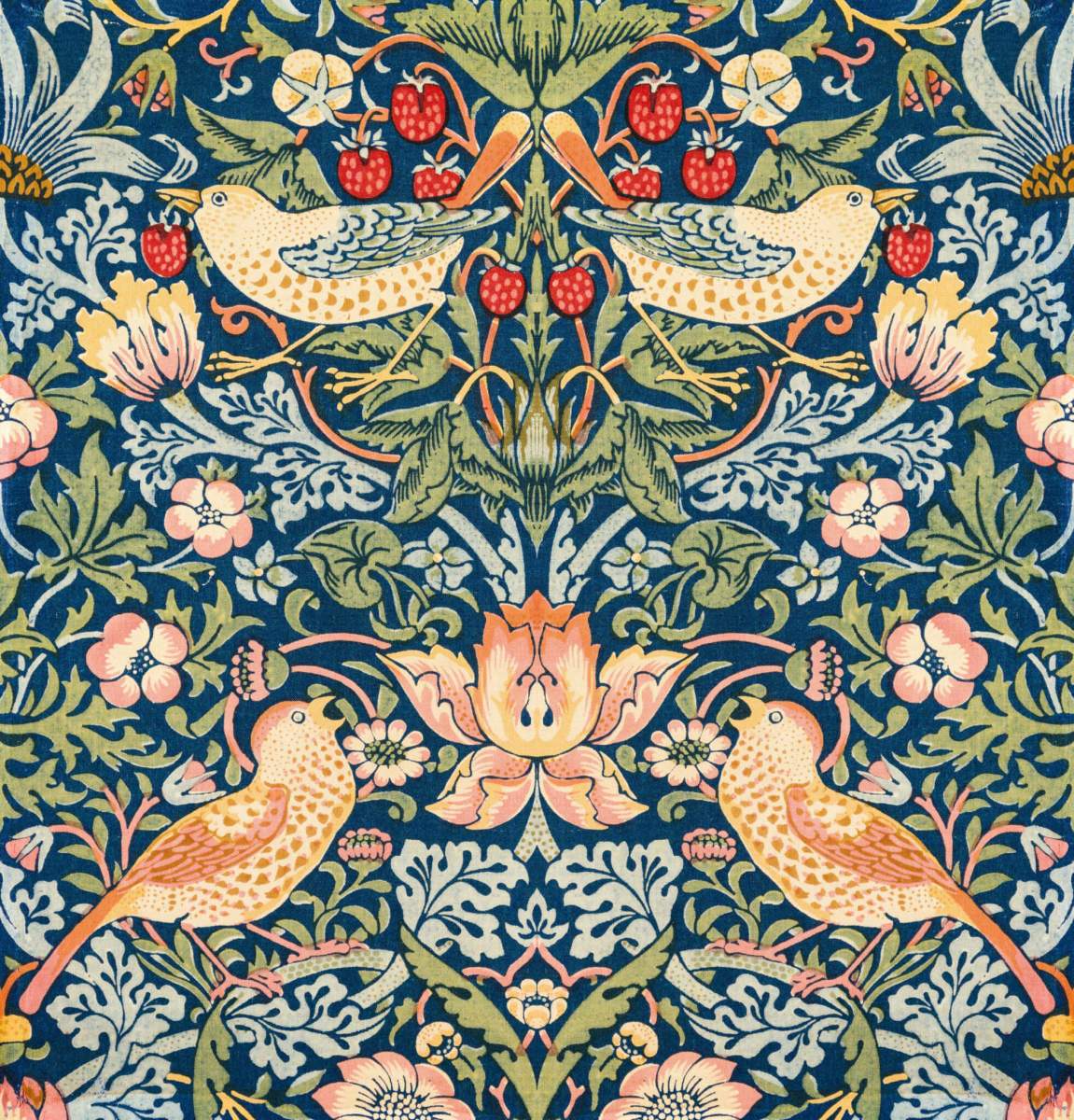
The Arts and Crafts movement emerged in the late 19th century in reaction to the Industrial Revolution.
It celebrated craftsmanship, local materials and functional design, positioning itself in contrast to the arrival of mass production and machine-made goods.
William Morris and John Ruskin
The Arts and Crafts movement was inspired by the ideas of writer John Ruskin and the work of artist, poet and textile designer William Morris.
They believed that industrialisation had cheapened the quality of goods and reduced the value of labour. They thought that mass-produced objects could not achieve the same level of individuality and artistry as those made by skilled human hands.
What is Arts and Crafts architecture?
Arts and crafts architecture embraced simplicity, utility and craftsmanship, with each design influenced by local building materials and construction techniques. The movement’s buildings often reject ornate designs that lack function or a connection to local identity.
The movement was followed by the similar-sounding styles of Art Nouveau (which embraced designs including leaves and flowers and distinctive flowing lines) and Art Deco (which celebrated modernity with straight lines and geometric patterns).
The Arts and Crafts movement eventually spread beyond Britain, and architectural examples can be found as far as Europe, Japan, and, most famously, in the architect Frank Lloyd Wright’s Prairie School in the United States. In each country, the style was adapted to new local traditions and materials.
Here are 8 Arts and Crafts buildings you can see in England:
1. The Red House, Bexleyheath, London
The Red House was commissioned, created and lived in by William Morris, founder of the Arts and Crafts movement. The artist Edward Burne-Jones described it as ‘the beautifullest place on earth’.
Completed in 1860, Morris worked with architect Philip Webb to create a home without unnecessary decoration, focusing on the simple, useful design that would become a key principle of the Arts and Crafts movement.
The house is asymmetrical because no unnecessary features were added. For example, each room has only the number of windows Morris and Webb judged to be needed for its purpose.
As well as a family home, the house was also a place where Morris and his circle of friends could work.
It still features original designs and furniture by Morris and Webb, stained glass and paintings by Burne-Jones and embroidery by Jane and Elizabeth Burden, often celebrating the manufacturing process and the skill of craftsmen.
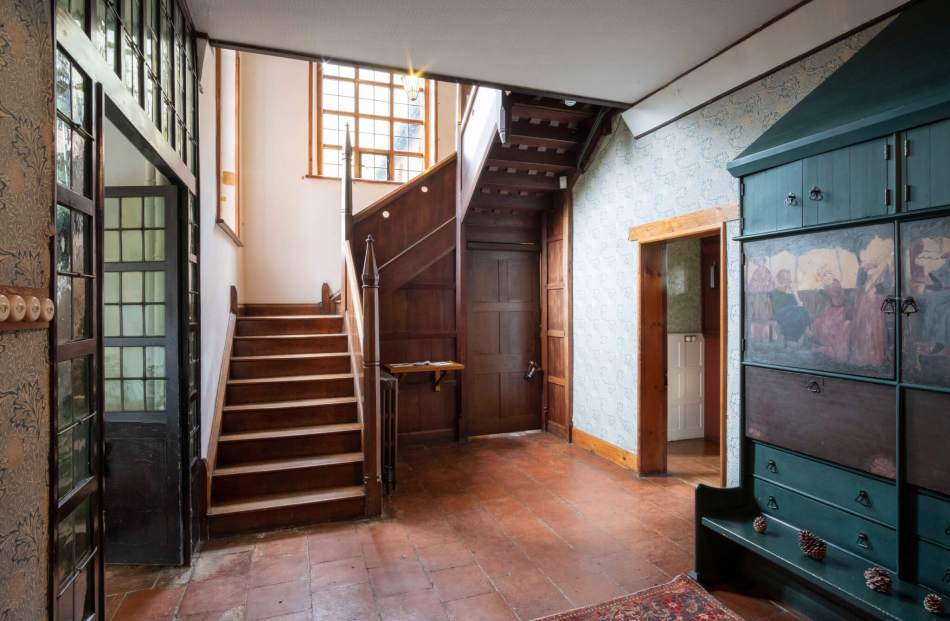
2. Standen House and Garden, East Grinstead, West Sussex
Also designed by Philip Webb, Standen House was built for solicitor James Beale and his wife Margaret using local materials and traditional construction methods.
Designed to look as if it were part of the landscape, only ‘the best materials and workmanship’ would do, in line with the ideals of the Arts and Crafts movement.
Featuring Morris & Co. interiors throughout and views across the Sussex countryside, the house and garden were designed to complement each other.
‘A house should be clothed by its garden,’ Morris said, believing that gardens were a continuation of a house and should be used as such.
3. Wheal Betsy, Newlyn, Cornwall
This Arts and Crafts house was built between 1909 and 1911 for artists Thomas Cooper Gotch and Caroline Burland Yates by architect Arnold Bidlake Mitchell.
The Gotches wanted a house like those they had seen in ‘The Studio’, a magazine launched in 1893 to promote the Arts and Crafts movement. The work of architect Mitchell was regularly featured, and when their search for their ideal home was unsuccessful, they commissioned him to build one.
Local construction methods and materials are found in the slate roofs and the use of locally-quarried granite, giving the house a distinctively Cornish character.
Wheal Betsy became the hub of the Gotches’ life in Newlyn’s artistic community, and the inspiration for many of Thomas’s works.
4. Stoneywell, Ulverscroft, Leicestershire
The Arts and Crafts architect and designer Ernest Gimson designed Stoneywell Cottage to appear as if it were growing among the rocky outcrops of Charnwood Forest.
It was first intended as a summer house for his brother, away from Leicester’s industry, before becoming a family home in the 1950s.
Stoneywell is typical of the Arts and Crafts desire for simple and functional living. As Morris said, ‘Have nothing in your house that you do not know to be useful or believe to be beautiful.’
The cottage is still furnished with many original pieces crafted by Ernest and his circle of craftsmen: the dining table with a top fashioned from a single oak plank, stone hot-water bottles on the slate steps, and children’s toys in the nursery.
5. Former Maternity Ward, West Yorkshire
The Arts and Crafts style influenced buildings beyond houses, and this former Maternity Ward from 1928 is an example of an Arts and Crafts-style ‘bungalow’, built with half-timbered gables.
Alongside communal pavilion rooms and patios to enhance the well-being of recovering mothers, the ward at the Huddersfield Municipal Maternity Home represented a revolutionary progression in British healthcare, at a time when mortality rates for new mothers were very high.
Its original floor plan, designed with infection control, sanitation and care of new mothers at its heart, has remained unchanged over the years.
6. Church of St Andrew, Tyne and Wear
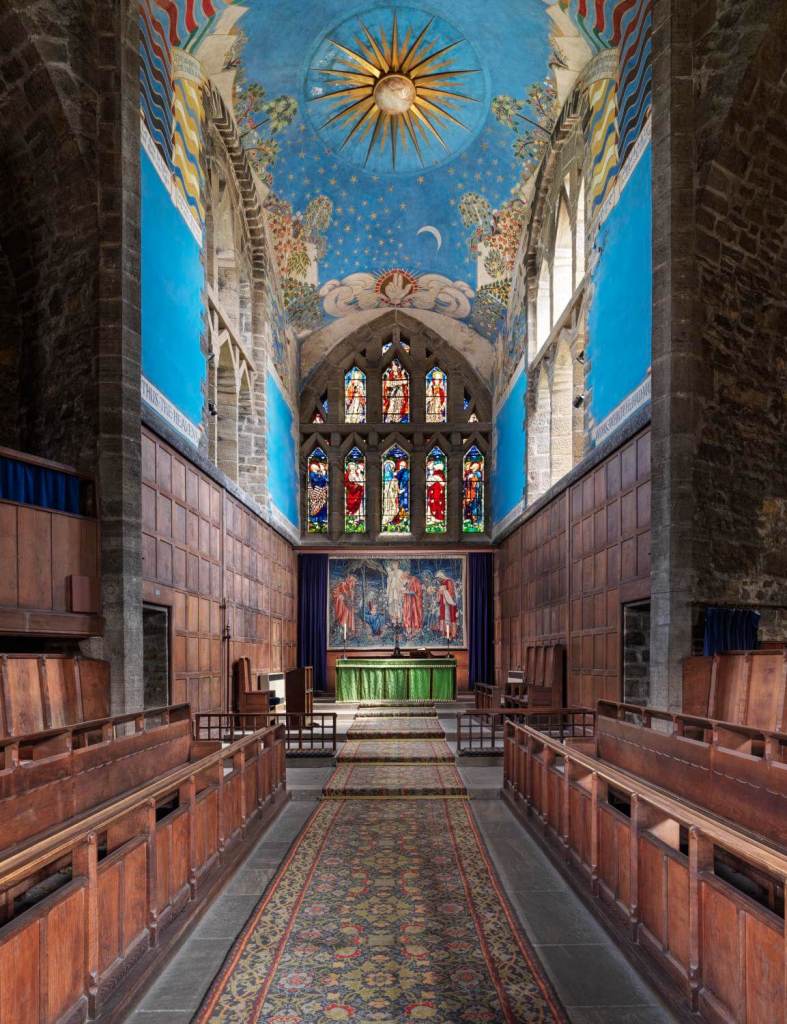
Known as the cathedral of the Arts and Crafts movement, the church of St Andrew in Sunderland is famed for its limestone exterior and exquisite interior.
Built by Edward Prior in 1907, the cathedral features stunning wall and ceiling murals depicting the creation of the cosmos by MacDonald Gill, as well as a carpet by William Morris, a tapestry by Edward Burne-Jones and stained glass by Albert Henry Payne and Burne-Jones.
7. Graithwaite Hall Gardens, Cumbria
The gardens at Graythwaite Hall in the Lake District were designed for the politician Colonel Sandys between 1889 and 1895, at a time when garden design was moving towards Arts and Crafts principles.
They were the first major design by Thomas Mawson, now considered to be the founder of modern landscaping, in which he pioneered his ‘composite’ garden: a combination of the formal and informal.
The design was fully illustrated in Mawson’s work, ‘The Art and Craft of Garden Making’, and became one of the most influential gardens of the early 20th century.
8. Mausoleum of Sir Alfred Apperly, Gloucestershire
The Apperly mausoleum was constructed around 1913 to house the remains of Sir Alfred Apperly, a member of a local family made wealthy from the woollen trade.
It was designed by architect Percy Richard Morley Horder, who frequently worked in an Arts and Crafts style, and the mausoleum is influenced by the building materials and traditions of the Stroud valleys.
The carved tympanum depicting mourning angels was also made by Arts and Crafts designer and craftsman John Houghton Maurice Bonnor.
Further reading: