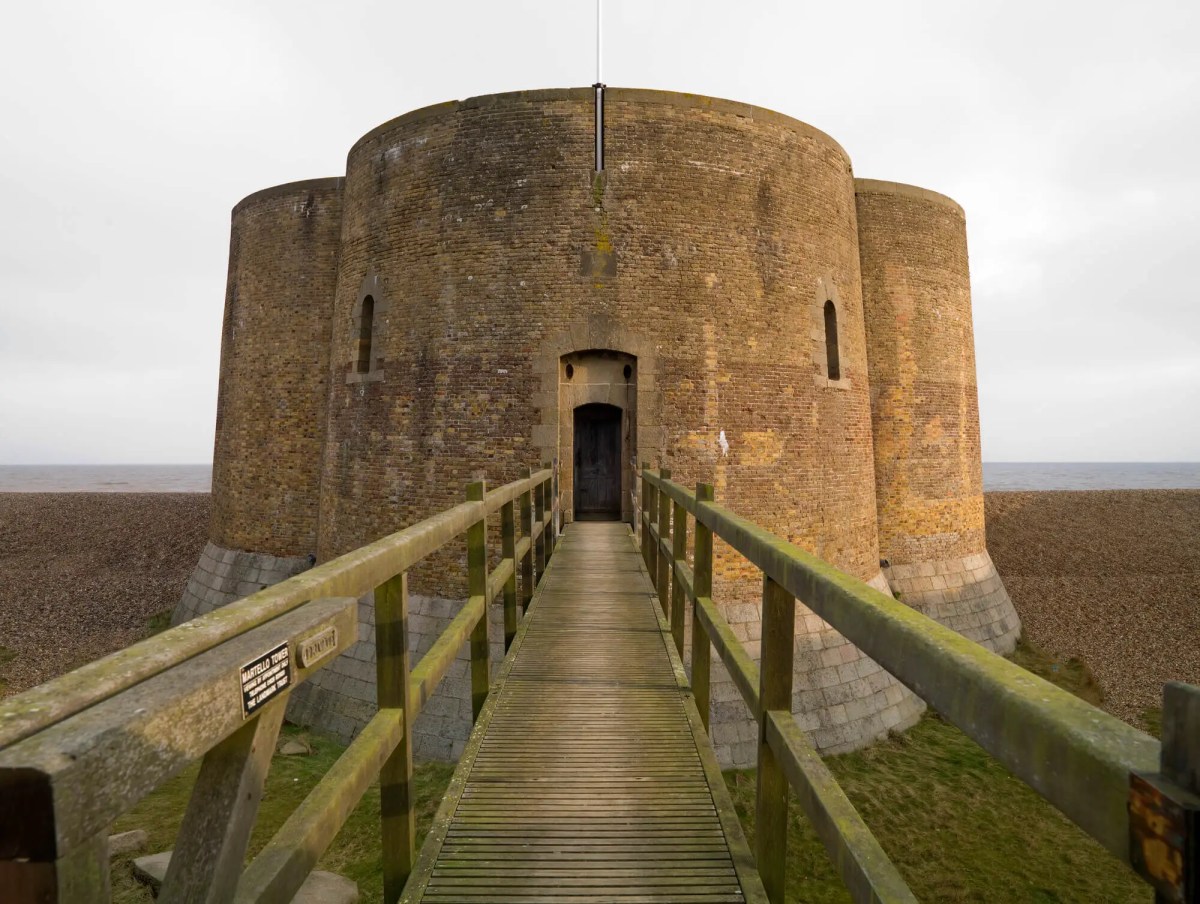
Martello towers are a series of small coastal artillery forts, built to counter the threat of invasion from France in the Napoleonic era (roughly 1799 to 1815).
The name and form of the Martello tower derive from a small defensive tower at Punta Mortella, a point in the bay of San Fiorenzo in Corsica. The British Army struggled to capture the tower in 1794, and when they withdrew from Corsica in 1796, they demolished most of the tower so that it could no longer be used. Contemporary correspondence misspelt Mortella as ‘Martello’, and the misspelling has remained to this day.
Between 1796 and 1815, 194 towers were built in Britain and its dependencies as a result of the British being at war with France and the United States of America. The intention was to strengthen batteries, protect coastline particularly vulnerable to enemy landings, and guard estuaries and marshland sluices.
A proposal to build defensive chains of Martello towers along the south and east coasts of England was agreed in 1804. From Folkestone in Kent to Seaford in Sussex, 74 towers were built along the south coast between 1805 and 1808 and were identified by numbers (1-74).
Twenty-nine towers were constructed along the east coast of Essex and Suffolk between 1808 and 1812; these were identified by letters of the alphabet, starting with Martello ‘A’ at St Osyth, and ending with ‘CC’ at Slaughden just south of Aldeburgh (having started again at AA once they passed Z).
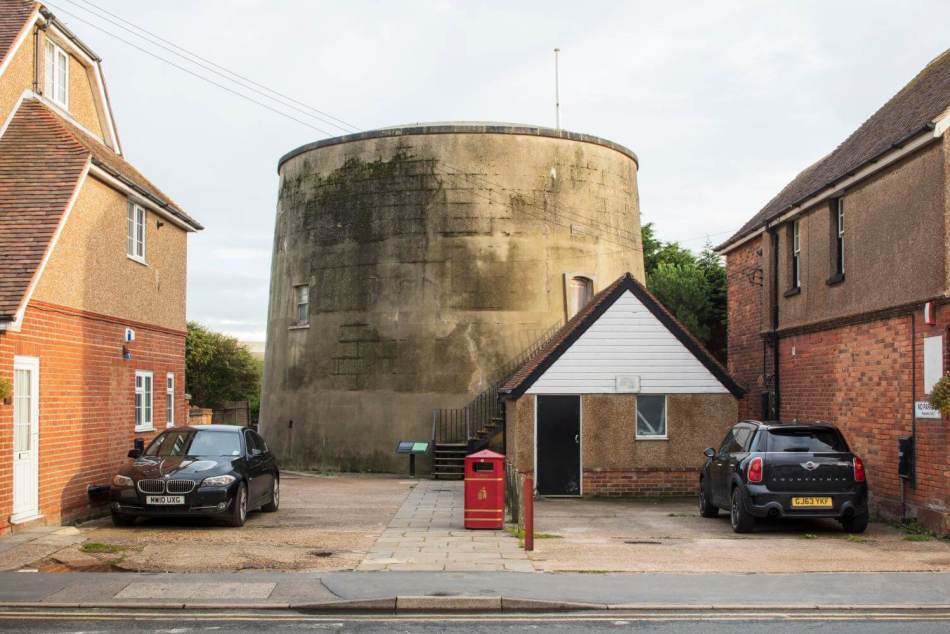
How many Martello Towers survive?
Of the 103 towers built in England, around 45 survive to varying degrees.
Around one fifth of the towers were built with a dry moat, typically 5 metres deep and 10 metres wide. Lined with a perimeter brick retaining wall, compacted soil was piled around the exterior to create a sloping surface against the outside face of the wall. The idea was that the dry moat would act as a trap for enemy troops, who could be picked off by musket fire from the tower roof.
Some towers were also constructed with a subsidiary water-filled trench at the foot of the tower, known as a cunette, or a defensive sloping bank known as a glacis.
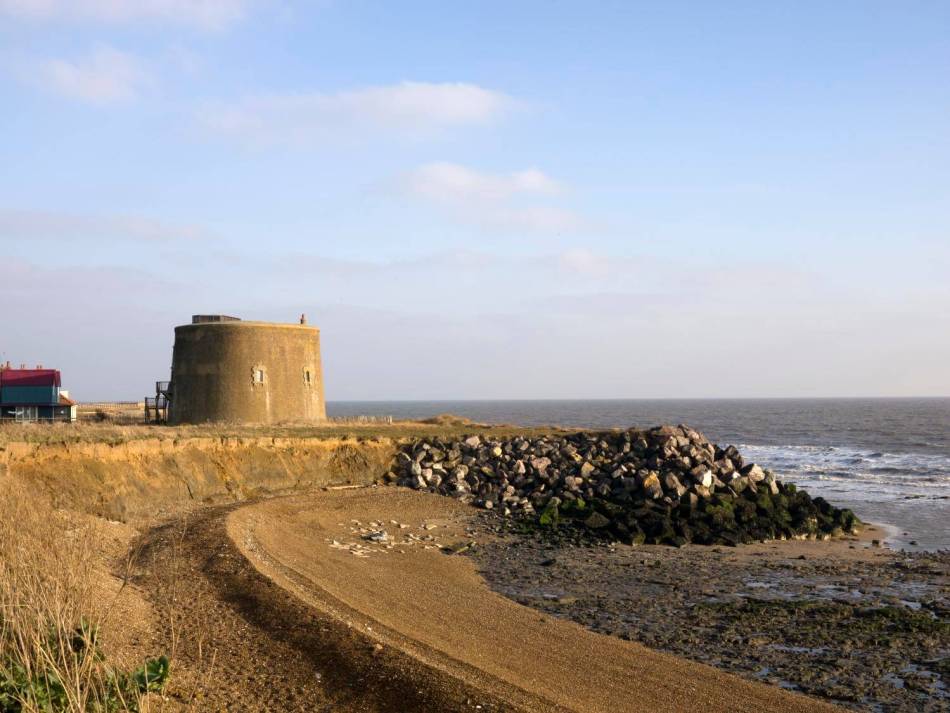
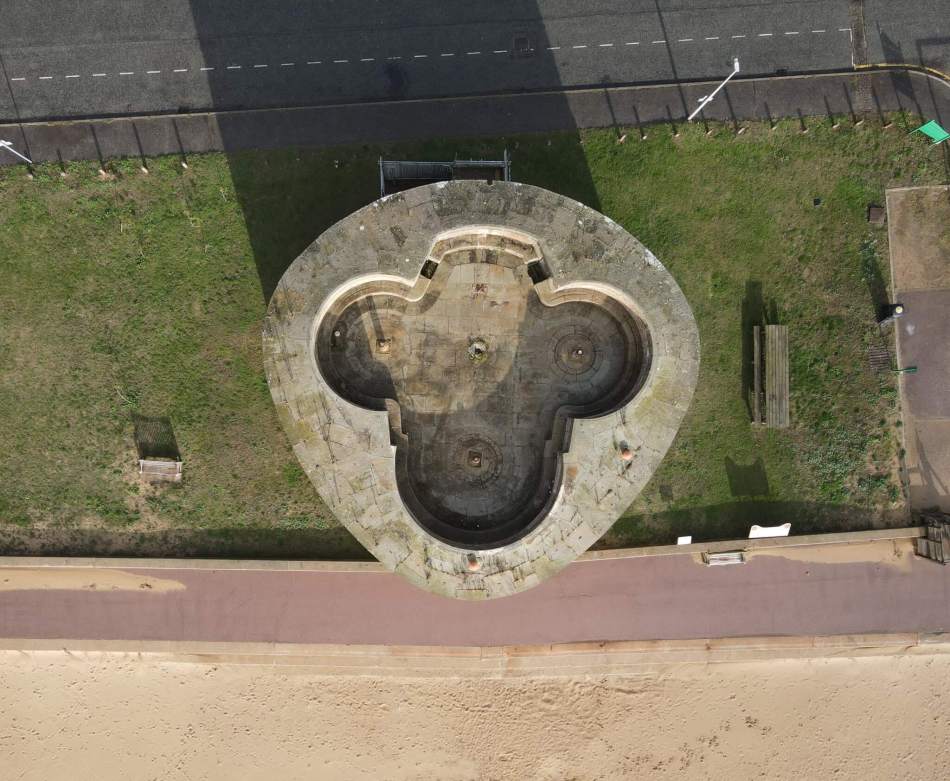
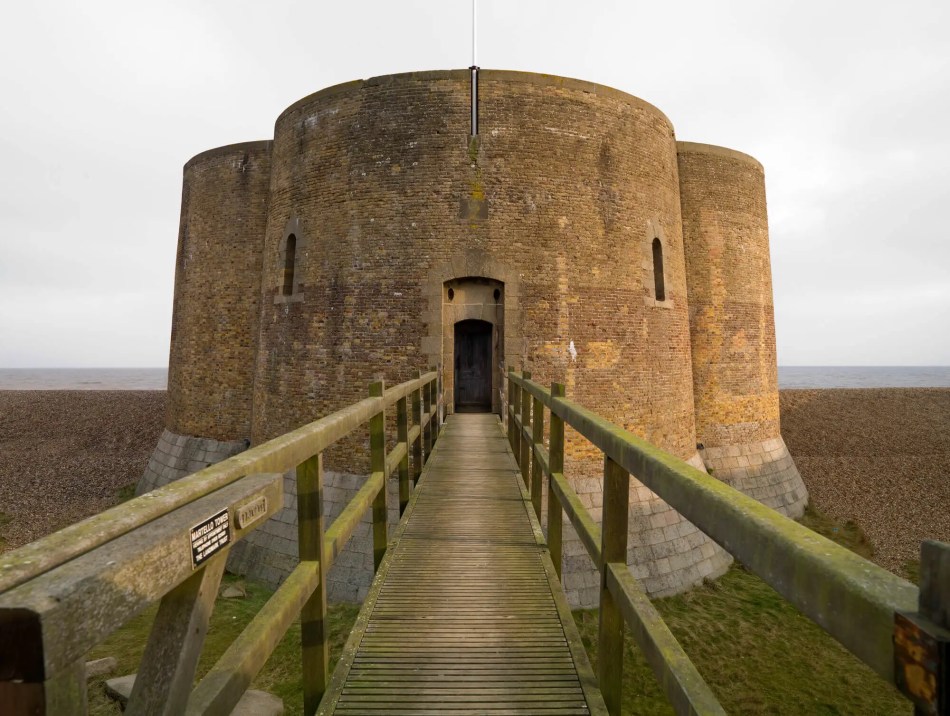
Both the south and east coast towers were designed around the concept of a single robust round tower with roof armament; the only exception is Tower CC which is quatrefoil (four-leafed) on plan.
The south towers were constructed of yellow-grey London brick or locally made red brick, while the east towers were constructed of red brick manufactured at Grays in Essex. Both were constructed with a high-strength hot lime mortar which set as hard as iron and rendered.
A vast quantity of raw materials was needed for these towers and it’s estimated that over 700,000 bricks were used in the construction of each east coast tower.
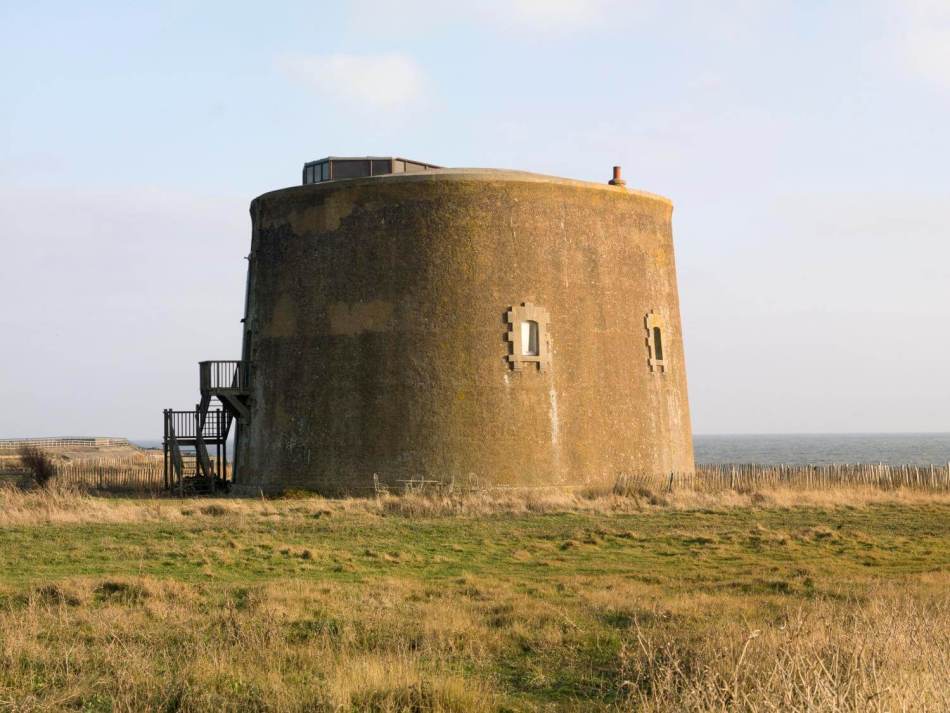
The quality of workmanship on the east towers is considered higher than the earlier south towers, as by that time much experience had been gained in building the structures and the threat of invasion had ebbed, so the work was not as hurried. The parapet, windows and doors of the east towers are dressed with stone.
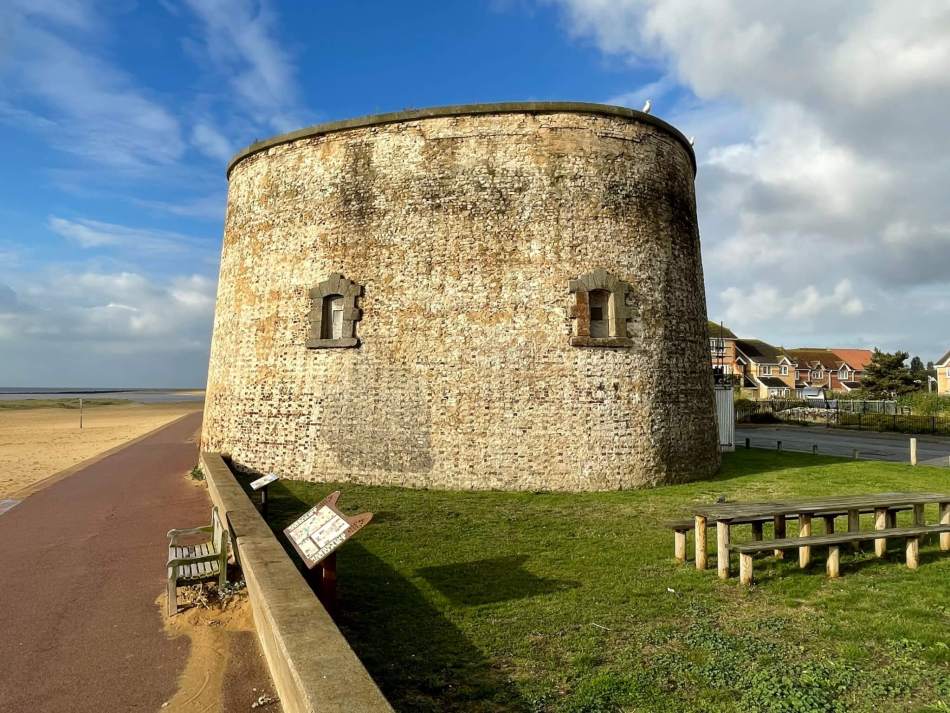
The walls are 10 metres (33 feet) high, being slightly tapered from base to roof. Although they appear round, the south towers are actually elliptical on plan, having thicker walls on the seaward side.
The plan was modified slightly for the east towers to accommodate an increase in roof armaments and 2 stairs to the roof, resulting in a cam-shaped or ovoid plan. The south towers generally measure around 13.6 metres (45 feet) in diameter, and the east towers have a wider diameter of around 16.7 metres (55 feet), providing larger floor areas on each level.
What was inside a Martello tower?
Each of the towers had 3 circular floors, namely a ground floor, first floor and roof. The entrance was at first floor level, reached either by means of a retractable ladder or a drawbridge where a moat and glacis had been constructed.
The first floor was partitioned into three sections around a central brick pillar, one room for the commanding officer, another for housing a garrison of between 15 and 24 men, and the rest for storage of provisions.
The substantial central brick pillar (thicker in the east towers to support the increased roof armaments) supported a brick-vaulted ceiling, oak radial floor joists and a rack to hold 27 muskets.
Small side windows provided natural light, 2 on the south towers and 4 on the east towers. The ground floor was entered from the first floor through a trapdoor by means of a ladder and was used for the storage of gunpowder, ammunition, provisions, fuel and water (fed from the roof and operated by a pump at first floor level).
In the south towers, a single staircase from the first floor provides access to the seaward side of the roof, while in the east towers a pair of staircases provide access to the landward side of the roof.
The south towers were each armed with a 24-pounder, long range cannon mounted on a rotating oak carriage, enabling the cannon to be fired in any direction. The east towers have a quatrefoil (four-leafed) arrangement, with a 24-pounder cannon in the seaward emplacement, and carronades (smaller cannons) in the lateral (side) emplacements.
Howitzers were also installed as short-range guns to defend the tower on the landward side or at close quarters. The inside of the parapet wall has ammunition recesses for storing cannonballs, all ammunition being passed up the stairs by hand from the ground floor magazine.
Two chimneys of light-weight construction could be rapidly demolished in the event of an attack (as they would otherwise impede the guns and create blind spots within the field of fire).
Were Martello towers ever used?
The towers were never actually tested in combat, and after the Napoleonic threat of invasion passed a number of towers were demolished for materials, and a number adopted as coastguard stations to monitor smuggling.
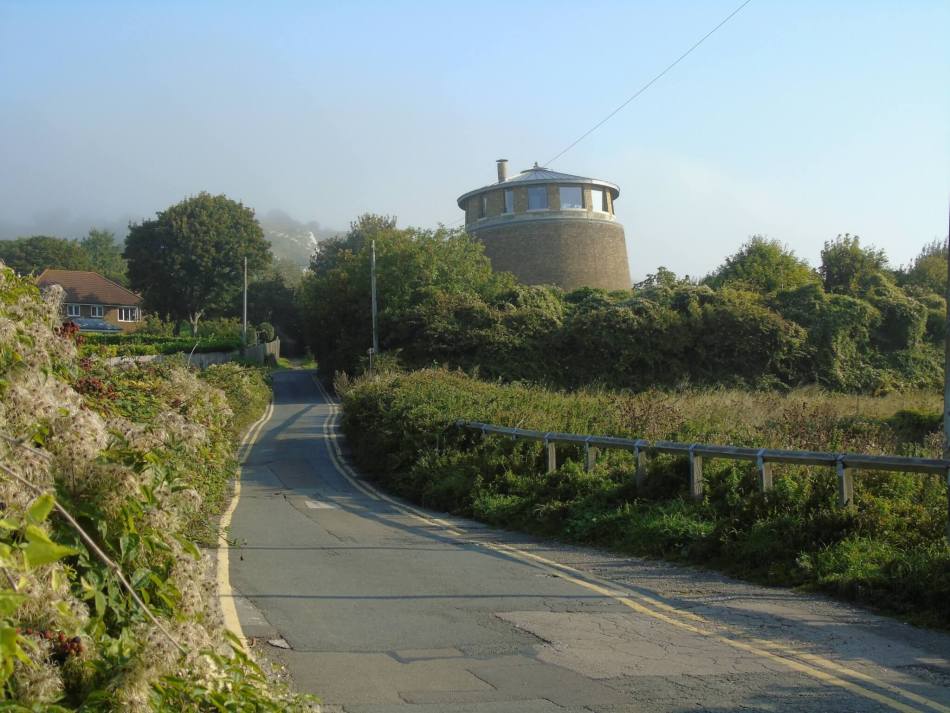
Some towers continued to contribute to the defence of the country during the conflicts of the 20th century, including use as wireless telegraphy stations, and observation posts during the First and Second World Wars and Cold War. A significant number have been lost to erosion, and of those that do survive, many have been converted into private dwellings.
How to visit a Martello tower?
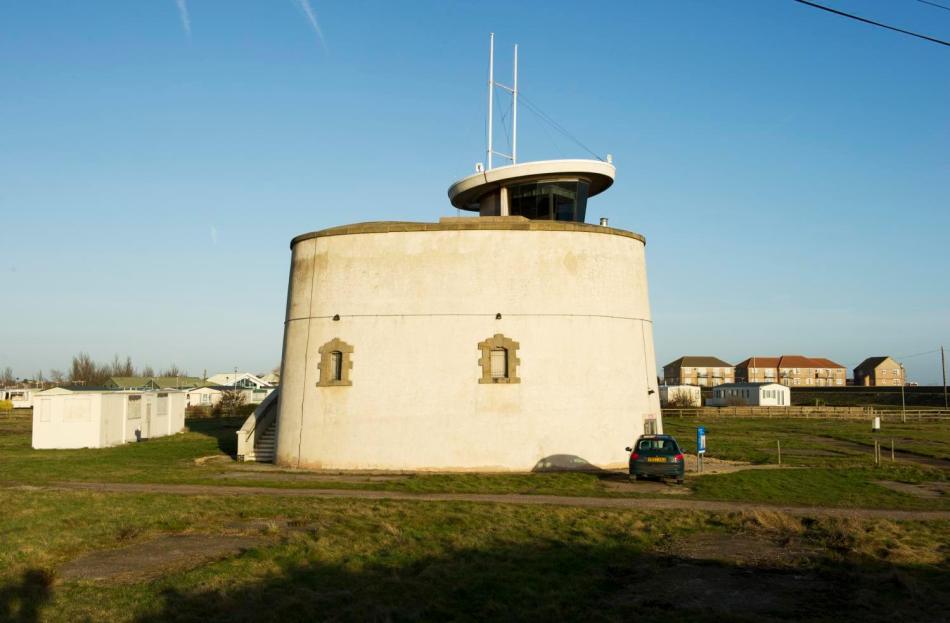
In East Sussex you can visit Martello Tower No.74 at Seaford which has been adapted as a museum by the Seaford Museum and Heritage Society. In Essex, at Martello Tower D at Jaywick visitors can explore an exhibition on the ground floor, get up close to a replica cannon, and enjoy wonderful views across the sea from the roof.
Further reading