An instant USA Today bestseller, The Women’s Orchestra of Auschwitz by Anne Sebba is a vivid portrait of the disparate women who came together to form an orchestra in order to survive the horrors of Auschwitz. Read on for a featured excerpt!
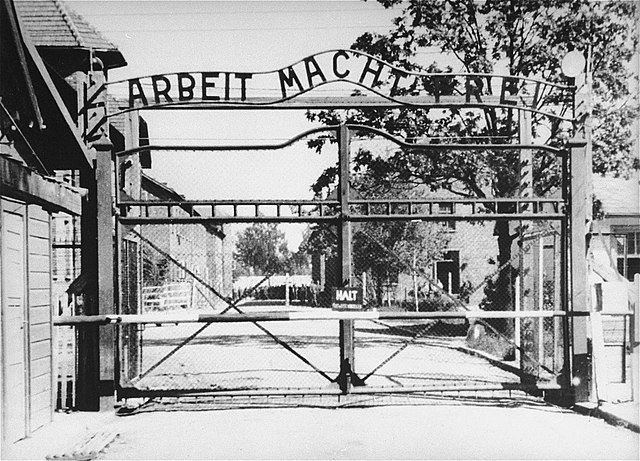
The success of the men’s orchestra, smaller than the big symphony orchestra in Auschwitz I and known as the Lagerkapelle (or camp chamber ensemble) under Laks’s direction, was likely a major source of inspiration for Maria Mandl’s idea to develop a women’s orchestra. The Laks orchestra played in the men’s sector of Birkenau, known as B1b, and Mandl proposed that the women’s orchestra should be housed in a separate but nearby section known as B1a, which would similarly play marches for the female prisoners going out to work.
“I had to organize the orchestra under Mandl,” Helen “Zippi” Spitzer said in an interview in 2000, adding that “she noticed I’m an artist and a musician.”
Zippi’s comments are an interesting indication of the degree to which she had ingratiated herself with Mandl. She had a sure instinct of how best to survive the Nazi extermination system, deploying every aspect of her varied background and wide-ranging abilities to make herself indispensable to Mandl, who had the power of life and death over all the women prisoners. “Even she did not understand the system,” Zippi said of Mandl. “She wanted results. If she asked for 18 or 20 diagrams for Berlin she couldn’t care less when I did it, how I did it, as long as it was done.”
Once, when Zippi was ill with stomach cramps, she needed to lie on her bunk bed until they passed, a serious infringement of camp rules. Mandl found her there, but, instead of punishing Zippi, the normally brutal guard simply touched her gently on the forehead in a motherly way and allowed her to remain. “She knew I did my job and delivered and worked during the night sometimes. So I could have the day free,” Zippi explained in the same interview. “Some kommandos were protected…I didn’t investigate how I knew it. I just did.”
As soon as Mandl discussed her orchestra project, Zippi realized that her claim to be a “musician,” even though she could only play the mandolin to a basic level, would create further dependence. And in this way the ring of mutual manipulation tightened.
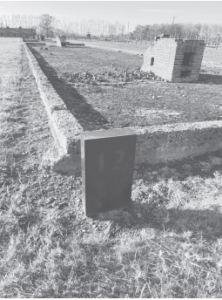
However, establishing an all-female orchestra was bound to be complicated, especially since the decision was not up to Mandl alone. First, she had to clear the project with a senior male SS camp official. In early 1943 she approached Paul Müller, camp director and number two to the commandant, who, fortunately for her, saw there were advantages as it simplified counting the rows of prisoners marching to work and made the imposition of faux military discipline easier. He agreed to help her with the paperwork that was necessary to propose the project to Rudolf Höss, overall commandant of the camp.
Zippi’s role in helping Mandl set up the women’s orchestra was in fact rather more ambiguous than she made it sound. Although Zippi explained that she had already been “very creative” in the camp drawing office and so now grabbed “the chance to talk about music and artistic things,” she nonetheless said that Mandl had initially turned to Katya Singer, a fellow Slovak Zippi had befriended on the journey to Auschwitz, for help with this venture and it was Katya who then approached Zippi. “The camp hierarchy wanted Katya, because she was the top administrative inmate at this time, to go with them to Auschwitz I and make contact with the men there partly to get instruments and partly to discuss procedures…But Katya did not understand music so she suggested I go in her place. So that was the beginning.”
Katya did not speak about the origins of the orchestra in her one known interview but spoke highly of Zippi as her assistant. “Zippi never did anything harmful to anyone. She was always straightforward with me.” In an earlier interview in 1983, Zippi described the origins of the orchestra slightly differently, omitting Katya’s initial role.
“[Mandl] was coming to our camp office and started to discuss how to go about it…we promised her we’d get professional musicians from the card index and if not we’d make inquiries.” Zippi was clearly keen to be involved: “I wanted the contact with the men,” she said, claiming later that she thought they would be a useful source of information for any resistance activities. She thus asked for permission to be included in the group that went to the men’s camp in Auschwitz I “to see how they did it.”
Zippi provided a slightly different version in 1982 of how the women’s orchestra began. “We wanted to see how the men functioned,” she said. “I had a dual role working with and reporting to Katya Singer on the negotiations with the men’s orchestra. They agreed to supply us with violins and all the necessary instruments in abundance. They had their own and there were thousands of instruments from all over Europe from deportees…even the sheet music they brought with them was used by the camp orchestras…after four weeks the orchestra had a barracks. It was Block 12.
In early 1943, while these preliminary discussions were continuing, a specially convened block leaders’ meeting in Birkenau announced the plan to start another orchestra, this time for female-only players. Hanna Szyller (later Palarczyk), deputy block elder in Block 12, attended the meeting and was in no doubt that the idea for an all-female orchestra originated from Mandl. Female block elders, the slightly privileged prisoners whose job was largely to maintain discipline and distribute food, were now instructed to seek out prisoners who could play instruments.
Among the first to volunteer immediately when she heard about the creation of the new orchestra was Zofia Czajkowska, a thirty-six-year-old Polish music teacher, who had arrived on April 27, 1942, from her hometown of Tarnów on the first Polish women’s transport to Auschwitz. Zofia had been tortured in prison before deportation and then spent a year at the camp assigned to the most exhausting physical labor. By early 1943 she was in a weak physical and mental state and saw the orchestra as possibly the only means of escaping from her plight.
The Women’s Orchestra of Auschwitz Copyright © 2025 by Anne Sebba. All rights reserved.
The post Featured Excerpt: The Women’s Orchestra of Auschwitz appeared first on The History Reader.