In her guidebook from 1900, the journalist Dora Jones declared “The life of a bachelor girl in a big city [is] a wonderful and glorious vision … What a thing it must be…to be like Celia in London, who has a career, in music perhaps, or art or journalism, who lives in chambers like a man and has a latchkey…and goes in and out unquestioned, and knows – by sight at least – so many interesting men and women.”
Paving the way for independent female living
The thrill of an independent life was no doubt a draw to London for some young women, while for others it was the necessity of earning a living in the new roles of the turn of the century. The 2025 book ‘Hostel, House and Chambers‘ tells the story of the buildings – hiding in plain sight on the streets of Victorian and Edwardian London – that enabled and housed the intrepid new working woman.
The story begins with a few enterprising schemes of the mid-19th century that paved the way for independent female living, but the movement was established by the large ladies’ residential chambers of the 1880s and 1890s. Women campaigned for their so-called ‘Castle in the Air’ eventually built by limited dividend companies – emphatically not charities – for newly professional gentlewomen. Some were ladies of private means, but most were of slender means, and chambers provided a room (or two) of their own, in respectable surroundings.
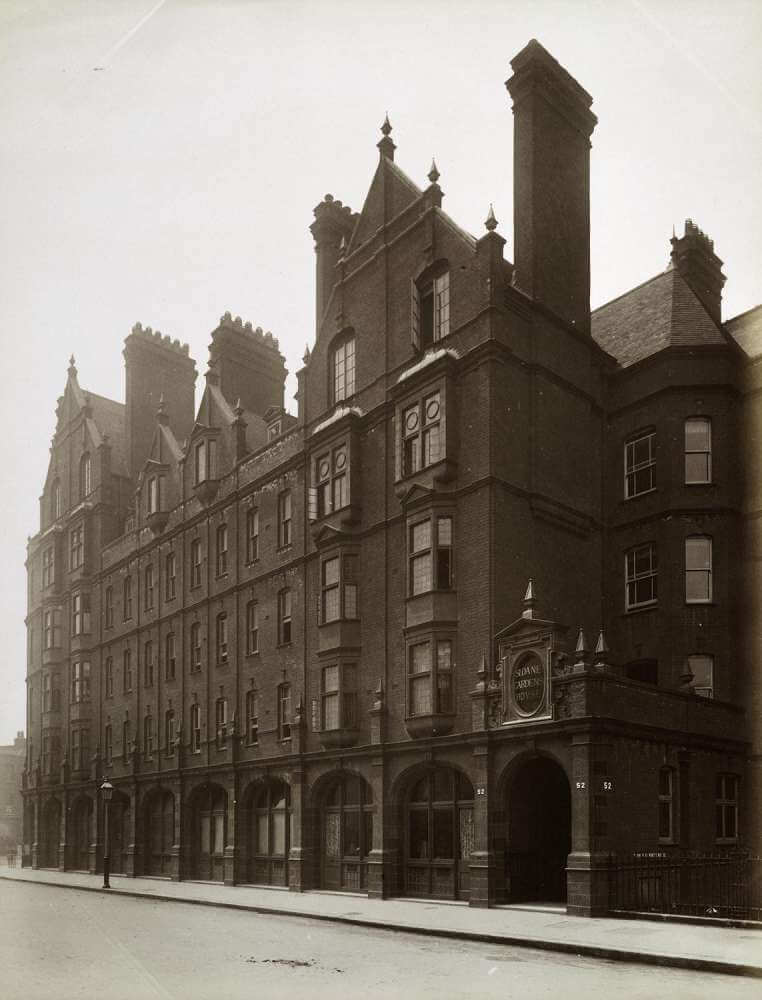
Sloane Gardens House
Sloane Gardens House exemplifies Victorian ladies’ chambers. It was the first project of the Ladies’ Associated Dwellings Company, and an architecturally impressive red brick and terracotta edifice in Chelsea. John T. Lee designed the handsome building which opened for 55 women in 1888 then quickly expanded to more than triple that occupancy by 1890. Suiting its well-heeled neighbourhood, Sloane Gardens House had a lively roofline with finialled gables, tall chimneys and oriel windows in an idiosyncratic Jacobean style. It had ground floor shops, to help with the financing, and featured a lift and fireproofed construction, which meant that each floor could house bedrooms and cubicles for the single lady residents.
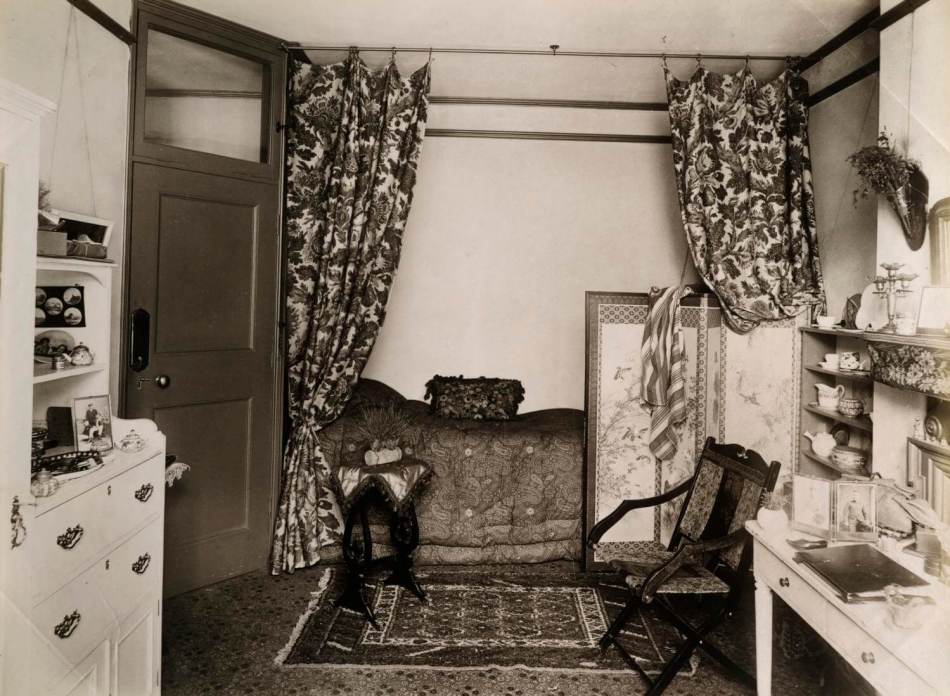
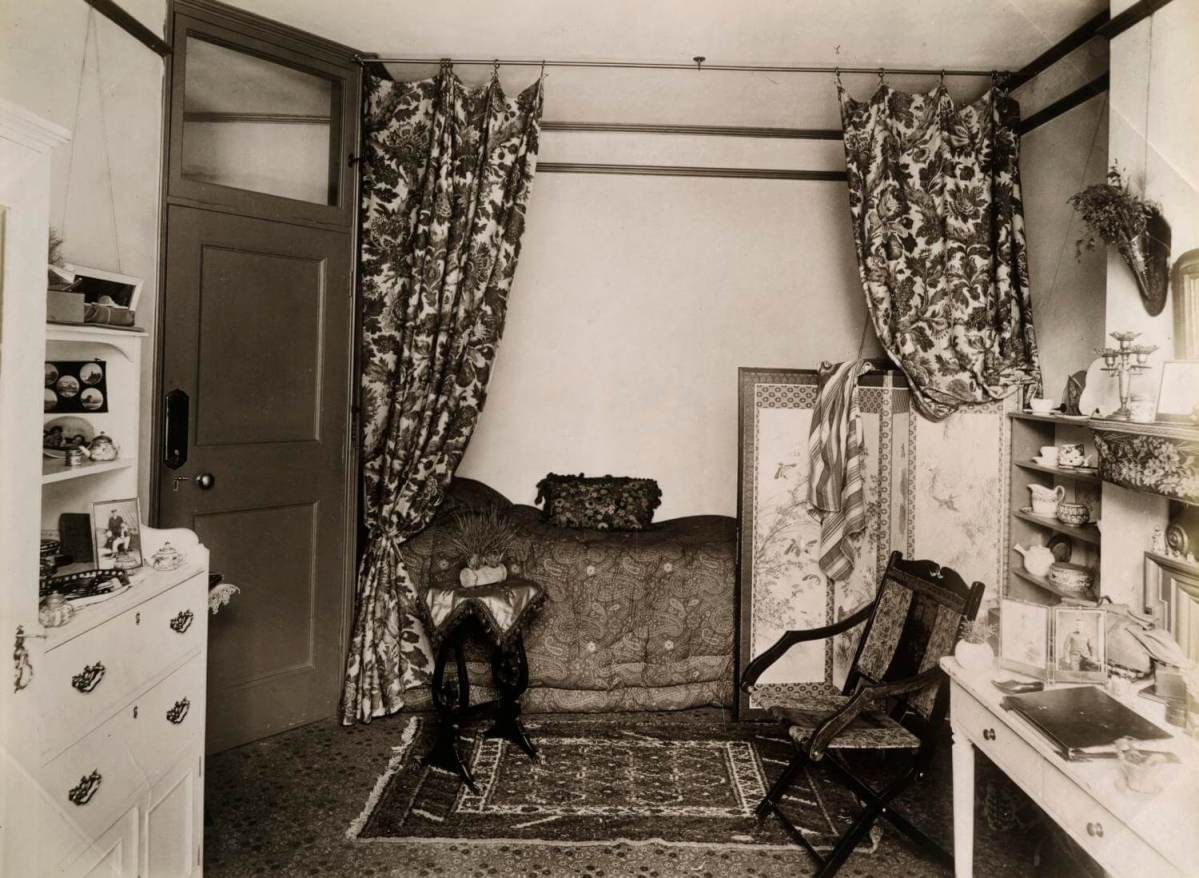
At the opening, Princess Mary Adelaide ‘inspected their very tastefully furnished rooms’, perhaps seeing room B14, which had been photographed for the architect a few days before (see Historic England Archive BL10075 above). It provides a rare glimpse of a bed alcove screened by a curtain, making a snug sleeping space when entertaining guests in the tiny multipurpose room. We see the paisley-print quilt and a striped garment casually slung over the screen, as well as a fireplace providing display space for the precious photographs and delicate trinkets from home. The resident of B14 is unknown to us but she likely shared a profession with the first generation of the House’s residents: artists and photographers, government clerks and civil service typists, secretaries and journalists, a political speaker and organiser, a chemist and a librarian.
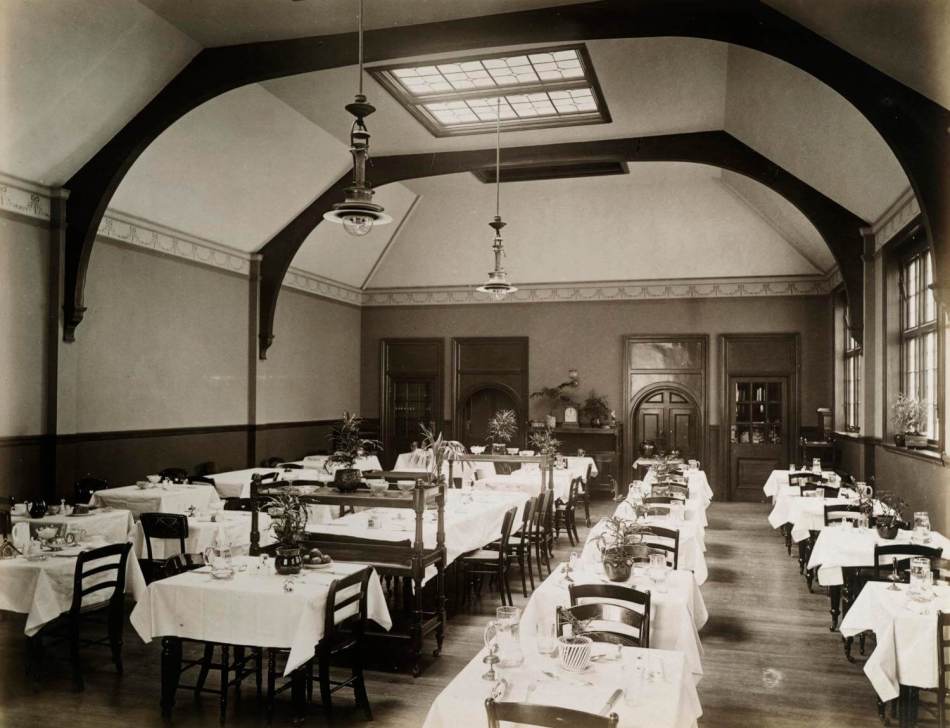
The serviced building provided the residents with genteel communal rooms, including a library, several sitting rooms and music rooms for practising. They took their meals in a large communal dining room which was photographed before the formal opening, with white tablecloths, potted plants and silver salt cellars, all under a lantern, arched trusses, electric lights and a stencilled frieze (See Historic England Archive BL10074 below).
York Street and Chenies Chambers
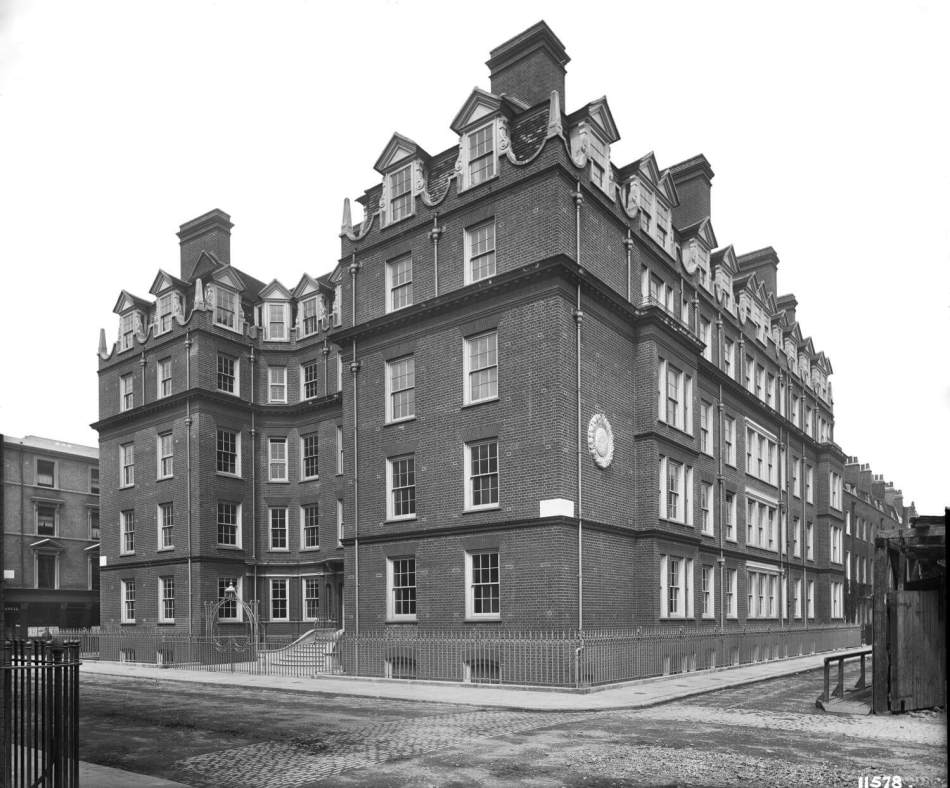
Other ladies’ chambers followed in a similar vein, including York Street (see Historic England Archive BL11578 below) and Chenies Street Chambers funded by the Ladies’ Residential Chambers Company Ltd. These had more generous room arrangements and pioneered space for bicycles, which became a hallmark of the Edwardian hostels that followed.
It was this next generation of hostels that were radically new – taking the model of London’s ladies’ chambers, and vast men’s lodging houses, to build hostels for the women who flooded London after 1900 to work in new offices, telephone exchanges, stores. They needed somewhere safe and respectable to live, on their own, albeit in the company of 50-200 others.
Brabazon House
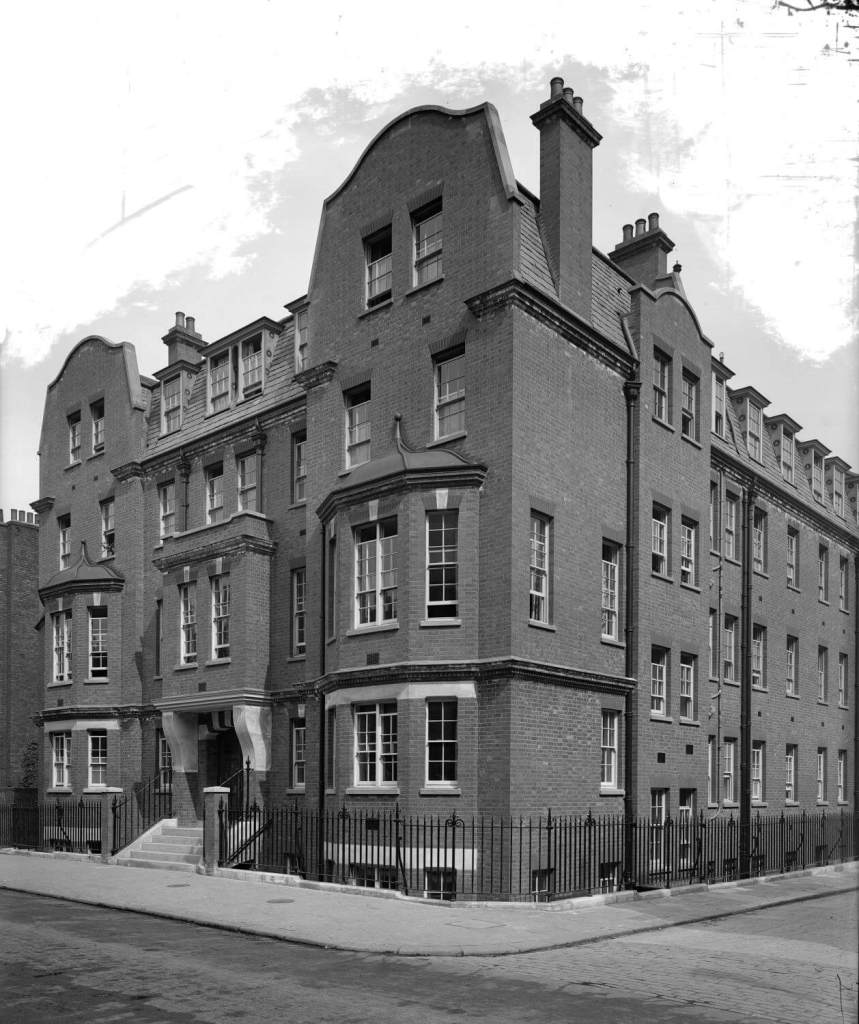
The first, celebrated, purpose-built residence on a large scale for lower-waged working women was Brabazon House, opened in Pimlico in 1902. It was funded by the Brabazon House Company Limited, a business initiative of Lady Brabazon, who had run a converted hostel of the same name in Bloomsbury. The architect was Robert Stephen Ayling, who pioneered and fine-tuned the design of many hostels in London neighbourhoods.
The architectural flair (see Historic England Archive BL17208 below) was concentrated on the façade with bay windows and oriels, Dutch gables and ogee copper roofs. The return elevation, however, was much plainer with many narrow windows that hinted at the high density accommodation inside.
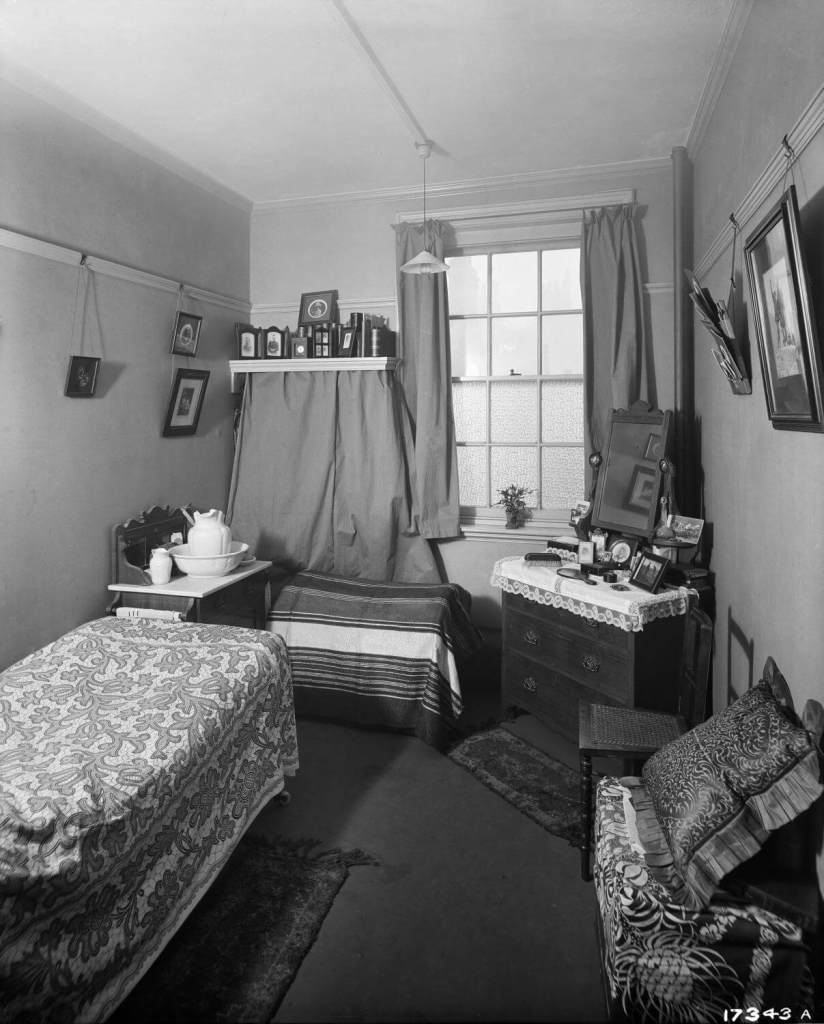
Here were a mix of small bedrooms or cubicles to suit a range of small budgets, each with a single bed, a chest of drawers and a washstand. The residents efficiently and lovingly decked out their rooms or cublicles with photographs, knick knacks and textiles (See Historic England Archive BL17343A below).
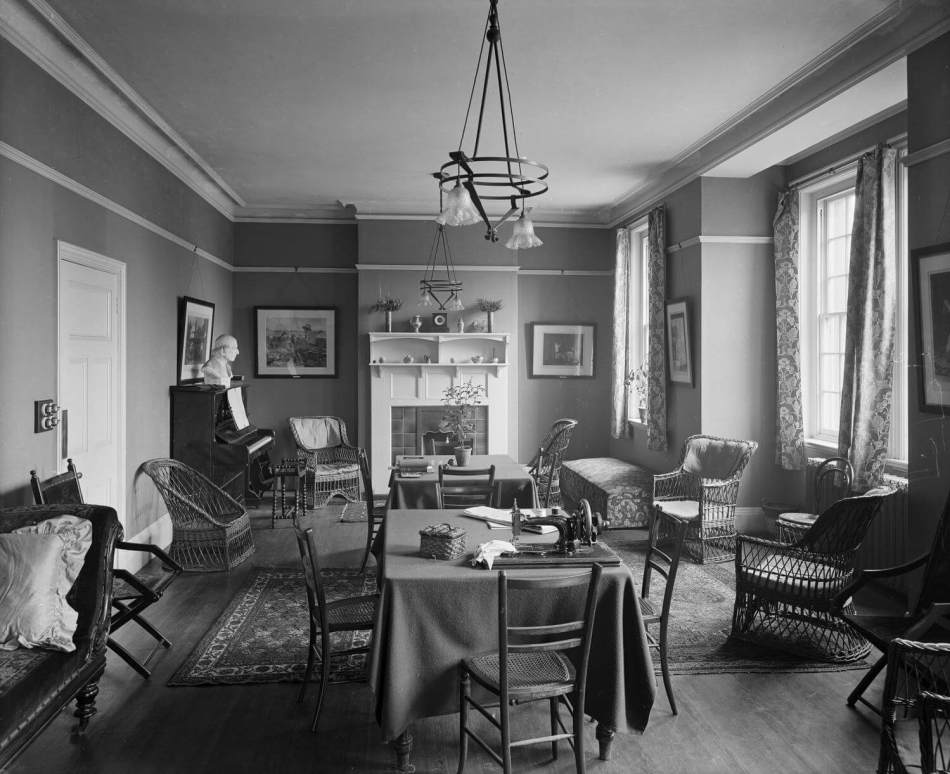
The majority of Brabazon House’s first residents were secretaries and clerks in central London’s government and commercial offices. The women balanced their busy working days, and their small private spaces, with time together in the comfortable shared dining and sitting rooms. Here they could read the newspaper in wicker chairs, play the upright piano, or sew, write and paint at tables, as well as enjoy each others’ company (Historic England Archive BL17342).
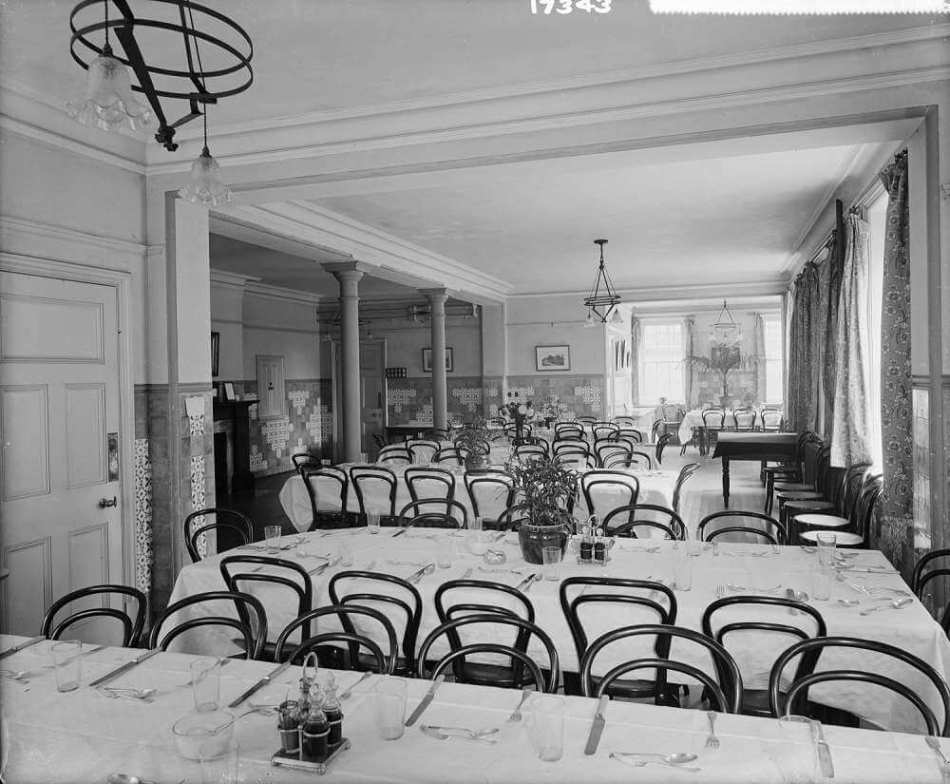
The residents ate together and no doubt conversed on issues of the day in large basement dining rooms with tiled walls, on which the impressive superintendent, Jeannette Lindsey, left a tantalisingly not-quite-legible note of instruction (See Historic England Archive BL17343 below).
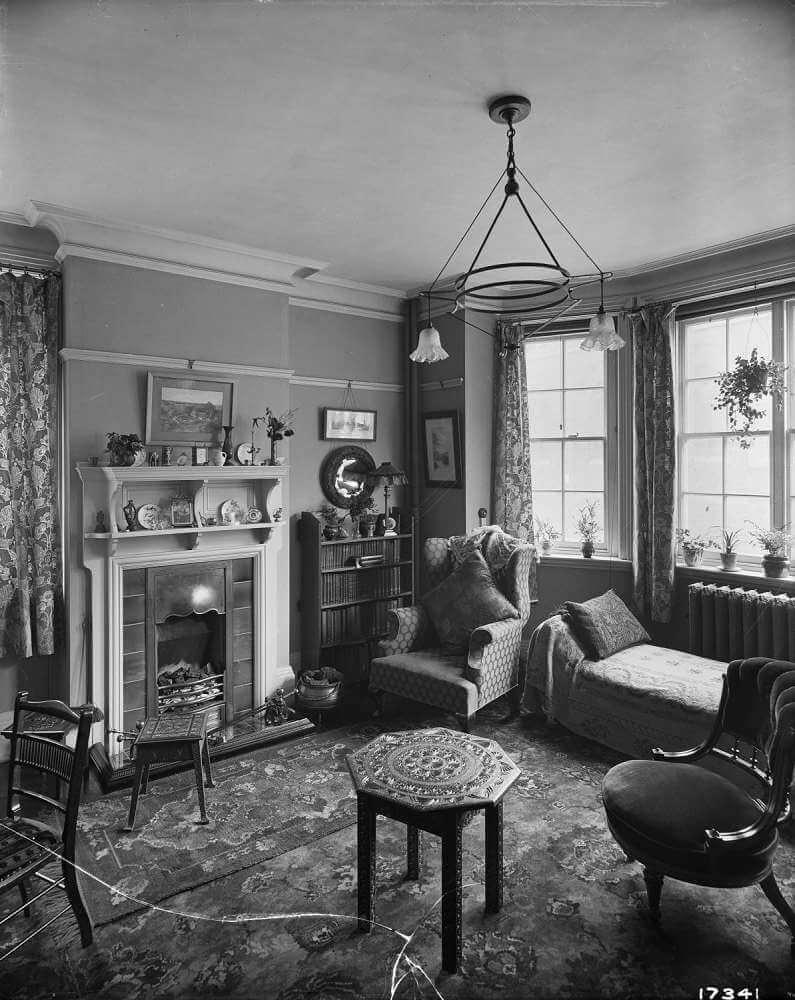
Lindsey, who had worked at the previous Brabazon House, set up this hostel and the Company’s next projects, lived in a well-placed ground floor room. From here she could oversee the affairs of the House and perhaps provide some reassurance to investors, residents and their families. Like the communal rooms, with framed pictures and elegant furniture, Lindsey’s own bedroom and sitting room were the epitome of a middle-class domestic set up (See Historic England Archive BL17341 below).
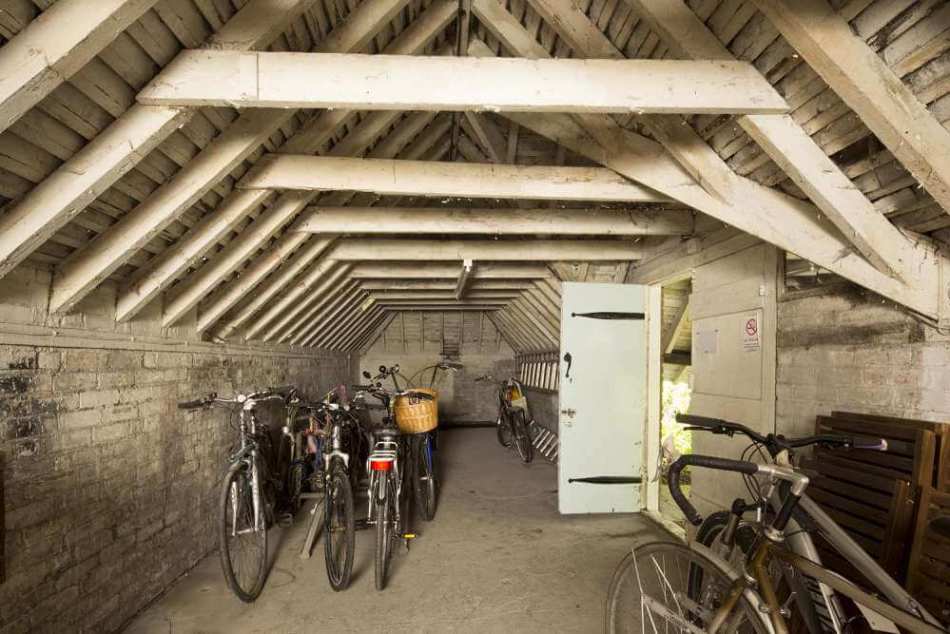
In the basement of Brabazon House, Ayling pioneered an exciting new amenity, accessed by a handy ‘Bicycle Slope’ down from the pavement. There had been external stores in the late-19th century but bringing bicycles into their own storage room within the building formalised the new custom of women cycling and associated it with their independent living in London. It also fulfilled one of the aspirations of the ‘Castle in the Air’ when the activist Emily Hobhouse specified that ‘Bicycles (and a place to clean them – the suggestion of an architect) would not be forgotten’ in the planning of women’s residences.
Brabazon House was the first of many architect-designed women’s hostels built in the next two decades, each making their own mark in the urban landscape, each housing dozens to hundreds of working women in smart Queen Anne, Edwardian Baroque or Arts and Crafts style residences.
Life in chambers and hostels
These two residences – a Victorian chambers and an Edwardian hostel – illustrate the 170 or so residences for working women built in Bloomsbury, Fitzrovia, Pimlico, Chelsea, Kensington and other places. Women’s hostels, houses and chambers gave them a foothold and a presence in the city as they went about their work, their business and their lives. In this period of great change, Edwardian London took on new sounds of tapping typewriters, ringing bicycle bells and the swish of long skirts as women navigated an urban landscape where they newly felt at home. We can imagine the scenes of businesswomen travelling to and from work in the neighbourhoods where clusters of the chambers and hostels took root, ensuring that their very presence was shifting the opportunities for their peers and the generations to follow.
Women now took their place in cities through their new forms of labour – with courage and ambition and by necessity – in offices, exchanges, workshops and stores. They were bolstered by these new residences, exclusively for them, which brought relative comfort, camaraderie and respite at the end of the working day. Small private spaces with a metal framed bed and a jug and basin were set against larger, cheerful communal sitting and dining rooms. These provided space for each resident – with few resources of her own, but with gumption and companionship in spades – to find her way, supported by fellow female residents and staff in this self-sustaining model.
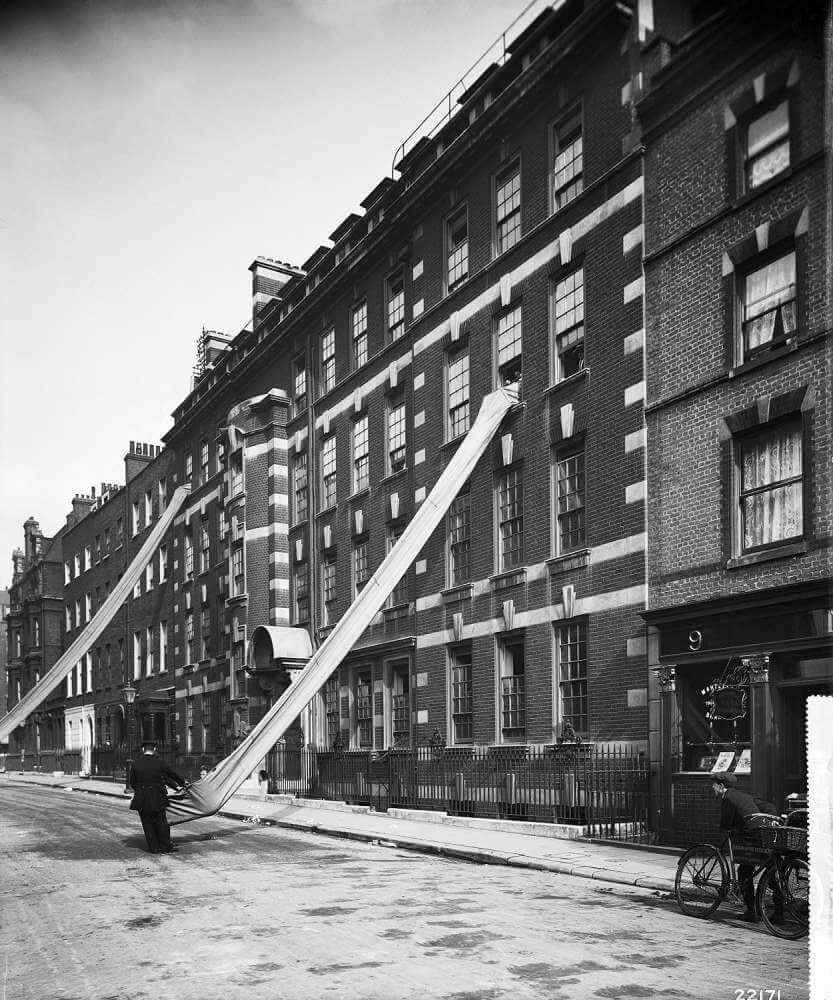
Hostel life was not luxurious or spacious but it provided a foothold and a place of mutual support and camaraderie. A rare glimpse of joyful abandon is shown in this extraordinary scene of hostel residents demonstrating the canvas fire escape shutes from the upper floors of the Homes for Working Girls’ Hyde House hostel in 1913 (See Historic England Archive BL22171 above). The fire brigade assisted the practice session, while a bicycle delivery boy looked on in astonishment.
Loss and survival
Sloane Gardens House is now a smart members’ club and Brabazon House was sadly demolished in the early 2000s. Many other residences survive, now upmarket hotels, flats, backpackers’ hostels and NHS and charitable accommodation.
A handful are listed including:
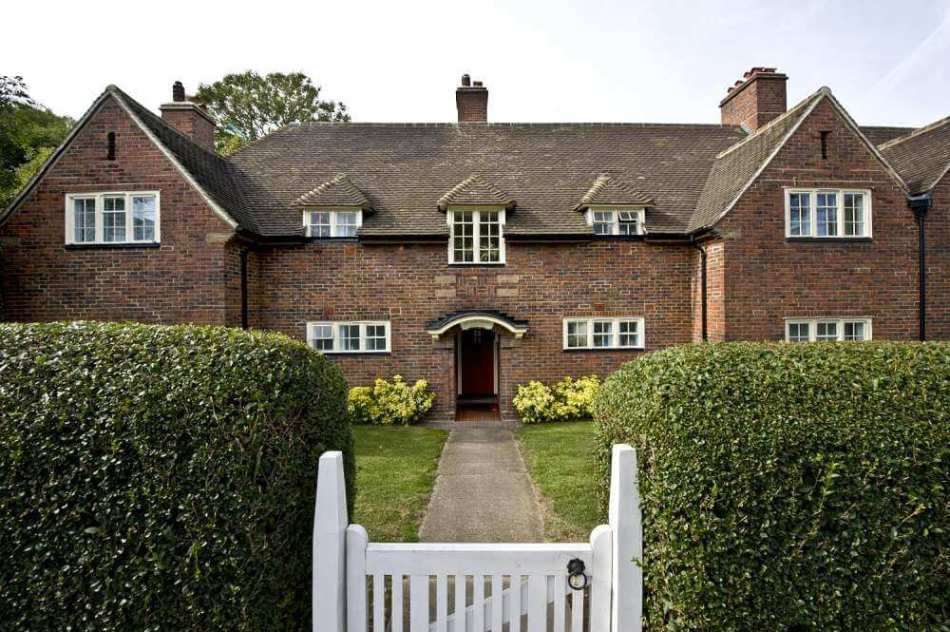
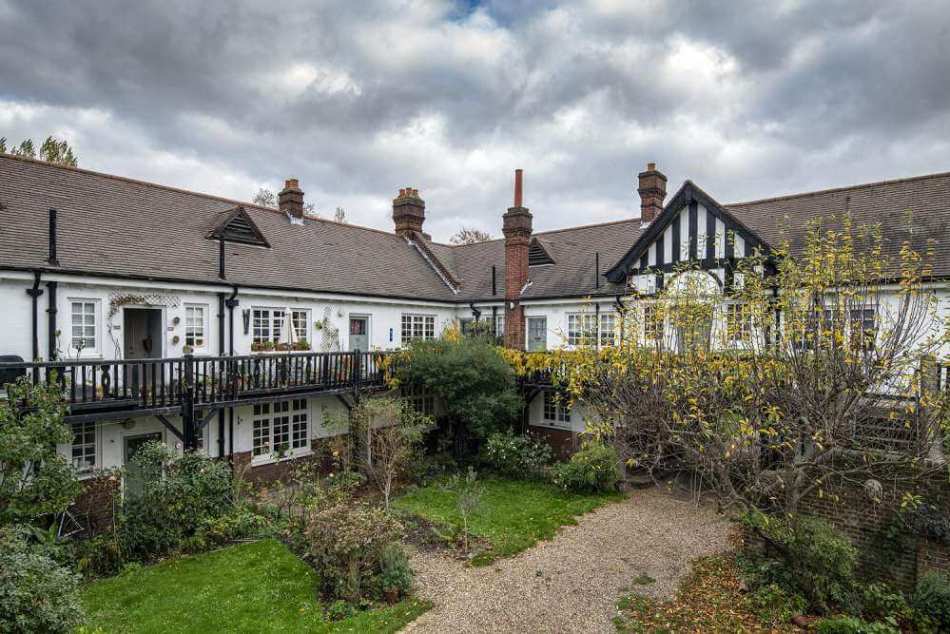
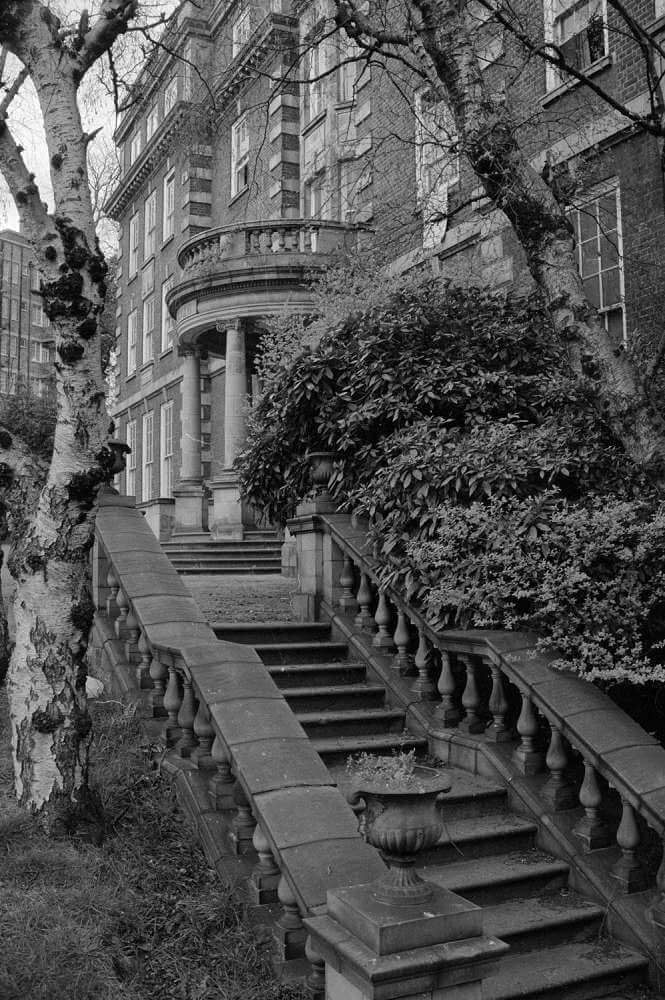
Special buildings for pioneering lives
I wrote Hostel, House and Chambers with gratitude to those who had the visions and led the campaigns, the architects who designed the buildings, and the women who championed, serviced and lived their own pioneering lives in these special buildings, paving the way for later generations of working women to live, work and thrive in London.