Audio Version of “Ndee Trails.” Read by John Welch.
(November 25, 2025)—I’ve been hot on the trail of Ndee (Western Apache) archaeology since the mid-1980s, dedicating many days and weeks to following documentary leads in the rugged uplands above the Salt River. The Ndee’s traditional “leave no trace” land-use ethic, coupled with container and shelter technologies using organic materials (for example, baskets and hide containers more so than pottery, and temporary structures rather than stone or adobe rooms), is a recipe for disappointment. Big finds have been few, far between, and often too sensitive for publication.
In other words, there’s a big disconnect between the super-abundance of oral histories and military reports that confirm that there were hundreds of Apache families living on White Mountain Apache land, and the very meagre amount of physical evidence.
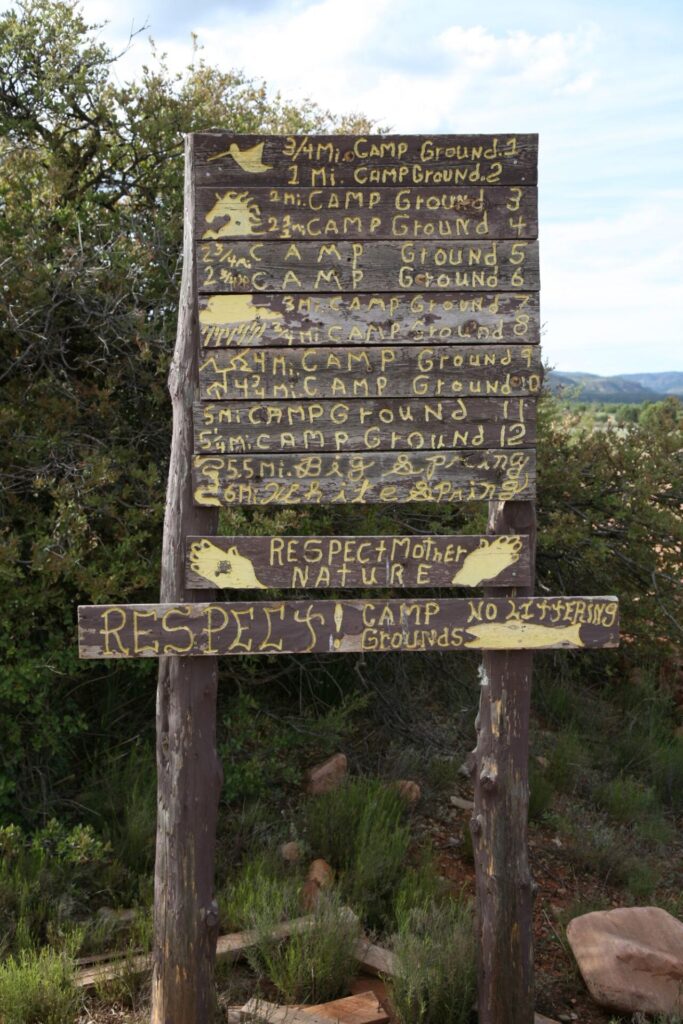
I’m too often faster on my feet than between my ears, so it wasn’t until about 15 years ago that it occurred to me that the single most common Ndee “site” type is trail segments. Until just over a century ago, pedestrian-equestrian trails were the sole means of travel and transport throughout the rugged vastness of Ndee Territory. Ndee trails connect places, oral traditions, knowledge, and landscape-level learning.
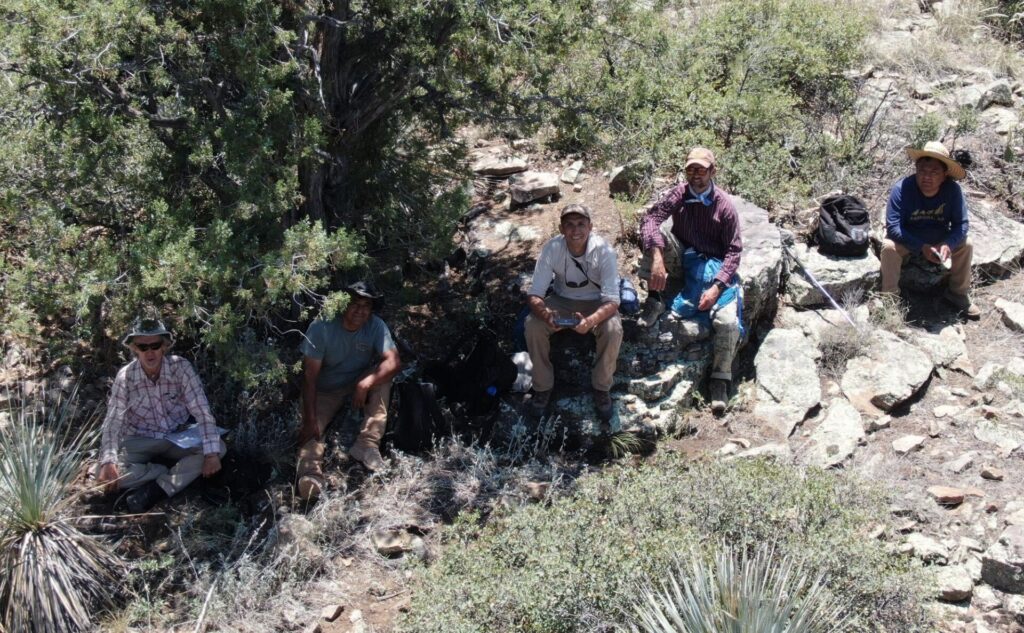
With help from White Mountain Apache Tribe Historic Preservation Officer Mark Altaha, his assistant Gregg Henry, ace photographer Bill Hatcher, and other colleagues, we’ve gotten busy following, mapping, and documenting trails. It’s a big kick to get together and see who can still shoulder a heavy pack and navigate the canyons and ridges, following the faint traces of the walkers and riders from days not so very long ago.
These trail features are proving to be rich sources of information, and the work has prompted Gregg to seek information from older cowboys and others familiar with the outback. Gregg has added some really compelling place names and stories to the atlas we are building. “Mist blowing back up” is the translation of a place name on a trail in the Salt River Canyon where it crosses a vertical slot and the prevailing updrafts capture most of the trickle from a little seep.
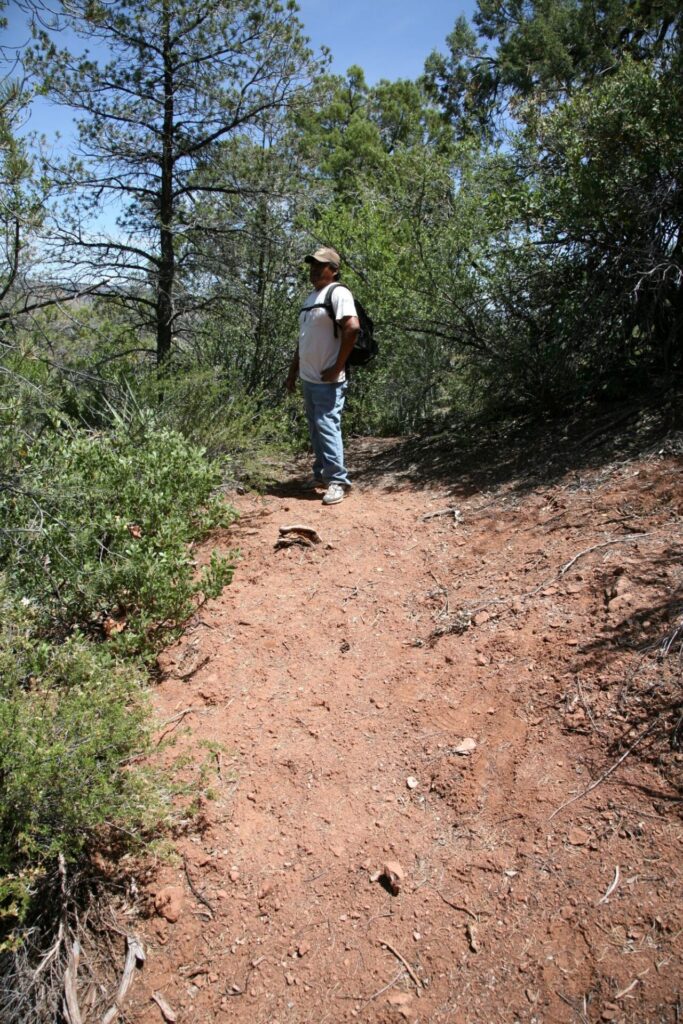
One thing I really appreciate is that there’s almost no objects to document or collect, so not much paperwork. Best of all, every trail so far leads to a seldom-visited place of inspiring beauty!
Every day is a good day to count our blessings—Gozhóó Doleeł!
DONATE TODAY
The post Ndee Trails appeared first on Archaeology Southwest.