Audio version of “Routes and Roots.” Written and read by Steve Nash.
(December 12, 2025)—In 1946, Bobby Troupe wrote the memorable song “(Get Your Kicks On) Route 66,” which was popularized by Nat King Cole, Chuck Berry, the Rolling Stones, and many, many others over the years. Honestly, there’s not a ton of depth to the song—it just lists the cities and towns that you would drive through while making the journey west from Chicago to California. Notable among the towns listed, at least from a Southwestern archaeology perspective, are Gallup, New Mexico, and Flagstaff, Arizona.
In 1971, Aliotta, Haynes, and Jeremiah released an addictive little ditty entitled “Lake Shore Drive.” It’s about the eponymous Chicago roadway that runs for 18 miles along Lake Michigan. It’s at once descriptive and judgmental (“from rats on up to riches”) and biased towards the northern half of Lake Shore Drive, which is particularly irksome for those of us (like Kate, our VP of Communications, and me!) from the South Side. From an archaeological perspective, that northern bias means that Aliotta, Haynes, and Jeremiah, would never have passed the Field Museum, which is located just south of downtown and used to be between (yes, between) the north- and southbound lanes of Lake Shore Drive.

Three years ago, a musician named Dave Alvin released a wonderful new song about the Southwest Chief train, which runs from Chicago to Los Angeles, more or less paralleling Route 66.
Why the musical interlude here?
My trail has very much followed that of archaeologist Paul Sidney Martin (1898–1974), who worked at the Field Museum in Chicago from 1929 until 1972. Though I don’t know that I ever met Martin, my father worked at the Field Museum from 1962 to 1969, where he edited Martin’s book on the excavations at Carter Ranch Pueblo, as well as other Martin-related publications. I may have met him when I was simply too young to remember.
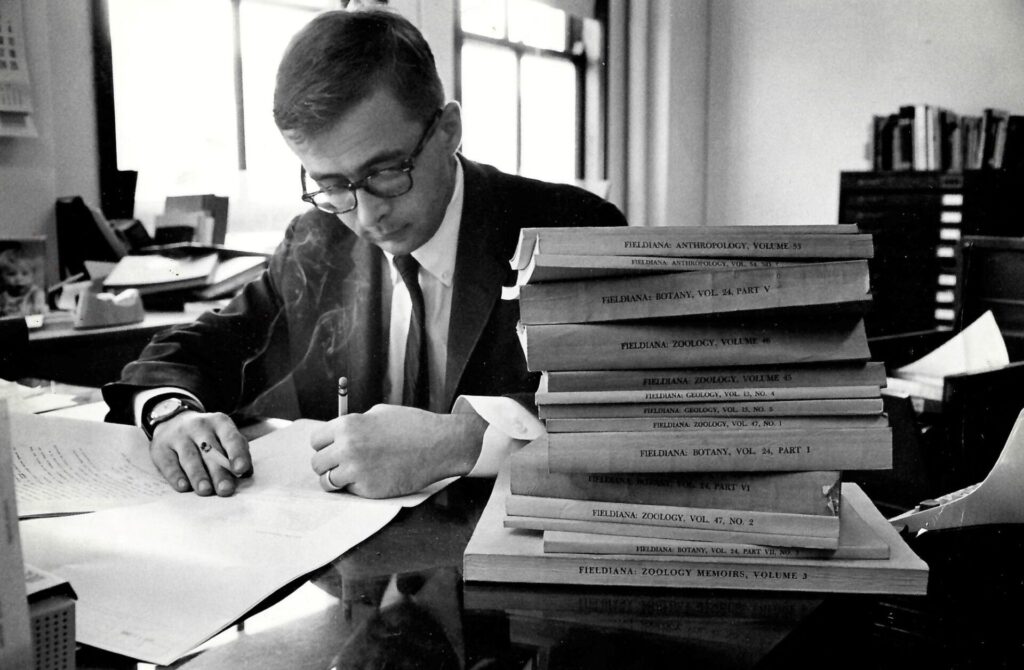
But then I myself worked at the Field Museum, from 1997 to 2006. During that time, I cataloged the 600,000-piece archaeological collection amassed by Martin during his illustrious career.
He earned his undergraduate and graduate degrees at the University of Chicago, where my mother worked for nearly four decades. A lifelong bachelor, Martin lived for many years at the Quadrangle Club at the University of Chicago (UofC), where he rubbed elbows with world-class scholars on a daily basis. While living in the Hyde Park neighborhood, where I grew up, Martin’s daily commute to the Field Museum took him north on Lake Shore Drive and then back again. He later moved back to his home town of Winnetka, Illinois, in the northern suburbs, on Lake Michigan. His commute from there was also on Lake Shore Drive, but on the stretch that Aliotta, Haynes, and Jeremiah sang about.
From 1927 until 1972, when he moved to Tucson, Arizona, Martin took the Santa Fe Super Chief train (originally named The Chief until 1938; now the Amtrak Southwest Chief) or (occasionally) drove along Route 66 to and from the American Southwest to conduct archaeological research in southwestern Colorado, west-central New Mexico, and east-central Arizona. Although he was exceedingly partial to classical music, and indeed served as the organist at UofC’s Rockefeller Chapel for many years, he would have known the Route 66 song.
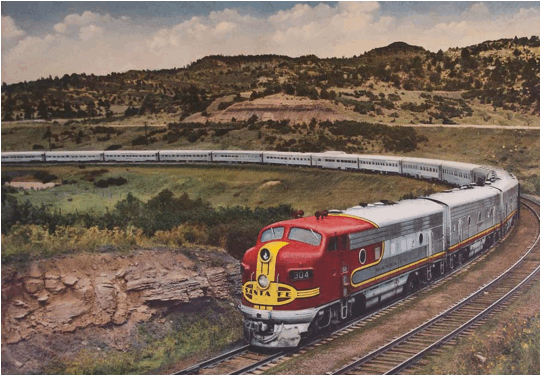
Between 1939 and 1955, Martin got off the Super Chief in Gallup, where he rented cars and trucks from Gurley Motors, and obtained other provisions before heading to the mountain town of Reserve, New Mexico. From 1956 until 1972, he occasionally disembarked in Winslow, because it was closer to the town of Vernon, Arizona, where his next field project was based. The contacts Martin developed in Gallup over two decades were too deep to ignore—that was his preferred departure point.
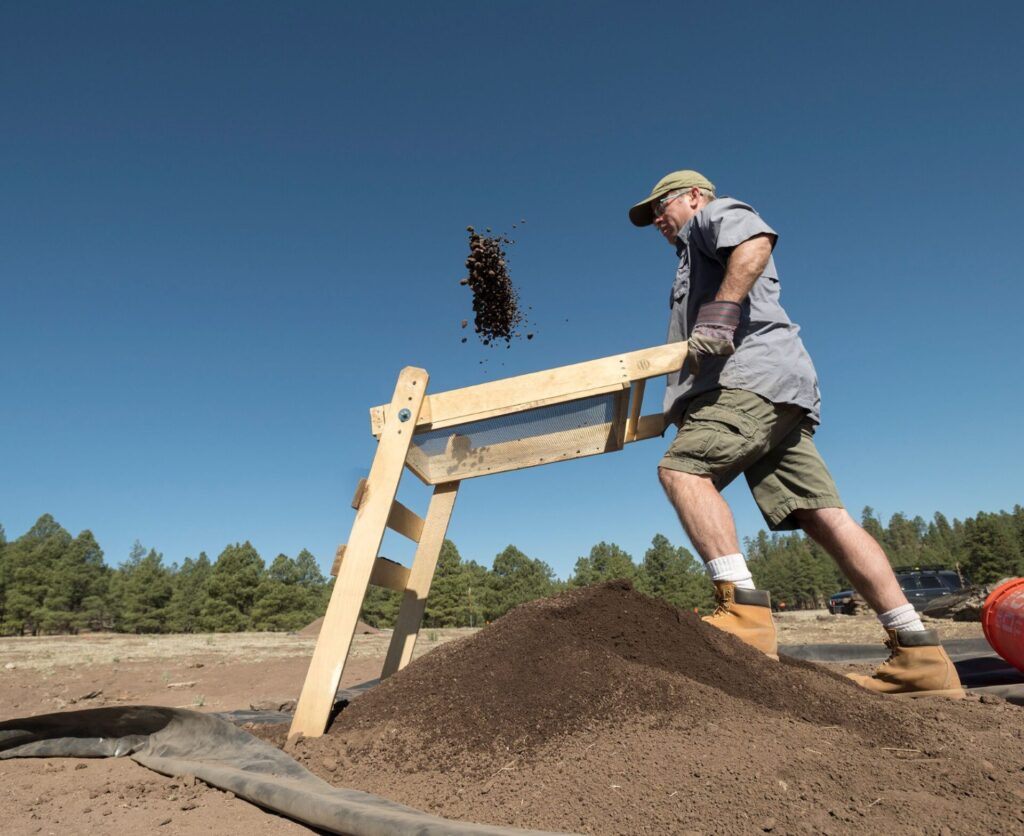
Since 2013, I have been working in the greater Reserve, New Mexico region, (re-)documenting the sites that Martin excavated for the Field Museum. In 2026, Preservation Archaeologist Karen Schollmeyer and I are going to spend two weeks there, preparing for our new archaeological field school that will begin accepting students in 2027. Our hope is that this new field school will include collections-based work in Chicago. Perhaps we can take the students on the Southwest Chief just for old time’s sake!
Trails manifest themselves in many ways. Across space, through time, and between people that span multiple generations. Personally, I love my connection to the American Southwest, and I thank my elders and colleagues for ensuring that the routes I have followed are at once full of meaning and potential.
DONATE TODAY
The post Routes and Roots appeared first on Archaeology Southwest.