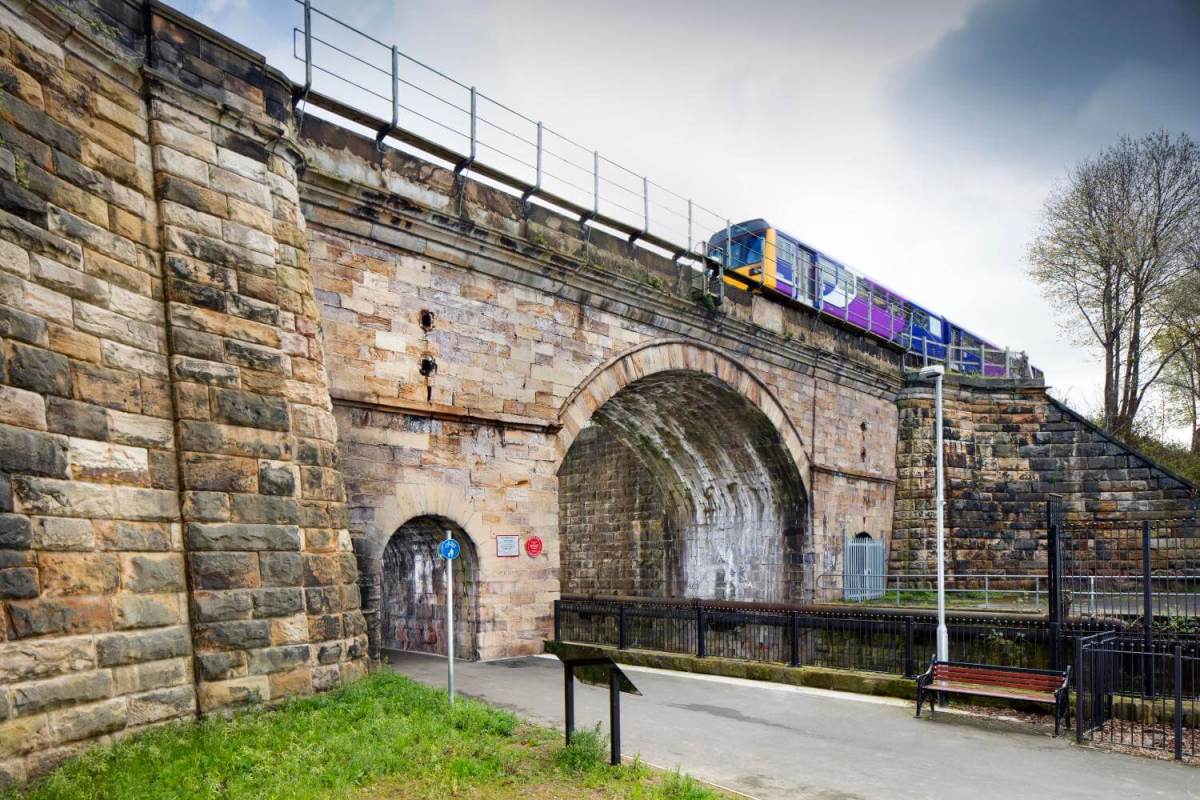
When the railway expanded in Britain in the 19th century, it transformed the way people lived, worked and socialised.
Heavy goods could be transported faster than before, rural areas now had access to urban centres and new employment opportunities, and travel and leisure activities became more accessible for most people.
But how and when did people first start using the railways?
The Stockton and Darlington Railway (S&DR) became the world’s first standard-gauge, steam-hauled public railway when it opened in 1825.
27 September 2025 marks its bicentenary, and Railway 200 is a year-long, nationwide campaign to celebrate 200 years of the modern railway.
Explore what made the S&DR special and discover how you can experience it in the historic environment today.
Early railways in England and Wales
Railways had been used in the mining industry since at least the 16th century to move materials from mines and quarries for onward transport to market. On fairly level terrain, these were simple wooden rails with wagons pulled by horses, but rope-hauled incline planes could be used on steep gradients.
Timber-railed, horse-drawn wagonways were extensive by the 18th century, with iron gradually replacing timber by 1800, which also saw the first railways being built for public use.
The first use of a steam locomotive was in South Wales in 1804, and the first (horse-drawn) passenger service also started in South Wales in 1807.
When did the Stockton and Darlington Railway open?
On 27 September 1825, the S&DR built on early railway technology and changed the world of travel. It brought together many strands of existing railway technology to create a remarkably pioneering endeavour.
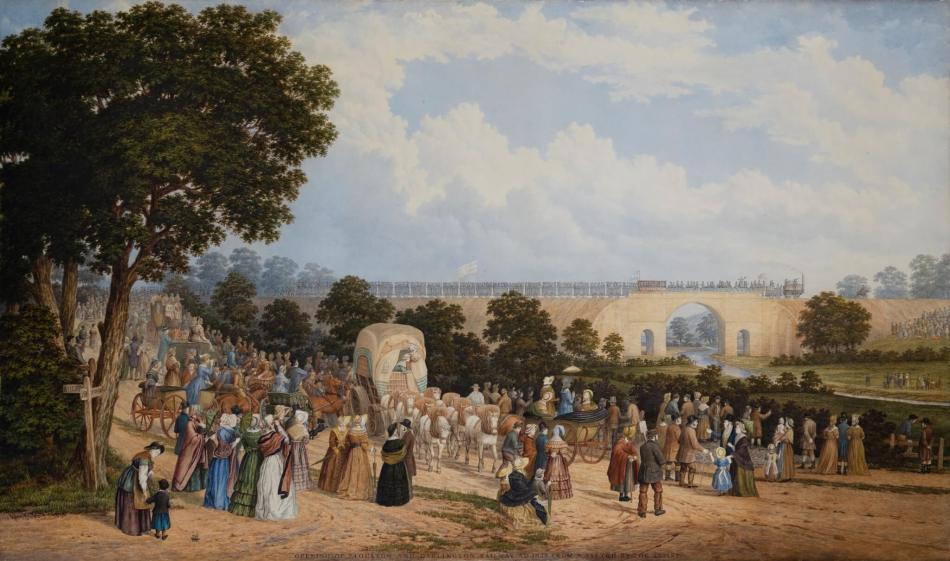
At the railway’s hilly western end, coal wagons were rope-hauled up inclines by stationary engines and pulled by horses along the level.
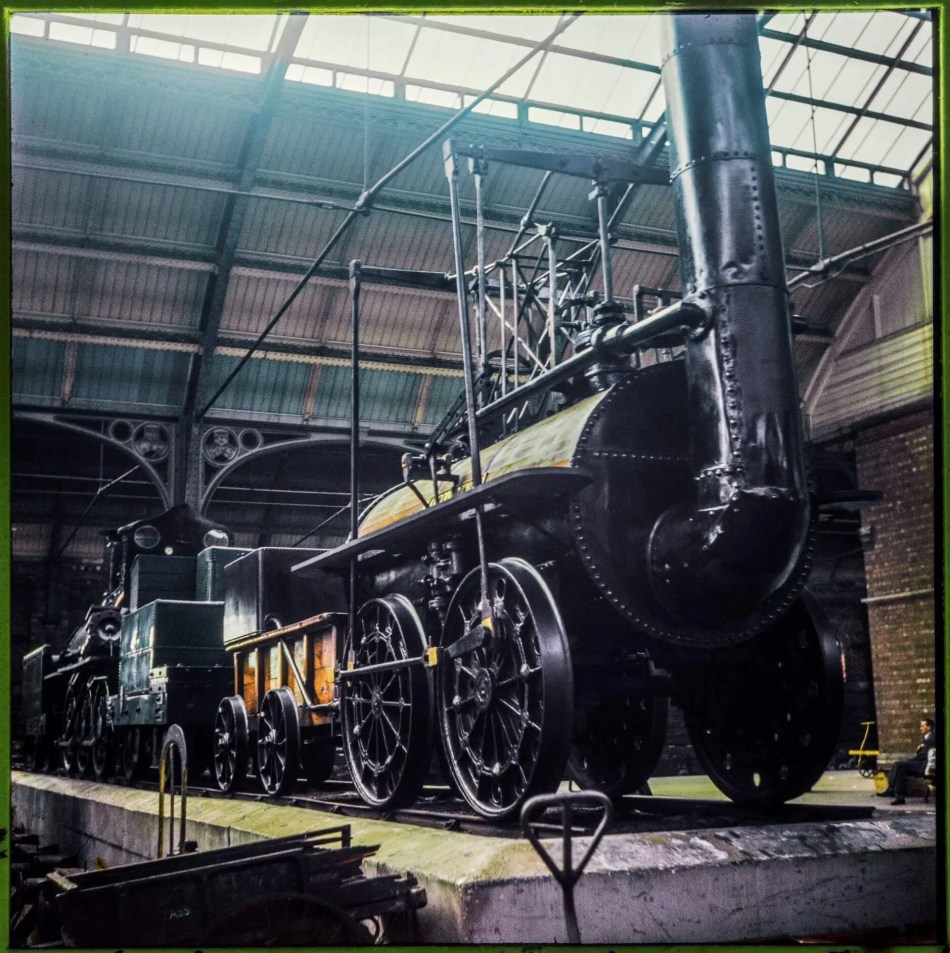
At New Shildon, a train of wagons was formed, including the passenger coach known as the Experiment. This train, carrying 600 passengers and tonnes of goods, was then hauled by Stephenson’s engine Locomotion to Stockton.
Why was the Stockton and Darlington Railway built?
The railway connected the Durham coal field to the west of Bishop Auckland with the market town of Darlington and the port of Stockton-on-Tees, where goods could be loaded onto boats. This reduced the cost of transporting coal, but it also allowed the carriage of other freight and passengers.
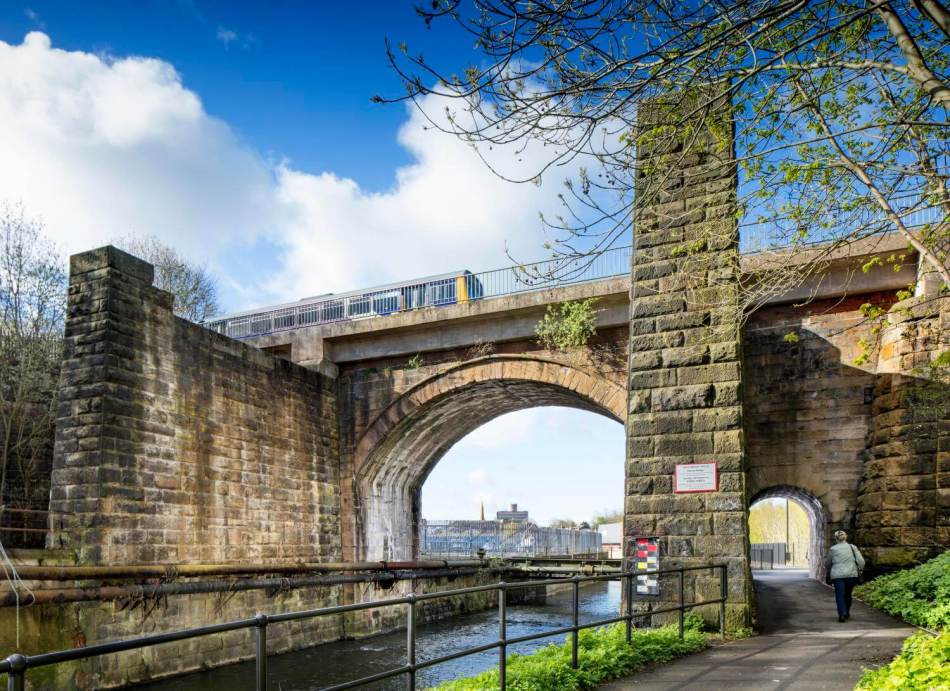
In 1818, businessmen and colliery owners collaborated to promote a horse-drawn railway, which was approved by parliament in 1821.
However, Edward Pease (1767 to 1858), a Quaker who was one of the S&DR’s investors and a Darlington merchant, discussed using steam locomotives with the engineer George Stephenson (1781 to 1848), and so the S&DR was redesigned in 1823 to be steam-hauled for much of its 26 miles.
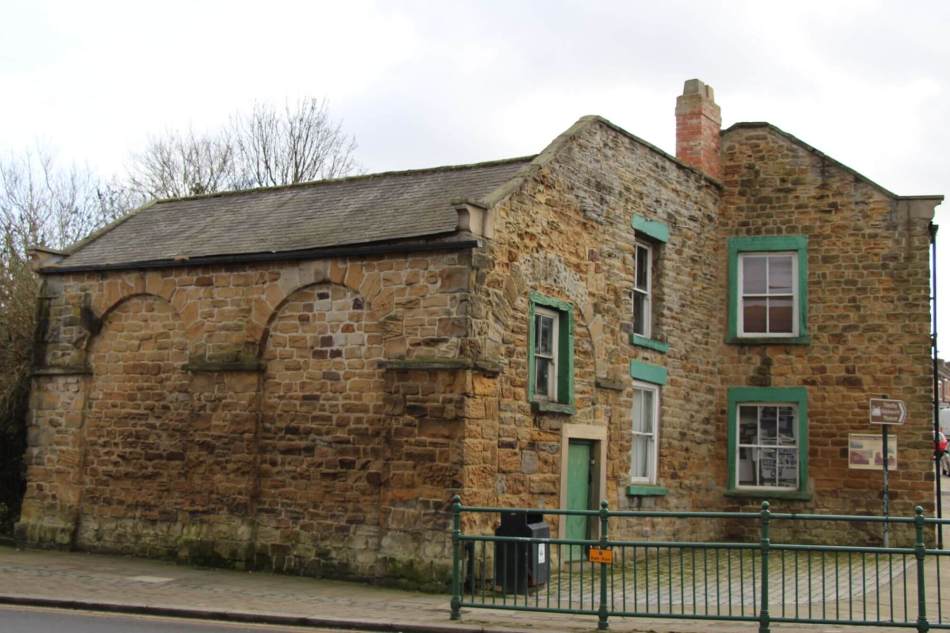
Passengers were initially carried on horse-drawn services, which were independently operated under licence. One of the licence holders was Daniel Adamson, who built a stone coach house to store his coach overnight.
A railway based on coal
Coal made the S&DR profitable, as the railway carried vast quantities of it. The railway was soon extended to the new port of Middlesbrough, built on the river Tees from 1829. Coal, ore and the S&DR led to massive industrial growth on Teesside, feeding the area’s ironworks.
The S&DR needed coal to run its locomotives, too. Coaling stations were built to refill the locomotives’ tenders, and an extensive one survives in Shildon.
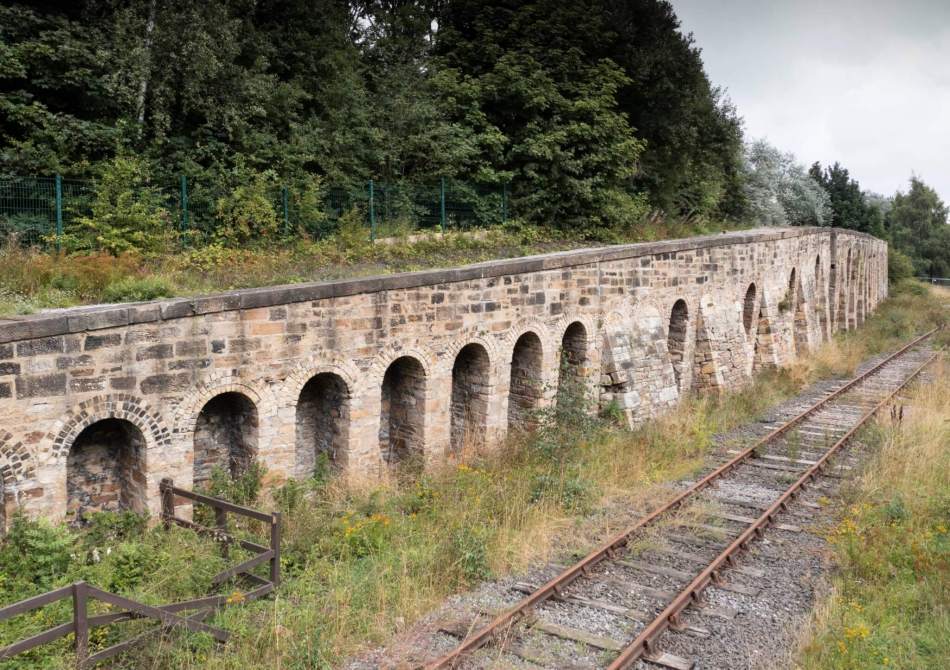
The first railway town in England
New Shildon in County Durham was a new town built on land drained for the railway where several coal lines met, and it was where the S&DR manufactured and serviced steam locomotives and then wagons.
It was also home to the Soho Works where their principal engineer, Timothy Hackworth (1786 to 1850), built locomotives from 1833. The S&DR bought his company in 1855 and combined it with its own.
Employment on the railway and in local coal mines made New Shildon a successful place to live and work, and as it expanded, it joined up with the historic village of Shildon.
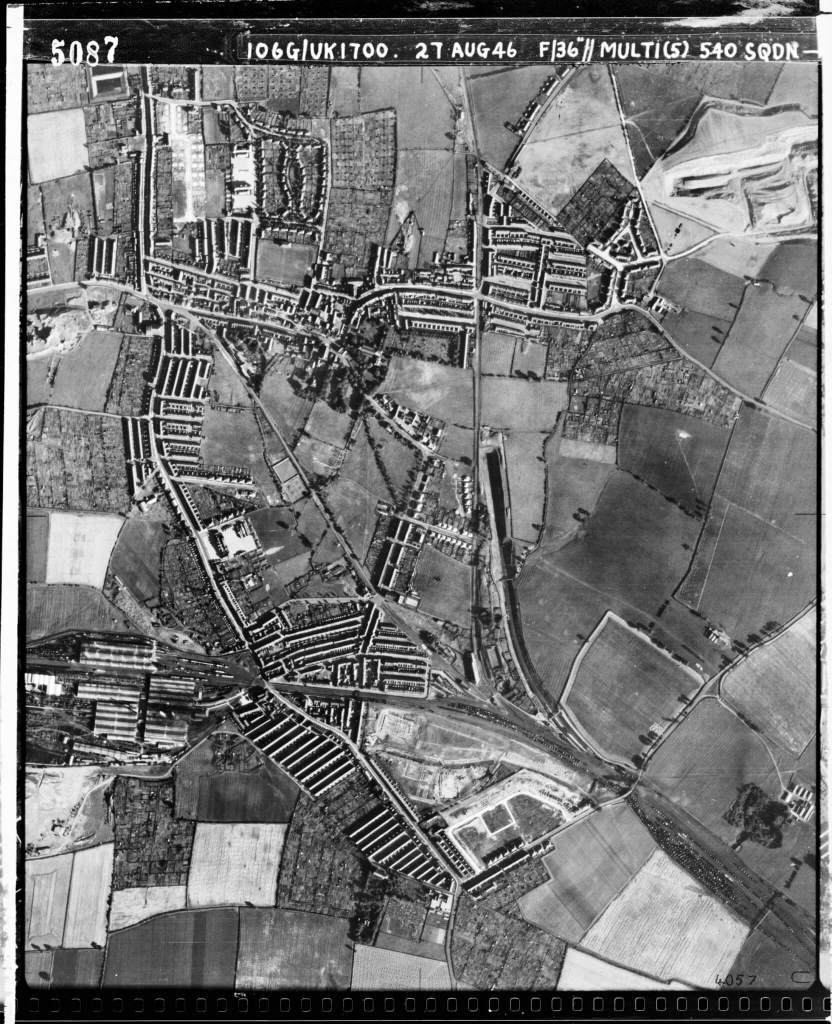
Roads and several branch lines link the 2 parts of Shildon. The pre-1825 village is to the north, and New Shildon was built around the east to west part of the S&DR.
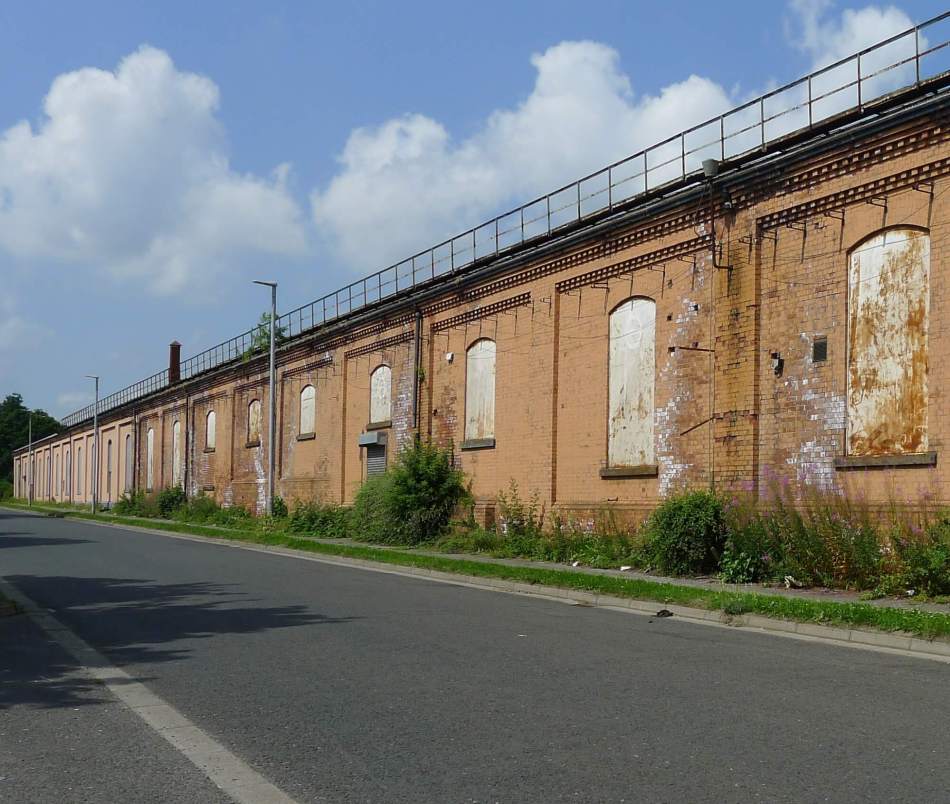
The west of New Shildon features the long buildings of the former wagon works, started by the S&DR and closed in 1984. It is now the Hackworth Industrial Park.
The centre of New Shildon contained rows of housing, the earliest being the 2 triangular blocks on either side of the railway line. To the east was the vast sidings for coal wagons, now home to the National Railway Museum’s Locomotion.
Railway innovation and new building types
In 1825, the S&DR was a complex endeavour. Aspects that are obvious now, such as railway stations, ticketing, booking, signalling, and directly employing or contracting out staff, were thought out in its early years.
Locomotives and wagons needed buildings where they were manufactured, housed and serviced. Goods and aggregates needed places where they could be unloaded and sold. People needed shelter, platforms and stations.
The Goods Depot at Darlington shows how the fledgling public railway innovated, changed and adapted in its early years. In 1827, the company built its first goods depot in Darlington, but by 1833 it was turned into a passenger station.
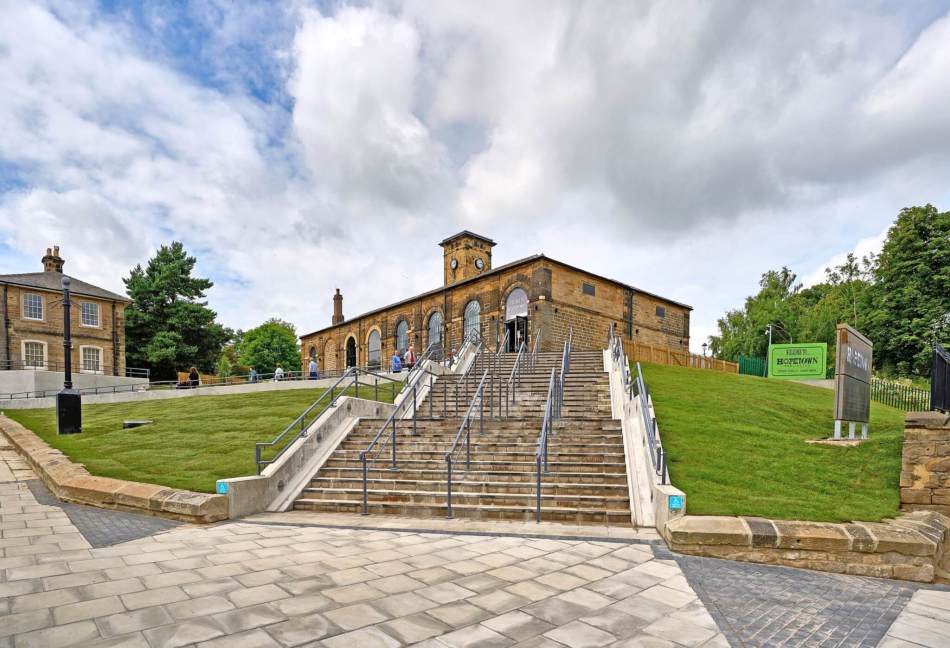
The present building was then constructed for undercover unloading, with arched openings for windows and tracks, possibly for 2 railway tracks. By 1839, it had been doubled in length so that 4 railway tracks could enter the building. The next year, it was expanded again.
The swift evolution of the building shows how the needs of the S&DR were constantly shifting in the railway’s early years.
Inventing the railway station
The idea of a building that combined ticket sales, parcel depots, waiting rooms, and platforms for passengers was not conceived in 1825. Trains stopped at level crossings and tickets were sold in public houses.
In 1826, the S&DR built a ‘house’ between Heighington and Aycliffe “for a booking office, and the reception of passengers” (‘Durham Chronicle’, 29 October 1829), but local magistrates initially refused it a licence to sell alcohol until an appeal was successful. This building became known as Heighington Station.
In 2023, the building had its listing upgraded to Grade II*, recognising its historical importance. It is probably the first station building in the world.
Following a crowdfunding campaign and a donation by Hitachi in 2025, the building is being acquired by the Friends of the Stockton and Darlington Railway.
Stockton and Darlington’s wider influence
As use of the railway increased, engineers and potential investors came to see the S&DR and the lessons learned from its experimental operation were carried across the world.
Described as “the great theatre of practical operations on railways” by Edward Booth of the Liverpool and Manchester Railway, the S&DR influenced the development of many early railways.
These included the Saint-Étienne-Lyon (France, 1828), Baltimore and Ohio (USA, 1830), and the Liverpool and Manchester (1830). Locomotives built in Shildon were supplied to Russia in 1836 and Canada in 1838.
Experiencing the Stockton and Darlington Railway today
Much of the S&DR is still in use as part of the national rail network, and museums at Shildon (Locomotion) and Darlington (Hopetown Darlington) utilise and maintain historic railway buildings, telling the story of its history.
As part of the bicentenary celebrations in 2025, the S&DR Trail of Discovery (a public walking and cycling route following sections of the original line) has information boards and links to podcasts about aspects of the company’s history.
You can also explore new and revised descriptions of S&DR buildings and archaeology on the National Heritage List for England.
Written by Lucy Jessop and Eric Branse-Instone
The Stockton and Darlington Railway Heritage Action Zone ran from 2018 to 2023 and laid essential foundations for the S&DR200 bicentenary celebrations, as well as the line’s long-term management as a world-class visitor attraction.
Our investment in the project included funding the repairs to key heritage sites, new research into the railway’s history, community engagement, and heritage skills training.
Key partner organisations included Darlington Borough Council, Durham County Council, Stockton Borough Council, Tees Valley Combined Authority, the Friends of Stockton and Darlington Railway, the Science Museum Group, and Network Rail.
Further reading