by Mattia Steardo
The concept of “labor” occupies a central place in the history of political economy and, consequently, in the political imagination of our own time.[1] From Adam Smith’s The Wealth of Nations to Karl Marx’s Capital, labor emerges as the central determinant of wealthrr and value, whether to praise its productive merits or to denounce its alienated form. Despite the concept’s centrality, its role as an analytical and normative category has often been underexamined in historical economic discourse, especially outside the canon of the discipline, which tends to frame political economy as an intellectual endeavor driven by a succession of great thinkers. This paper seeks to reinsert the Spanish economic Enlightenment into this broader narrative by sketching some ideas on labor by eighteenth-century Spanish thinkers—not as an incidental notion but as a cornerstone of economic modernity.
Labor also stands at the heart of a recent invitation to revitalize the study of political economy on a global scale. Arguments grounded in the capacity of labor to generate value and in the legal entitlements derived from this material reality have been regarded as a proxy for rural producers’ participation in the conceptual universe of political economy and capitalism. The global circulation of such arguments thus provides a useful and productive framework for investigating the intellectual manifestations of the progressive diffusion of capitalist modes of production worldwide. Though this theoretical intervention is to be welcomed, it also tends to suffer from a shortcoming common to many other theoretical efforts to investigate the origins and development of the modern politico-economic world: the tendency to privilege the Anglo-American historical experience as the model for both economic development and intellectual innovation. In fact, this was a shortcoming from which Marx himself was not entirely exempt, as his analysis of the emergence of the capitalist mode of production was closely grounded in the socio-economic transformation of the British countryside and in domestic relations of production.
The modest aim of this essay is to move beyond these limitations by analyzing the diverse meanings attributed to the concept of labor in the legal and politico-economic thought of one of the most important historical actors of the early modern period: the Spanish Monarchy. Though the Spanish Bourbon’s defeat at the dawn of modernity has largely led to its exclusion from subsequent histories of capitalism and labor, I would like to posit that the historical experience of Spain, especially its expansion overseas and development of interconnected commercial societies on the American continent, constituted an experience of economic modernity that very much preceded the supposed arrival of political-economic liberalism following the collapse of the Spanish imperial system during the 1810s.
Additionally, the broader field of intellectual history could benefit from engaging with the rich scholarship on Iberian political concepts, which over the past two decades has produced an impressive body of work and is now increasingly turning toward the history of economic concepts. Several contributions published in this same blog series attest to the field’s vitality and to the growing attention it is attracting, particularly with regard to the economic arguments that emerged alongside late eighteenth-century commercial expansion. These arguments might be mobilized both to question and to reinforce political allegiance to the Crown. Latin American scholars have indeed produced theoretical contributions to intellectual history for a very long time, and fruitful lessons can be drawn from integrating Latin American intellectual history into international debates in order to foster a more genuinely global turn in the field.
Why is it important to return to early Iberian economic thought? For much the same reason that it is crucial to revisit the economic knowledge produced in many other parts of the world: to understand how different societies sought to rationalize the profound economic transformations they were facing and how various elites developed intellectual strategies either to resist or to facilitate the institutionalization of a capitalist order—an order in which markets became crucial for social reproduction and in which, in one way or another, almost everyone finally became a merchant.
Expanding the concept of capitalism allows us to adopt a more genuinely global perspective. Yet this should not mean naturalizing its ethos as if it were universal or inevitable. Rather, it requires us to grasp the specific historical trajectories through which capitalism arrived and took root in different contexts. Marx offered a penetrating account of this process for England, but the task remains to do the same for other regions, with equal rigor and attention to their distinctive conditions. This global dimension needs to be integrated with the histories of Catholic societies too, not in order to cast them as a “good” alternative to the supposedly “bad” or amoral commercial ethos (for they were certainly not paragons of virtue), but rather to understand them as integral but distinctive participants in the broader European transformations that marked the advent of global capitalism.
Certainly, the vassals of Charles V and Philip II appear repeatedly in the narratives of the emergence of the modern world, since the “discovery” of the Americas by Europeans and the rounding of the Cape of Good Hope were regarded by authoritative commentators as among the foundational moments of modernity. At the same time, however, Spanish conquistadores and monopolist merchants have frequently been cast as the villains of this story: feudal and Catholic relics locked in battle against the Protestant pioneers of modernity and inevitably defeated by the advance of the new age. This new era was embodied, in such accounts, by Napoleon Bonaparte, who figured as the spark that ignited the swan song of an ancien régime whose demise had already been heralded by the late-eighteenth-century revolutions.
From our perspective, the key historical significance of the Spanish arrival in the Americas lies, instead, in the creation of new communities in which the pursuit of profit, gain, and wealth became guiding values. These principles were shaped by existing cultural traditions, including European Catholic morality and Indigenous pre-Columbian practices, but they nevertheless gained unprecedented centrality as legitimate foundations of community life.
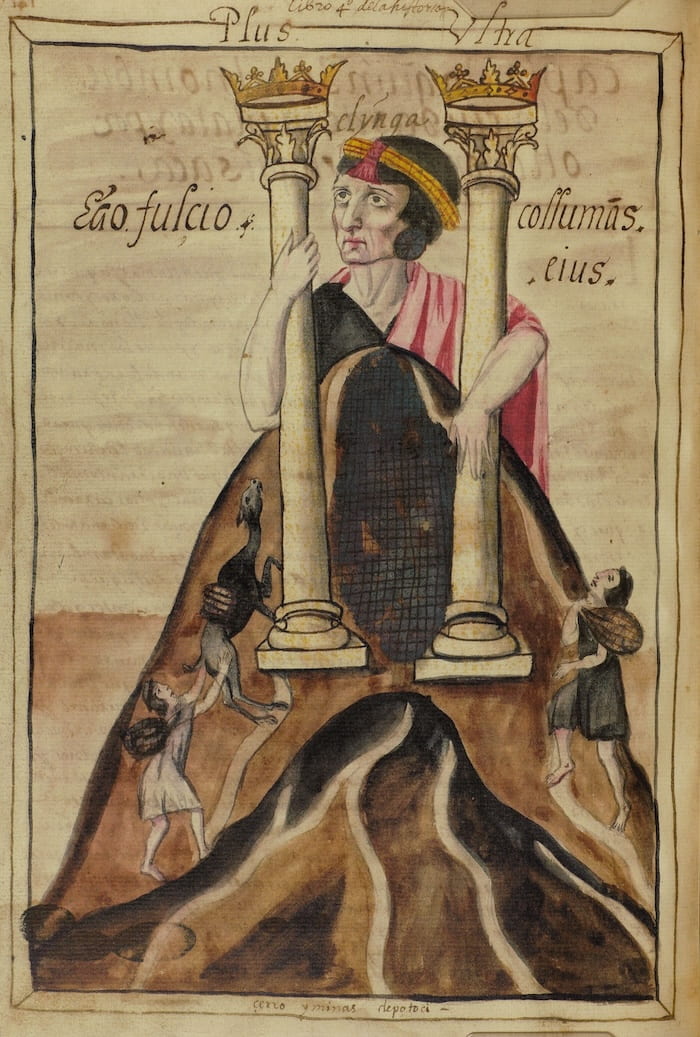
Those profit-oriented communities were producing commodities to feed global markets, especially silver, the “singular product most responsible for the birth of world trade.” After the discovery of the great mines of New Spain and Upper Peru, far-reaching commodity chains emerged around the production of American silver, which powered the early modern global economy. The Bajío region, for instance, developed its own forms of local capitalism. Likewise, despite its altitude of 4,000 meters, the Bolivian plateau around Potosí attracted large numbers of European adventurers as well as Indigenous workers and entrepreneurs, and by the early seventeenth century its population exceeded one hundred thousand.
This material reality, combined with the growth of economic reflection in eighteenth-century Europe, sparked important debates in Hispanic Enlightenment thought. Intellectuals sought to design strategies for imperial economic growth by adapting contemporary political economy, which stressed the role of population and labor in generating wealth, to the specific conditions of the Hispanic world.
An interest in economic reflection was by no means new. Although often dismissed by their Protestant counterparts as mere bullionists, sixteenth-century Spanish thinkers were in fact at the forefront of developing a kind of subjective theory of wealth and engaging in monetary debates, spurred in part by the moral doubts provoked by the sudden influx of American riches. Interestingly, when Joseph Schumpeter re-evaluated Scholastic economic thought in 1954, the reaction from contemporary economists was so severe that Raymond de Roover felt compelled to publish a piece confirming and expanding on Schumpeter’s assessment.
Yet the centrality of silver mines within the Hispanic trading system, combined with the decline of the monarchy’s international and economic standing vis-à-vis European competitors, alerted eighteenth-century reformers to the dangers of overreliance on mining. In his Auxilios para bien governar una monarchia católica (Madrid, 1789) composed in the 1720s, Melchor Rafael de Macanaz (1670–1760) addressed the issue, insisting that the mines enriched Spain’s European rivals more than Spain itself. Instead, he argued, the monarch should foster “commerce, agriculture, manufactures, and the transformation of domestic products, stimulating each of these branches with diligent and meticulous economy” (49). Macanaz would expand on these ideas in his Nuevo sistema de gobierno económico para la América (Madrid, 1789), where a central recipe for regenerating the monarchy’s economy was to transform millions of Indigenous vassals into “useful and industrious” subjects—namely, producers of commodities—through improved economic governance.[2] Among his proposals was the distribution of land in individual property, alongside the encouragement of artisanal production and monetary circulation, for, as he noted, “the land will never be properly cultivated, nor will a man ever labor for another with the same effort he would devote if the fruits of his work were his own” (83).
The aspiration to increase state wealth by enlarging the number of productive subjects was not confined to Indigenous populations in the Americas. Spanish reformers equally sought to direct the peninsular population towards useful occupations. The Basque merchant and economist Nicolás de Arriquíbar (1714–1775) embraced this principle in his Recreación política, an influential treatise written to refute Mirabeau’s L’ami des hommes, ou Traité de la population (1756–58) before the Sociedad Bascongada de Amigos del País. In his discussion of the nature of “industry,” Arriquíbar argued that the “most legitimate and most secure” wealth of the state was the value created by the aggregate of all forms of labor performed within the kingdom, “without which the most precious mines and the most splendid armies and fleets are nothing more than ephemeral goods, vanishing like smoke” (Recreación política. Segunda parte. Vitoria, 1779, p. 22).
This formulation exemplifies the process of abstraction characteristic of political economy. The diverse values generated by human labor were conceived as combining into the aggregated wealth of the monarchy, which was in turn equated with imperial power, in line with the economic thought of the period. For Arriquíbar, this understanding of labor as the foundation of both individual wealth and political strength was bound to a precise anthropological vision in which human beings realized their very essence only through work that benefitted the political community. “A man who does not work is a dead man for the state,” he declared, reflecting on the causes of demographic decline in contemporary states. Conversely, he argued, “the working man is a living plant, who not only yields fruit; but also multiplies, and this occupation constitutes his political life.”
Arriquíbar thus conceived of society as composed of “a mutual and continuous dependency, that men have on one another.” This interdependence materialized through labor, which bound together all classes: whether rich or poor, farmer or craftsman, merchant or man of letters or religion, “everyone, in their respective class, is bound to work, with no one exempt from this sacred precept.” Given that this reciprocal dependence was understood as a law of nature, the obligation to labor—defined as surplus-producing labor—became a necessary condition of social life. As he concluded, “man was born for work, just as a bird was born to fly; and the desire to live without working is not only against the order of Providence but also against society’s interest.” (Recreación política. Primera parte, Vitoria, 1779, pp. 43–59)
The Basque articulated a vision of political economy that extends far beyond the narrowly economic, presenting instead a normative account of how social order should function—an order that the state, through the direct and indirect stimuli of legislation, was expected to foster. Though absent from the traditional canon of economic thought, Arriquíbar exerted considerable influence in Spain as one of the founders of the Sociedad Bascongada de Amigos del País, a highly active institution devoted to education and the diffusion of economic science. His ideas eventually reached as far as the coasts of New Granada, aided by the increasing speed with which economic texts spread at the end of the eighteenth century.
A closer examination of other Spanish authors would likewise reveal multiple perspectives on the conceptual status of labor. Francisco Cabarrús (1752–1810), for instance, provided a lucid exposition of the Lockean labor theory of property, which he used to emphasize the social harm caused by an excessive number of unproductive clerics in Spain. His friend Gaspar Melchor de Jovellanos (1744–1811)—less radical than the founder of the Banco de San Carlos—reflected instead on the “property of labor” as one of the stages in the civil and economic evolution of human communities in his Informe sobre la Ley Agraria (1795).
Nonetheless, most Spanish economic thinkers remain little known to a broader audience, in large part because they were excluded from the canon of the history of economic thought, which was constructed primarily around the work of Adam Smith and presupposed a narrowly framed and Eurocentric vision of economic modernity—one centered on industrial pioneers and emerging working classes. The contemporary reactions to Schumpeter’s re-evaluation of Scholastic thought in the 1950s are emblematic of the deep-rooted anti-Spanish prejudice within this field. Much of this intellectual history, however, still awaits full and nuanced exploration.
This think piece is part of the forum “The Return of Political Economy in Intellectual History.”
[1] An article-length version of this blog post is currently under review with Ariadna Histórica. Lenguajes, conceptos, metáforas.
[2] Recent scholarship has established Macanaz’s authorship. See Fidel J. Tavárez, “A New System of Imperial Government: Political Economy and the Spanish Theory of Commercial Empire, ca. 1740–50,” in Empire and Social Sciences: Global Histories of Knowledge, ed. Jeremy Adelman (London: Bloomsbury Academic, 2019), 15–30.
Mattia Steardo holds a PhD in Global History of Empires from the University of Turin (2024). He has been a Research Fellow at the Fondazione Luigi Einaudi and is about to begin a Humboldt Fellowship at Leibniz University Hannover. His research interests include the history of political economy, Latin American history, and intellectual history.
Edited by Stephanie Zgouridi
Featured image: Painting by Felipe Guaman Poma de Ayala, c. 1590, in Códice Murúa: Historia y genealogía de los reyes incas del Perú del padre mercenario Fray Martín de Murúa: códice Galvin, F 3429.3 .P69 M87 2004. Rare Books & Special Collections, Hesburgh Libraries, University of Notre Dame.