In this blog post we’ll explore the hidden histories of listed pubs with a festive theme, selected by Amy and Caroline from Historic England’s Listing Policy Team.
Pubs are often part of our festive celebrations, whether that’s a warming mulled wine after a busy day of gift shopping, or a work celebration with Christmas crackers and paper party hats.
There are over 12,000 listed pubs and inns in England, making up around 3.2% of all listed buildings. Many have fascinating stories to tell, whether through the people who lived, worked and drank there, the signs and symbols used to identify them or the traditions that developed there. Some have traditions of connections to important parts of our national story, such as the English Civil War, others have connections to famous figures, and some may even have tales of residents of a more supernatural kind.
1 .Ye Olde Reine Deer Inn, Banbury, Oxfordshire
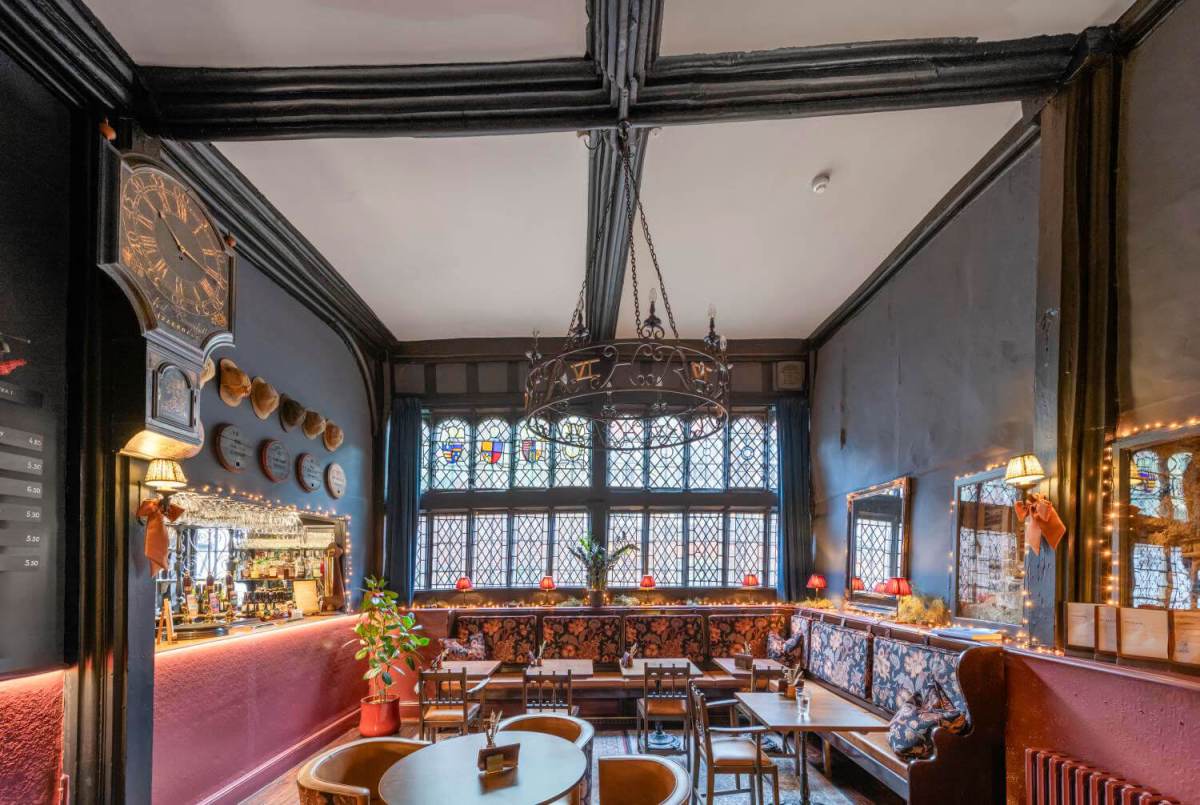
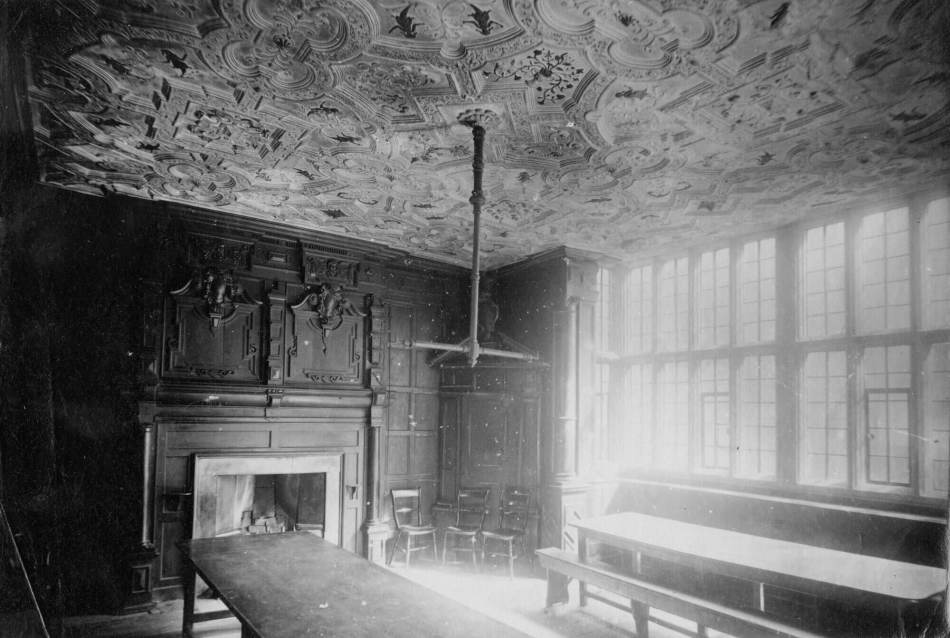
Dating from the 16th century, Banbury’s Ye Olde Reine Deer Inn has a storied past as one of the town’s oldest pubs. The inn’s 17th century Globe Room made it a venue of the highest quality, with wood panelling, a richly carved and painted ceiling and a large stone fireplace. Local legend links the room to Oliver Cromwell, who supposedly used it as a base for his part in the nearby Battle of Edgehill.
The Globe Room became well known and a popular local attraction in the 19th century, after the Architectural Association included a description, diagrams and photographs of the room in their journal. In 1899, plaster casts of the ceiling were made by the Victoria and Albert Museum. These are still on display today in the Cast Courts at the museum’s South Kensington site. The design of the ceiling became so popular that it was copied elsewhere, including at Knowsley Hall in Liverpool, and in the Houses of Parliament.
The room’s panelling was sold off in 1912 but was later returned to the pub in the 1960s, although the ceiling was lost. You can still enjoy a pint in the historic surroundings of The Globe Room today, drinking in the atmosphere of centuries past.
2. The Angel, Andover, Hampshire
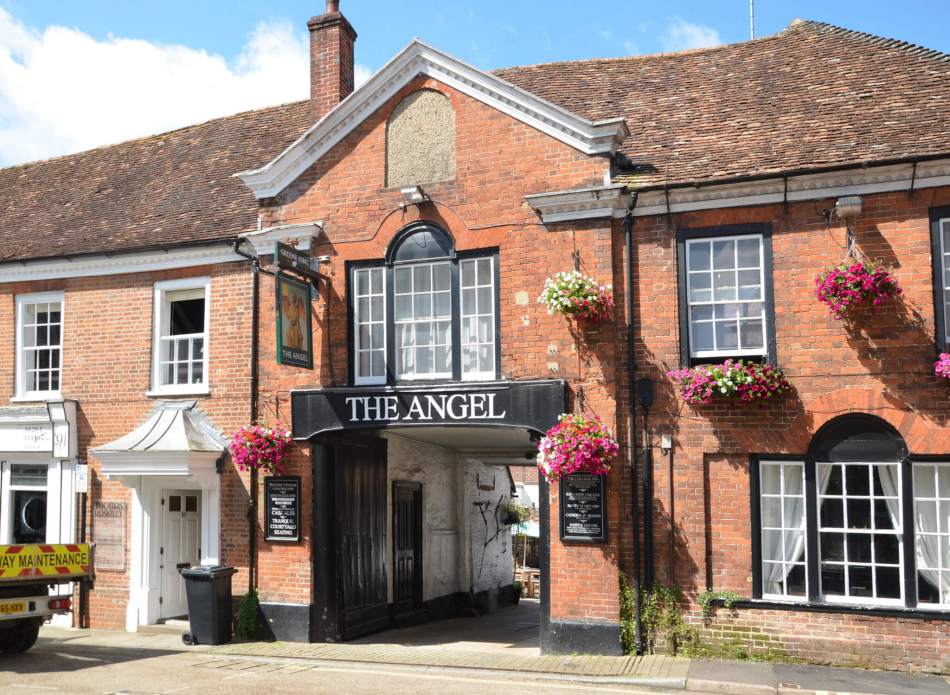
Like Ye Olde Reine Deer Inn, The Angel has traditions about some celebrated guests. At least ‘three kings’ have stayed or dined here, according to information on display in the pub. Notable royal guests have reportedly included Henry VII, Catherine of Aragon, Prince George of Denmark, and James II.
3. The Star Inn, Alfriston, East Sussex (previously known as The Star of Bethlehem)
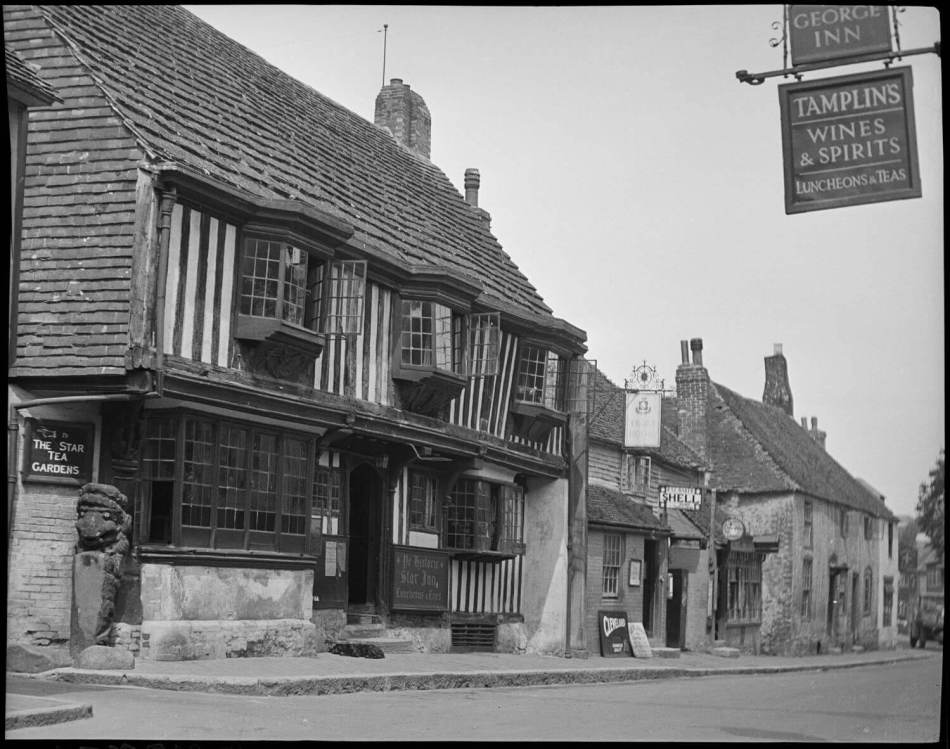
The 15th century Star Inn at Alfriston was previously known as The Star of Bethlehem, perhaps because it offered sanctuary to weary pilgrims on route to the Shrine of St Richard, previously located at Chichester Cathedral. Managed as a hostel by the monks of nearby Battle Abbey, the inn’s exterior features carvings with religious themes, including St George and the Dragon.
With such a long history, it is perhaps unsurprising that the pub is reported to be haunted, including by a lady dressed in grey and a ghostly monk, whose presence it is said, can be detected by the smell of wafting incense.
The inn’s dark past isn’t limited to its ghostly inhabitants: on the front of the building stands a carved lion, said to be formerly a ship’s figurehead. Tradition has it that it came from a Dutch warship which sank in the English Channel and washed up at nearby Cuckmere Haven. A gang of local smugglers supposedly brought the figurehead to the pub, where it adds to the quirky exterior.
4. Ye Olde Trip to Jerusalem, Nottingham
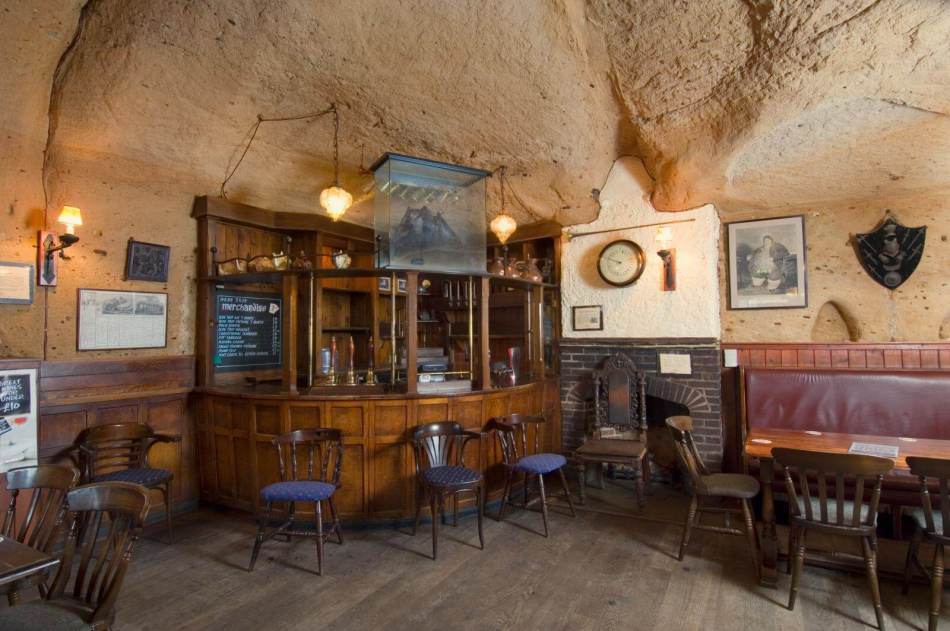
Is Ye Olde Trip to Jerusalem the oldest inn in England? That claim is disputed, and you can read more about it elsewhere on our blog. Our list entry dates it to the 1600s, although some parts of the building, like the caves you can see below, are older. Regardless of its age, there are plenty of legendary tales associated with Ye Olde Trip to Jerusalem.
Supposedly, the pub’s name comes from King Richard the Lionheart stopping there before journeying to Jerusalem in 1189. It’s had various names over the years, though. At one time, it was The Pilgrim (for which there is a record in 1760) and four decades later, it was called The Trip (there is a record dating to 1799). It’s also said that the pub was a local hideout for Robin Hood himself (another icon who inspired a host of pub names).
If you’re driving home for Christmas and pass Ye Olde Trip to Jerusalem, stop by – but make sure you think twice before sitting in the ‘pregnancy chair’ (in the fireplace below), which is said to increase your chances of becoming pregnant!
5. The Christmas Steps, Bristol
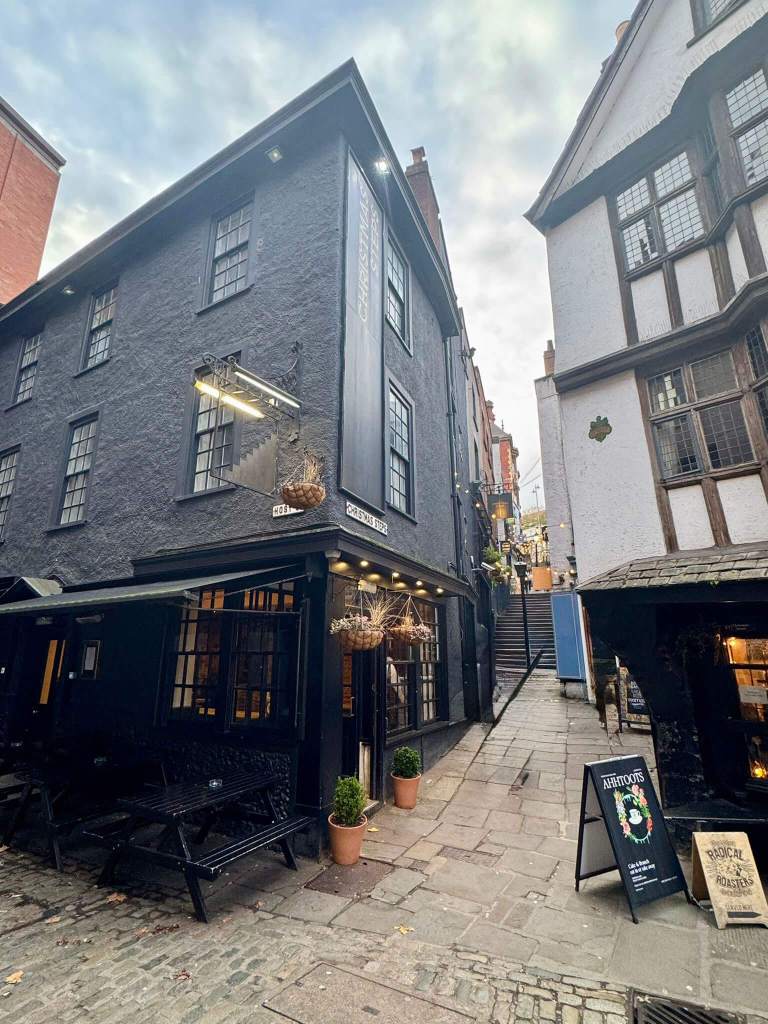
Bristol folk know: the cosiest place to be is The Christmas Steps in December. Plenty of nooks, a roaring hearth, and a sensitively styled interior that nods to its 425-year history. It is possible that it was first named The Horse’s Head, as there are 1613 burial records of a Black serving maid named Katherine working at an inn called The Horse’s Head which appears to have stood at the same location.
Over the years, it has been known as The Gaiety (also rather festive!), The Three Sugar Loaves, and much more. Nothing has suited it quite like The Christmas Steps, though.
6. The Shepherd and Shepherdess Public House, Beamish, County Durham
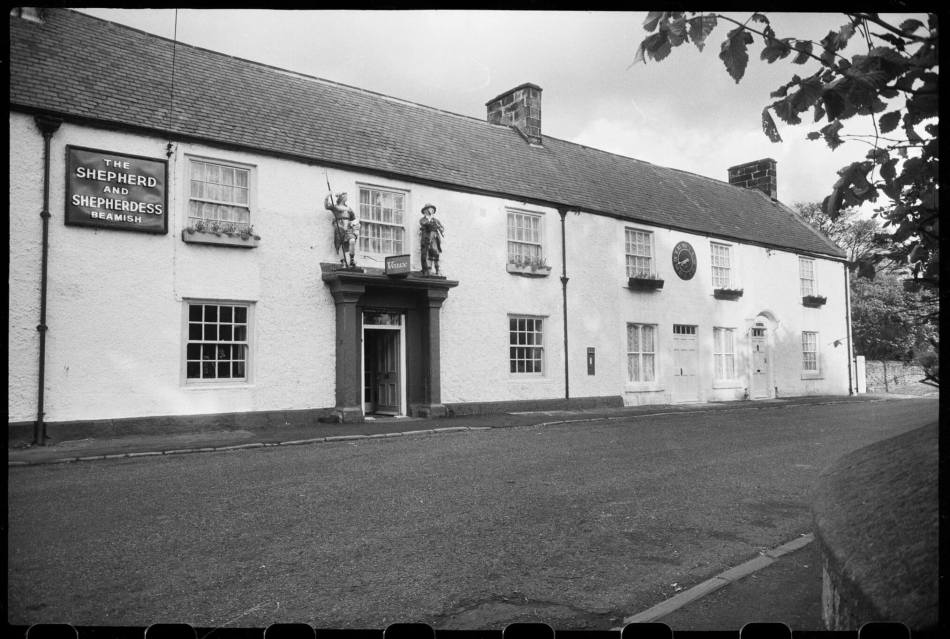
Rather than watching their flock by night, the life-sized lead statues at The Shepherd and Shepherdess Public House, Beamish, County Durham watch over regulars and visitors to this 18th century village pub.
According to the pub’s website, the statues have a rather surprising history. The story goes that the figures were imported from France during the Napoleonic wars, when the French imposed a blockade on lead to prevent the English from producing munitions. The lead was disguised as a set of decorative statues to avoid the blockade. Rather than being melted down as planned, they were purchased by the squire of nearby Beamish Hall, who erected them above the entrance to his home.
Following a storm, the figures were relocated to a lawn, but after a frightening encounter with them on a dark night the squire gave them away to the pub, where they have graced the entrance ever since. Located close to Beamish Museum, the colourful, classically inspired lead statues are an eye-catching advertisement for the pub.
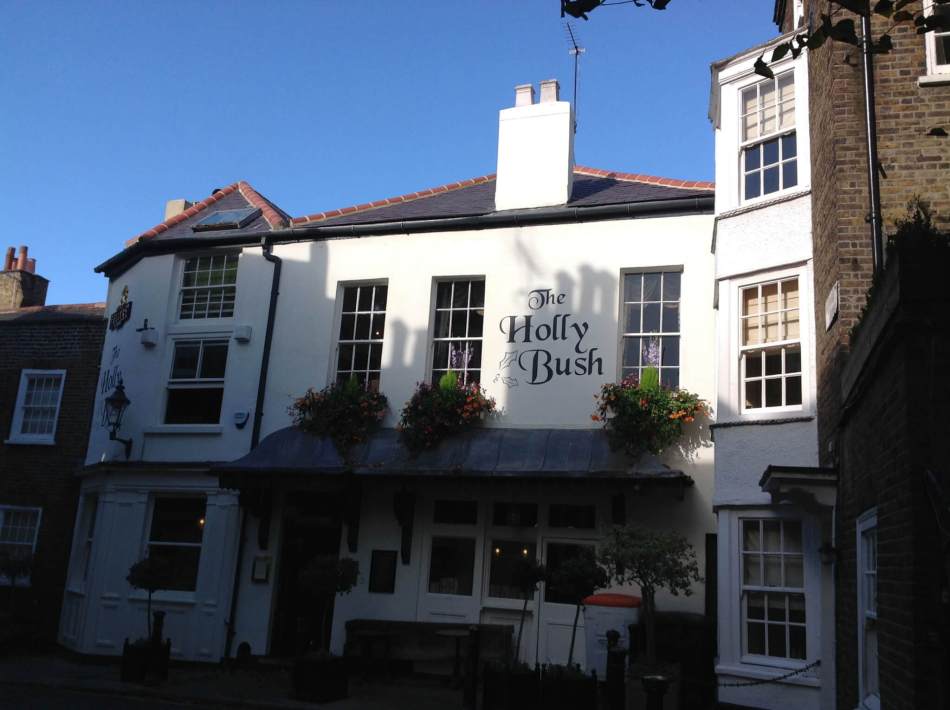
7. The Holly Bush, Hampstead, London
‘The Holly Bush’ is a popular name for English pubs, and not just for the festive inn signs it can inspire, such as that at Hampstead’s The Holly Bush. When medieval women brewed ale and had some excess to sell, they would put a temporary sign outside their houses to let people know they had drink for sale. This sign could be something like a wreath or small bush hung above a doorway, often a holly bush.
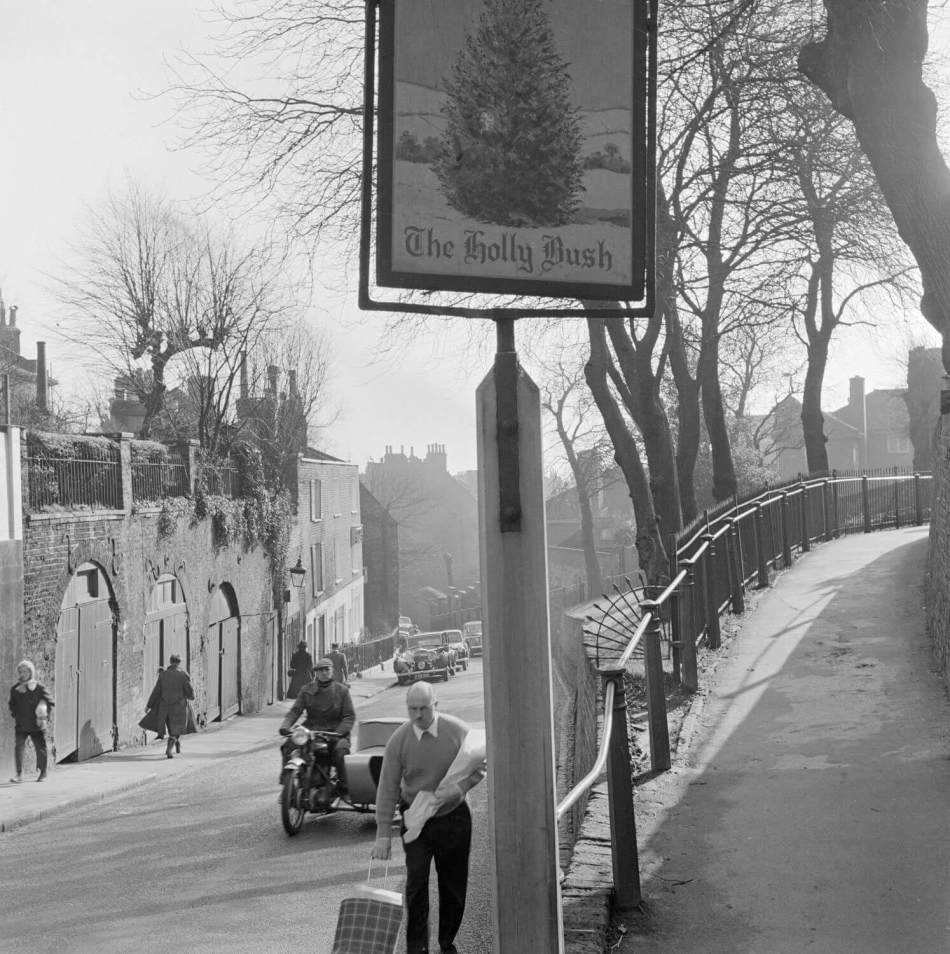
As time went on, there were more and more ‘permanent’ establishments with painted wooden signs; but innkeepers and alehouse keepers continued the tradition by adorning their doorways with bushes and wreaths. Even today, publicans at The Holly Bush hang flora outside to welcome guests inside.
When you’re hanging a wreath on your door this Christmas, remember: this is a tradition that’s always been about providing a warm welcome… and a glass of something delicious!
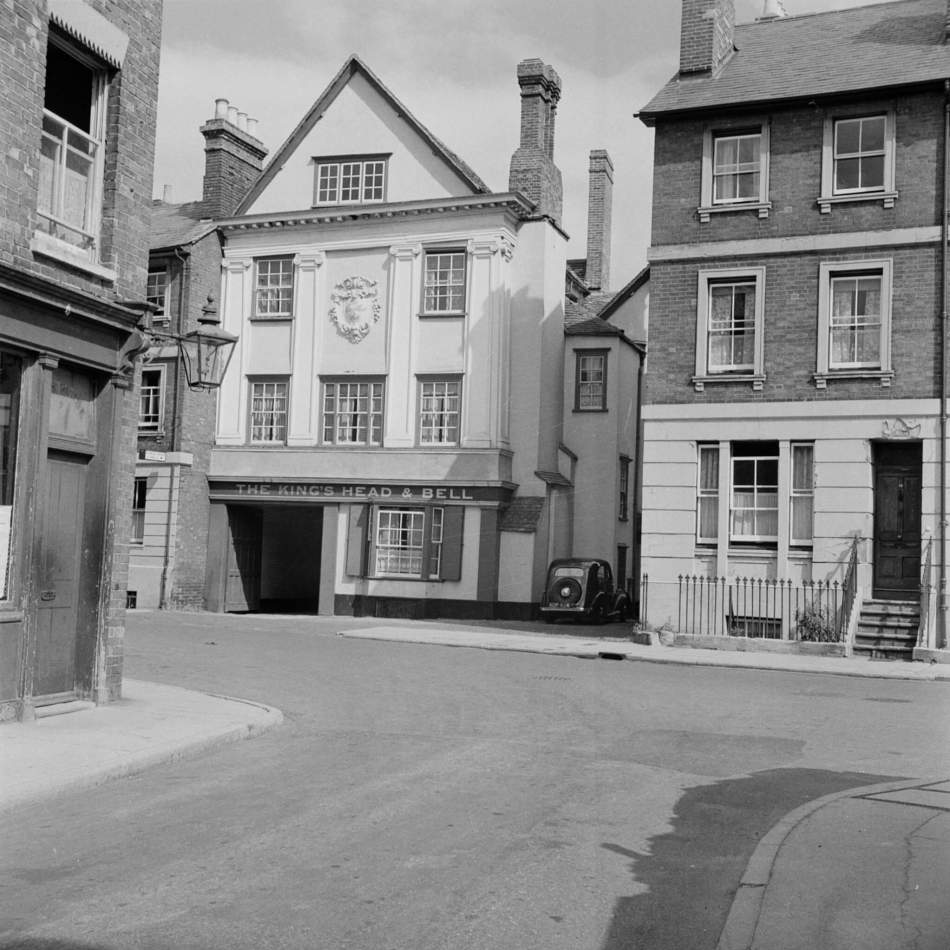
8. ‘The three kings’: The King’s Head, Laxfield, Suffolk, The King’s Head Inn, Aylesbury, Buckinghamshire and The King’s Head and Bell, Abingdon, Oxfordshire
Pubs with the name ‘king’ in the title are common: there are more than 60 listed pubs and inns called The King’s Arms or The King’s Head, and both names are in the top 20 most common names for listed pubs. Here are three historic King’s Head pubs from across the country to explore – you might not find the gifts of gold, frankincense and myrrh, but you will find real ale, traditional character and bags of history.
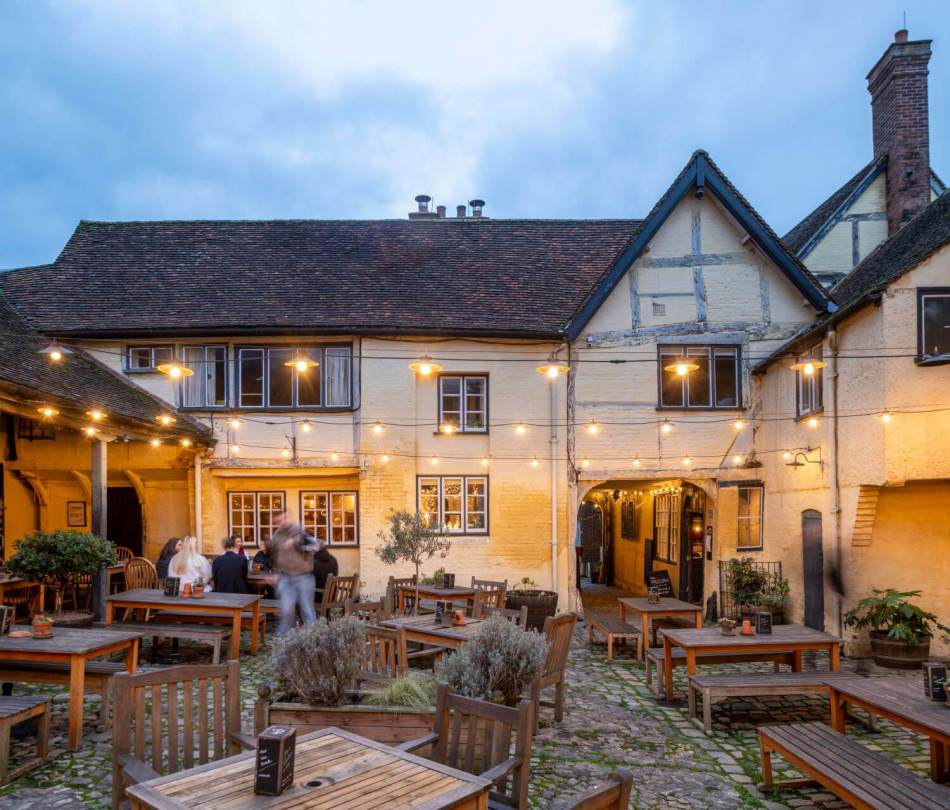
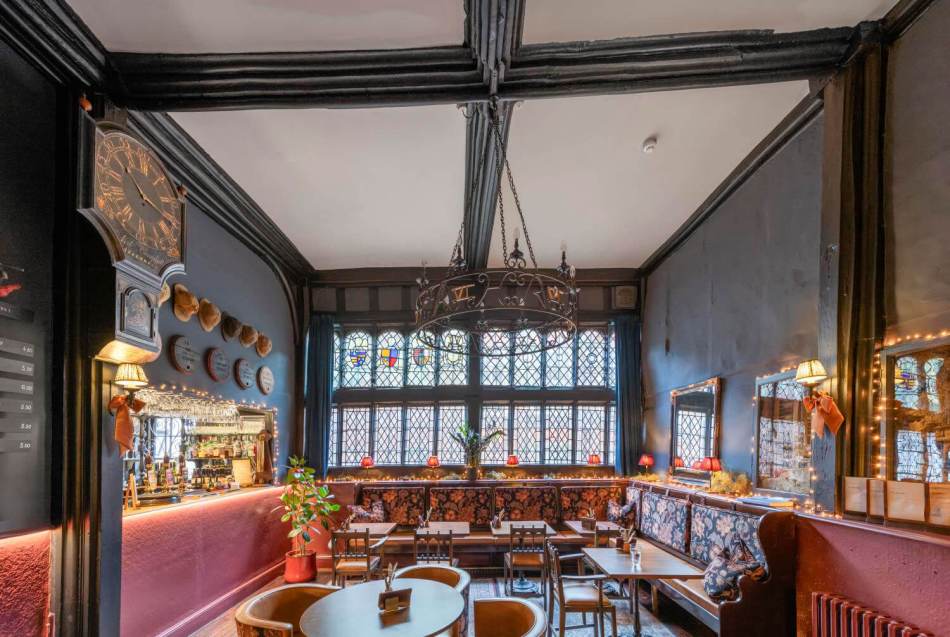
Managed by The National Trust, The King’s Head, Aylesbury dates back to at least the 15th century and although it has been altered throughout the years, many historic features remain. This includes the stables and mounting block from when it was used as a coaching inn, and rare stained glass windows in what was once The Great Hall, originally constructed as guest accommodation for nearby Claydon House.
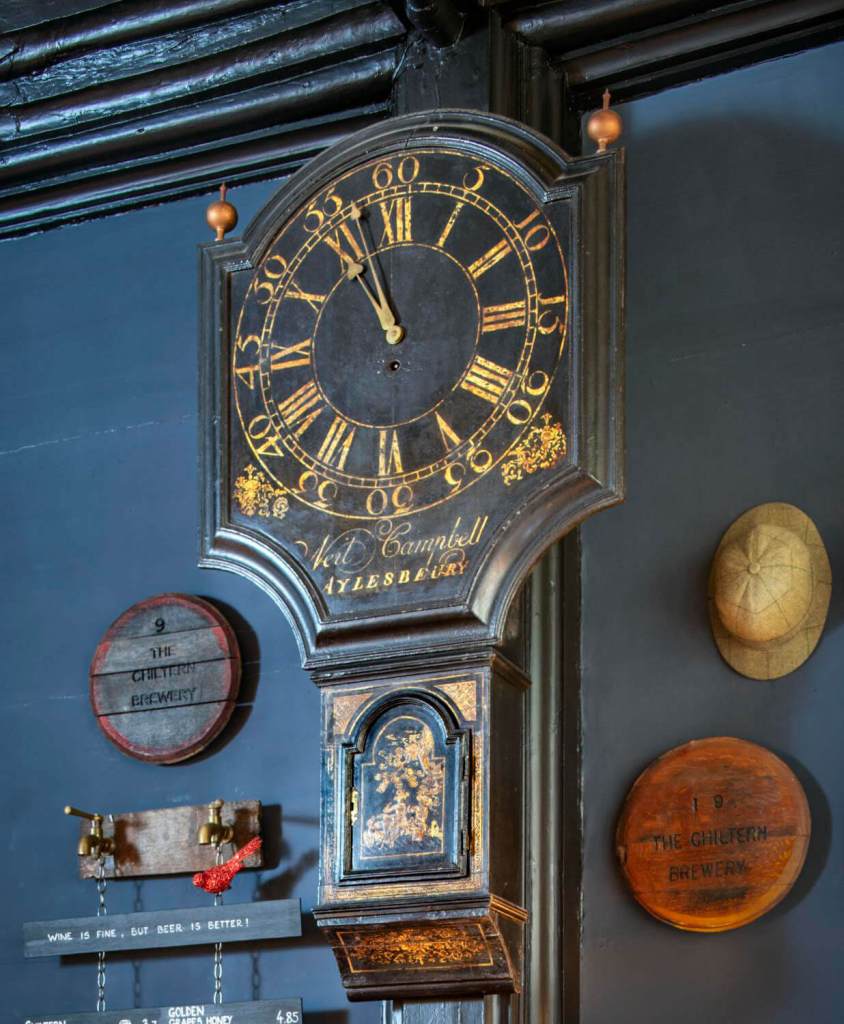
The inn also houses an Act of Parliament clock. These clocks (also known as tavern clocks) were installed in pubs and other public spaces to allow travellers to tell the time, during a brief period of heavy taxation on clocks.
The ‘King’ in question in the pub’s name may have been King Richard II, after an earlier 14th century inn on the site (called the ‘Kyngshede’), or King Henry VI, who reigned when the 15th century inn was built.
Like at Aylesbury, The King’s Head and Bell, Abingdon also offered stabling for horses, and the courtyard and coach entrance are still visible. Much of this historic pub dates back to the 18th century, with some 17th century elements, although there has been an inn on the same site from at least the mid-16th century. Originally named ‘The Bell’, The King’s Head may have been added later to give weight to a connection with Charles I, who is alleged to have stayed here and to have held at least one council of war at the inn.
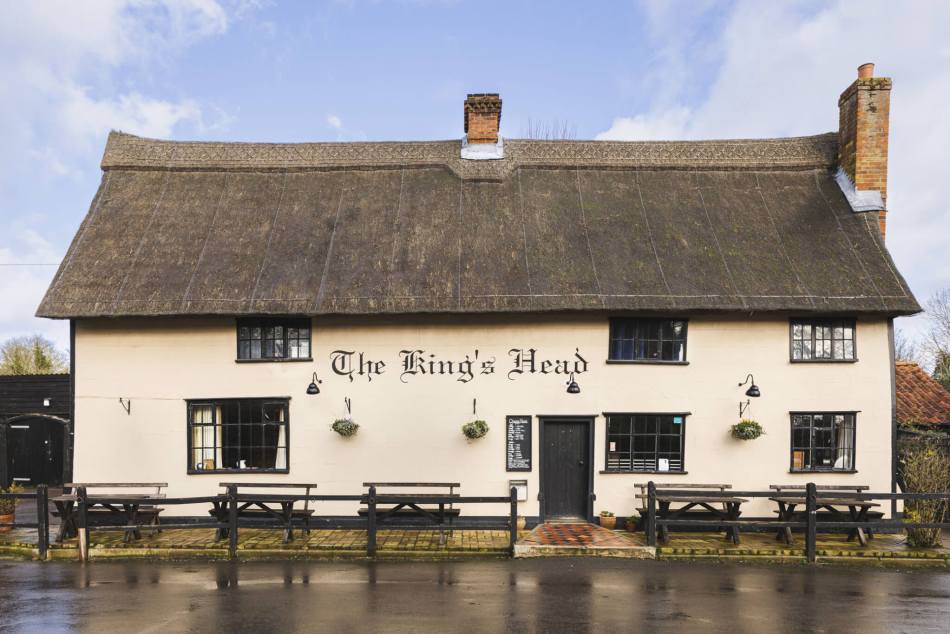
The charming, thatched King’s Head at Laxfield may have begun as a traditional Suffolk longhouse, probably dating to the 16th century. Its use as a pub began in at least the late 18th century, and its interior includes many unaltered historic features. Unusually the pub has no bar, and beers are served from casks in the tap room. Only around 7 pubs in England still have this arrangement. It also features wooden settles – high backed benches – which help to create a cosy feel.
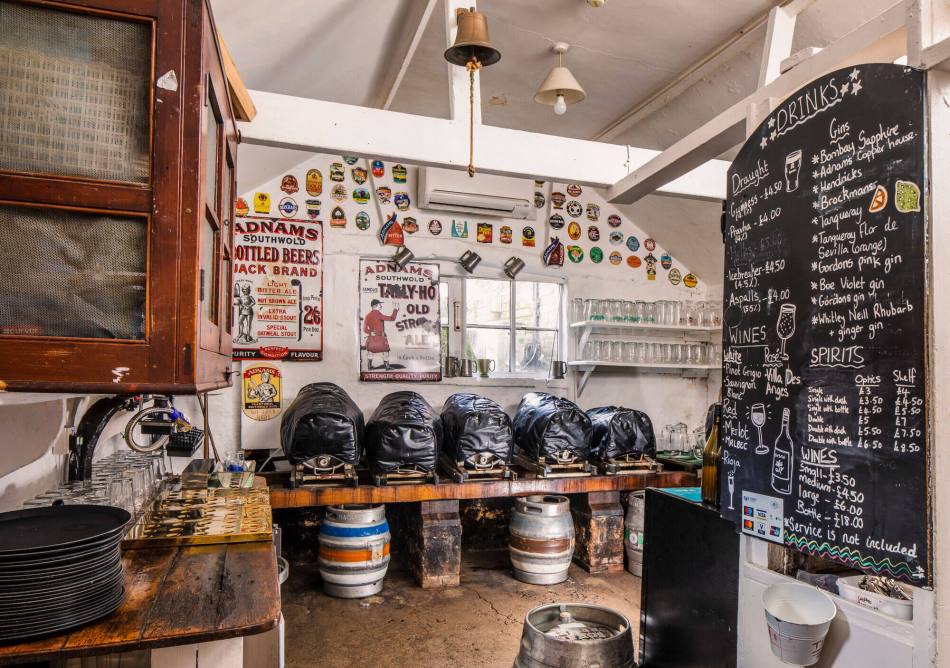
In the early 1990s The King’s Head was purchased by a consortium of locals. This happened again in 2018, when it was purchased from the brewery by a Community Interest Company (CIC) made up of locals who wanted to ensure the long term future of their village pub, which is also known locally as The Low House.
Historically, taverns offered a range of functions alongside accommodation and hospitality, and the three ‘Kings Head’ pubs mentioned here are no exception. The pub at Aylesbury provided postal services, the Abingdon inn offered stabling for the horses used by the volunteer fire brigade and the inn at Laxfield was used for inquests and legal proceedings, as well as providing workshop space for a carpenter, wheelwright and shoemaker.
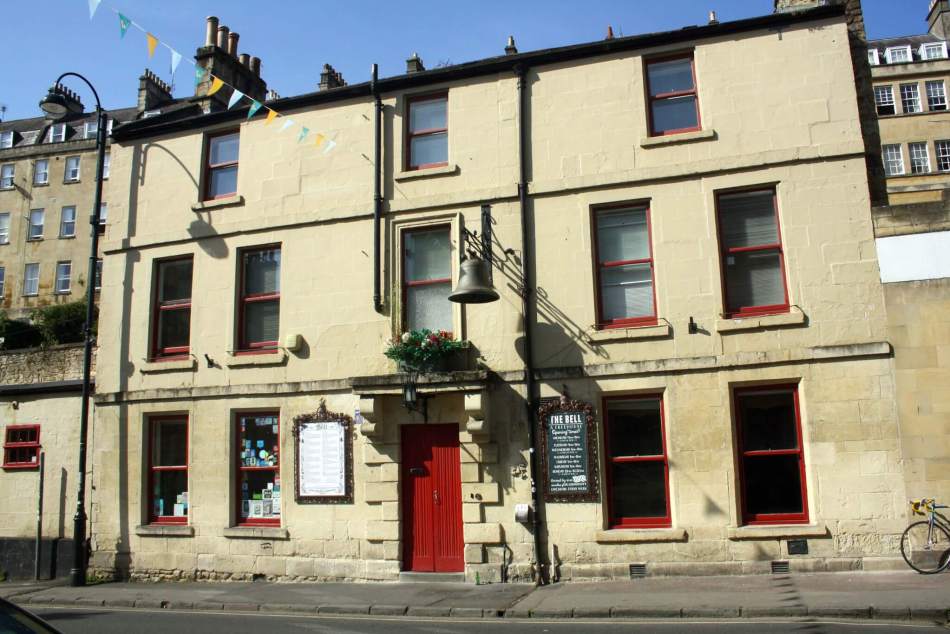
9. “Rocking around the Christmas tree” at the Bell Inn, Bath
Like The King’s Head at Laxfield, Bath’s The Bell Inn is a great example of a community-owned pub. Since 2013, it has been owned by over 650 customers. At the time, it was the largest pub buyout project in the country. The Bell Inn is also a flourishing live music venue and has been since at least the 1970s. The community buyout scheme was even backed by big names in music, including Robert Plant and Peter Gabriel. The pub has existed since at least the middle of the 18th century as evidenced by historic council meeting documents.
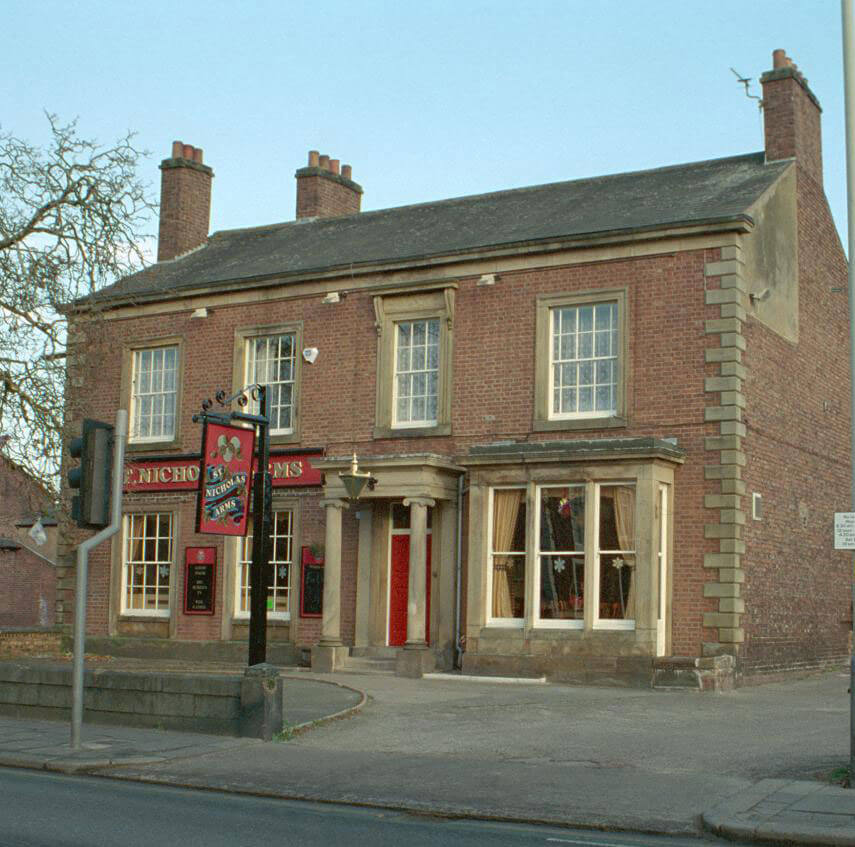
10. St. Nicholas Arms, Carlisle
What’s a Christmas blogpost without a nod to St. Nick?
Continuing a long tradition of homes that became public drinking houses, the lovely St Nicholas Arms maintains a homely feel in its cosy nooks. The Georgian home appears on an 1842 map of Carlisle, albeit as a private residence called St. Nicholas’ View.
In 1921, it was proposed as a pub by the Carlisle and District State Management Scheme. This was part of an effort to reduce overcrowding in the pubs at the lower end of Botchergate, but it wasn’t especially popular. Despite 900 residents objecting to the plans, the St. Nicholas Arms opened in 1921 and has been serving pints for over a century.
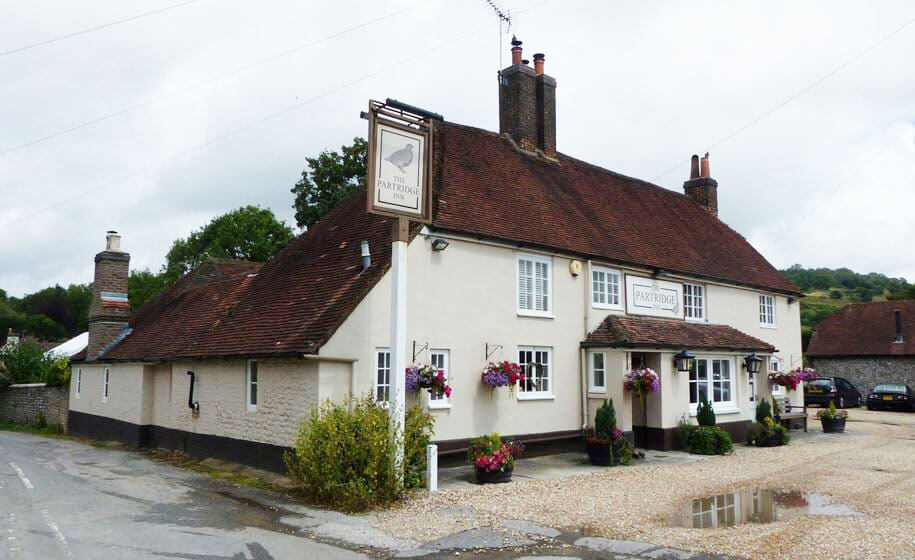
11. and 12. The Partridge Inn, Singleton, West Sussex and The Pear Tree Inn, Melksham, Wiltshire
To round out the 12 pubs of Christmas, we have a pair that simply had to be combined: The Partridge Inn and the Pear Tree Inn.
Both these names are traditional. The painted wooden inn signs mentioned in The Holly Bush entry were widely used before full literacy was common. A name like Ye Olde Trip to Jerusalem wouldn’t have caught on unless people could read a name like that; whereas a sign that had, for instance, a pear tree painted on it would have become known as The Pear Tree. “She was drinking at the sign of the Pear Tree” people might have said.
Any establishment with either of these names will certainly hear The Twelve Days of Christmas a lot this December!
‘Inn-terested’ in historic pubs? Visit our ‘Pubs Hub’ to find out more about our research, listing work and more. You’ll also find links to historic pub walks, and advice on protecting your local historic pub.
We are also inviting you to add more images of historic pubs through the Missing pieces project: to find out more see our ‘Winter Warmers’ page.
Our heritage pubs feel extra special at Christmastime: the names, the signs, the interiors, and the warm welcome all carry some extra festive magic at this time of year. Know another pub with a festive name or connection? Let us know in the comments.
Leave a Reply