Written by Dr Kate Jordan, Westminster University.
Cinemas were once a familiar feature of every high street. At their peak in 1946, an astonishing 4,709 cinemas were operating in Britain’s towns and cities. These dynamic buildings offered respite from the gloom of depression, wartime and rationing, beckoning audiences not only to watch films but also to marvel at the opulent interiors.
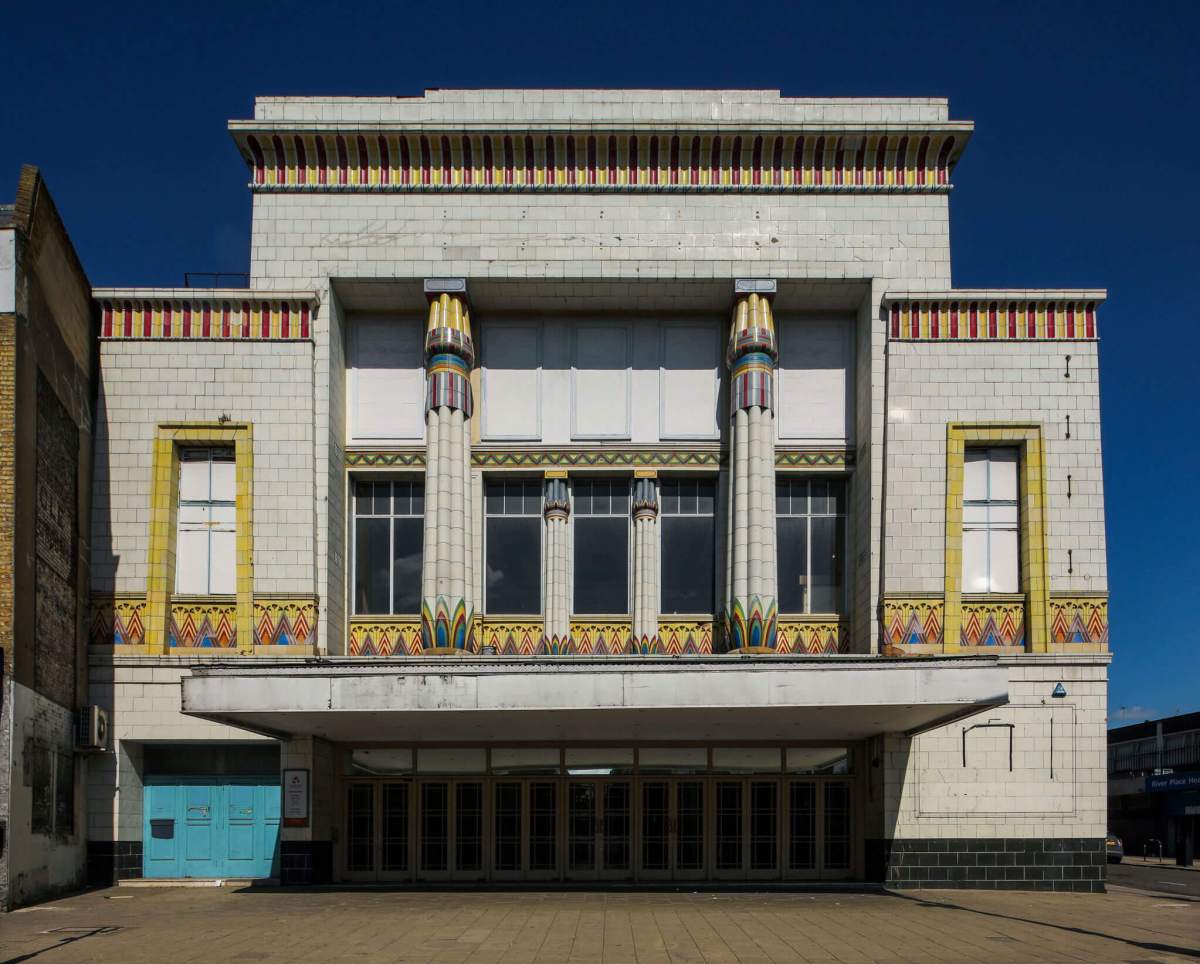
Cinemas of the early to mid-20th century were designed to reflect the glamour of the movies. In shaping this new typology, architects drew freely from existing styles such as Art Deco and Neo-Gothic, experimented with exotic ‘Moorish’ and ‘Egyptian’ themes, and invented dramatic new vocabularies including the ‘Atmospheric’.
In doing so, they created some of the most extraordinary interiors of the 20th century.
Cinemas in decline
Sadly, the golden age of cinema construction was short-lived. From the 1950s, the popularity of television led to a decline in cinema-going, and by 1963, the number of operational cinemas had more than halved to 2,181.
From the 1980s, the advent of home videos accelerated the decline and this, combined with the shift to functional multiplexes, saw the closure of scores of 20th-century cinemas. By 2022 there were just 1,087 cinemas in operation in Britain.
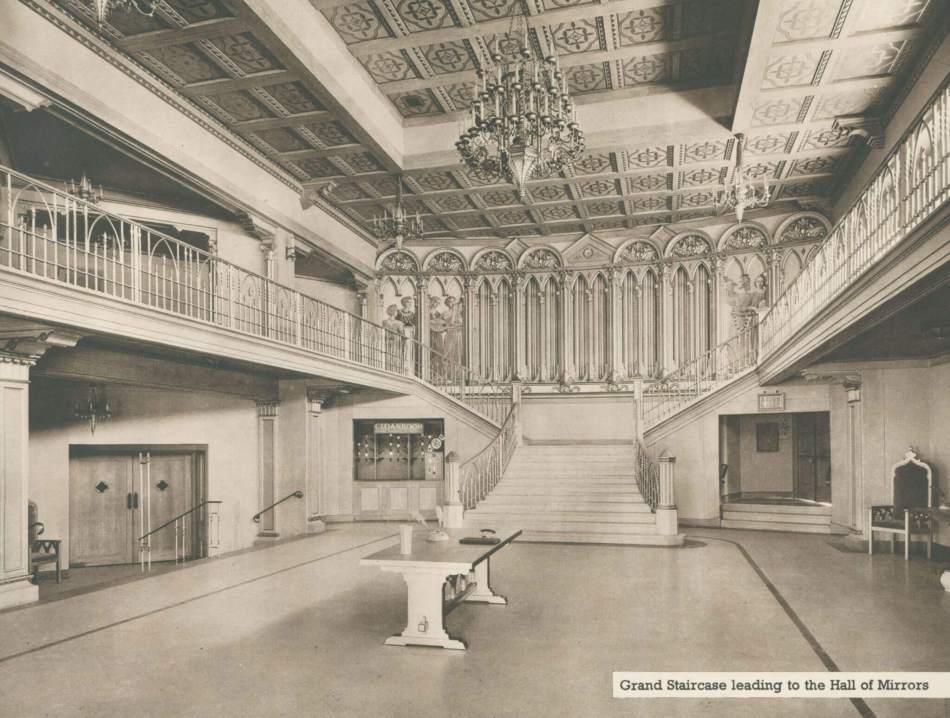
Many cinema buildings were saved through reuse as nightclubs and bingo halls, but this frequently required destructive alterations such as the removal of fixed seating and raked flooring.
By the 1980s, amenity societies such as the Cinema Theatre Association began to champion the cause of these buildings, resulting in the listing of many important examples.
In the 21st century, former cinemas faced yet another threat, as the indoor smoking ban in 2007 led to the widespread closure of bingo halls. For the numerous empty cinemas, even listing couldn’t guarantee protection against neglect, vandalism and demolition.

Cinemas as places of worship
In recent years, many of these buildings have found new life as places of worship, with religious communities restoring the buildings to their former glory.
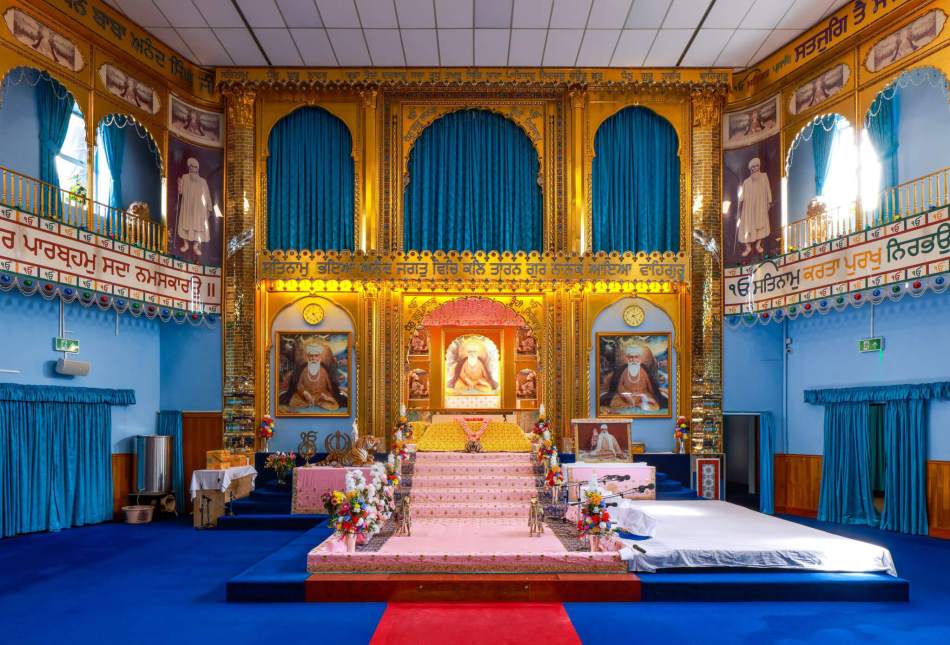
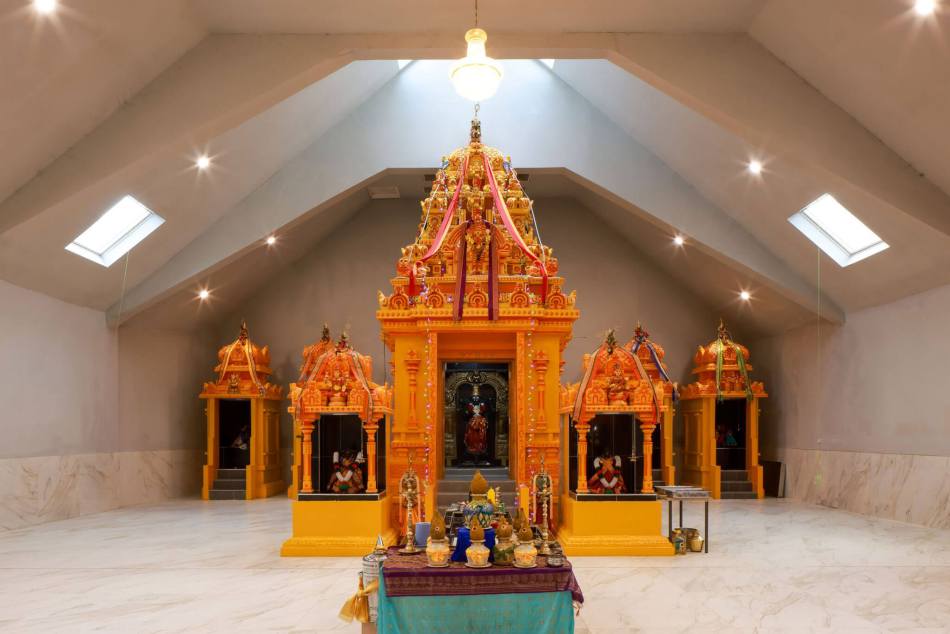
While former cinemas may seem an unusual venue for a church, mosque, gurdwara or temple, they are often ideally suited to worship.
The spatial organisation of cinemas lends itself well to the performative style of worship in Pentecostal churches, where the stage provides a platform for musical services. In mosques, expansive auditoria can accommodate large numbers of worshippers for Friday prayers.
In Hindu temples, the open spaces can accommodate free-standing shrines that worshippers process around. In gurdwaras, large rooms are often converted into dining halls and langar kitchens, which serve free food to the religious and local community.
The Christ Faith Tabernacle, Woolwich, London (formerly Granada Theatre)
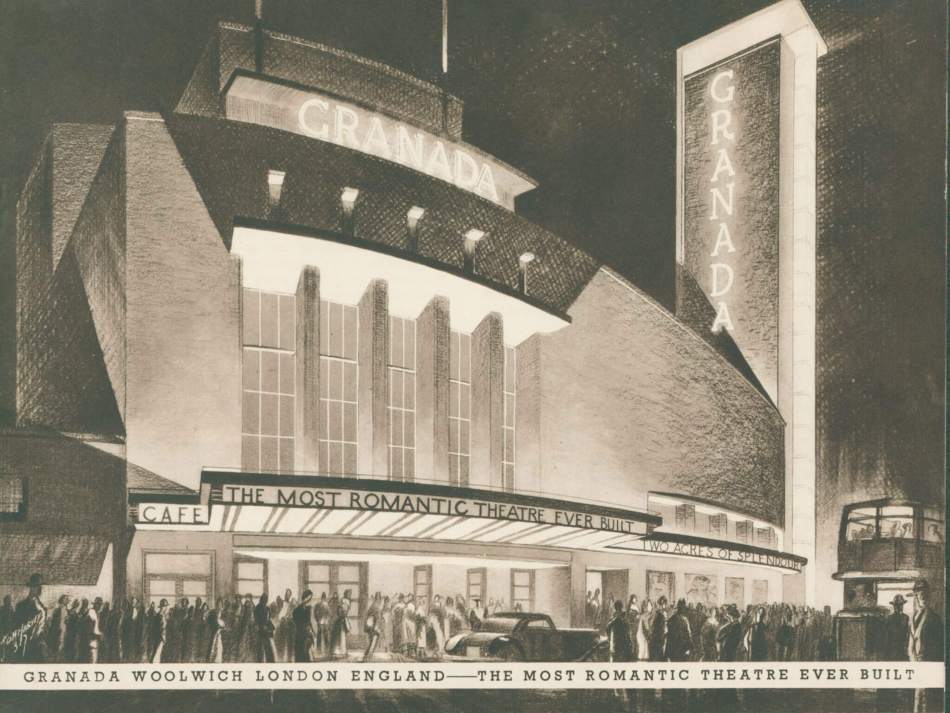
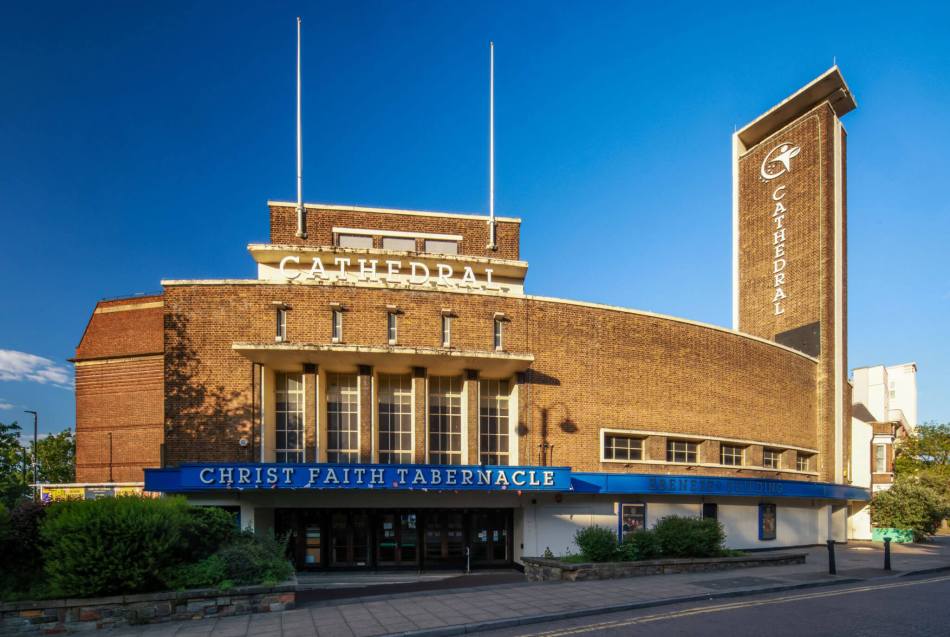
The Christ Faith Tabernacle Cathedral now occupies the building that was once the Granada Theatre in Woolwich, London. The building was completed in 1937 to designs by the renowned cinema architect Cecil Masey, with the Art Deco façade by Reginald H. Uren.
The former Granada was acquired by the Christ Faith Tabernacle community in 2011, who have since undertaken a painstaking restoration, which included reinstating the rake, organ and fixed seating.
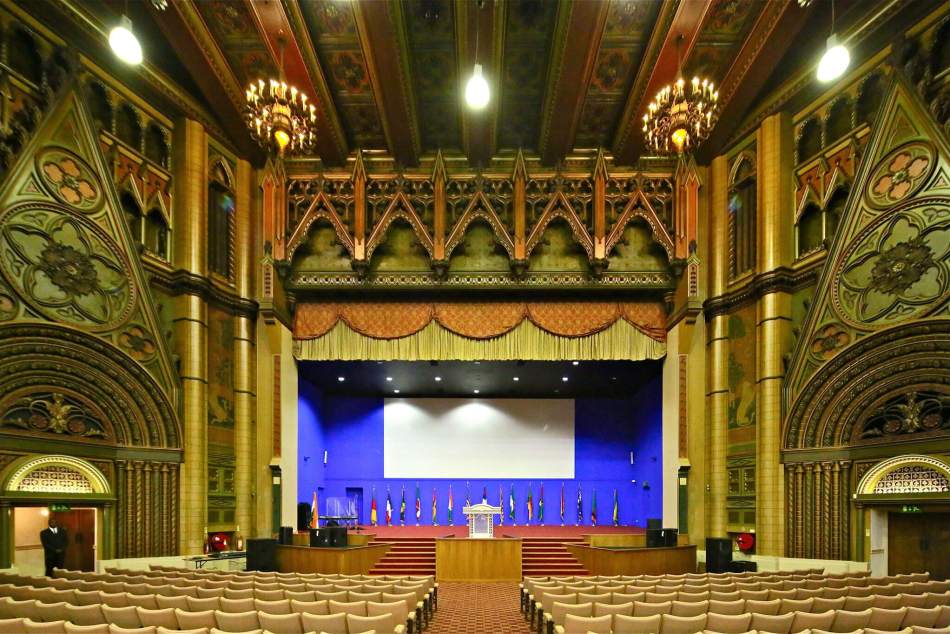
The building is noted for its dramatic Gothic interior, which was created by Russian set designer Theodore Komisarjevsky. The design was intended to be church-like, with Komisarjevsky writing that he had purposely chosen the Italian Gothic style at the Granada, because it was used “mostly in churches…which were designed for ‘religious shows’ which have the same origin as the shows of Secular theatre.”
The Bath Forum, Bath, Somerset (former Forum Cinema)
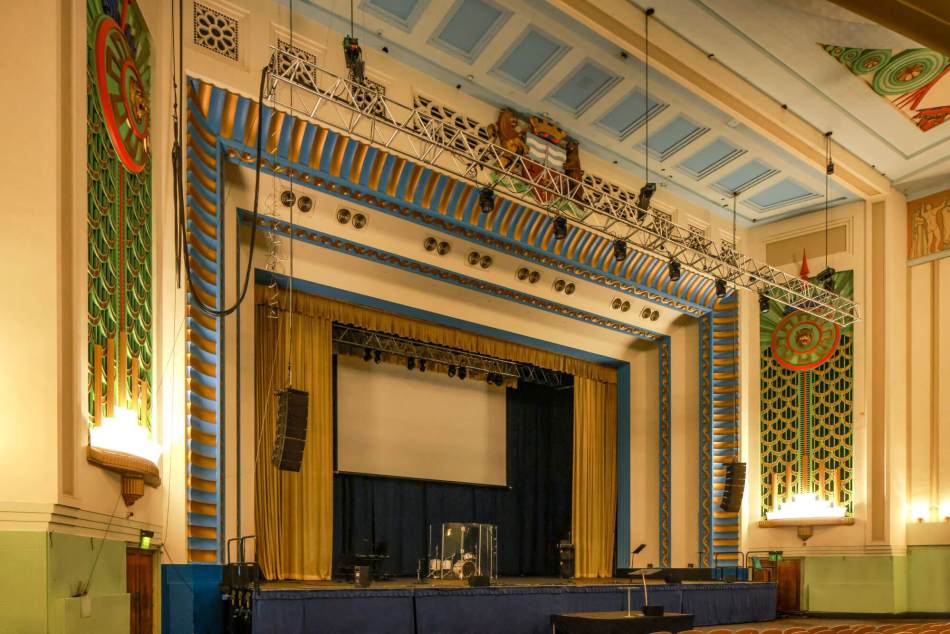
The Bath Forum is a church and venue operating in the former Forum Cinema in Bath, Somerset. This striking Grade II* listed ‘super cinema’ was completed in 1934 to designs by A.S Gray. The cinema closed in 1969 and, following a period as a bingo hall, it was acquired in 1988 by the Bath Christian Trust, for use as a place of worship, theatre and concert venue.
The Trust invested in a sensitive renovation of the building and its opulent Art Deco interior.

Portsmouth Jami Mosque and Islamic Centre, Southsea, Hampshire (former Gaumont)
The Portsmouth Jami Mosque and Islamic Centre in Southsea, occupies the former Gaumont (originally Plaza Cinema), which was designed by Henry J. Dyer and Son and opened in 1928. The interior was decorated in the ‘Atmospheric’ style, which featured inventive lighting effects to simulate sunlight, moonlight, and cloud effects on the ceiling.

The cinema closed in 1965 and was subsequently converted into a bingo club, which operated until 1997. In 1999, an arson attack on the empty building left it badly damaged. The building was purchased in 2002 for use as a Mosque and community centre. Since acquiring the former Gaumont, the community has undertaken a meticulous refurbishment of the building.
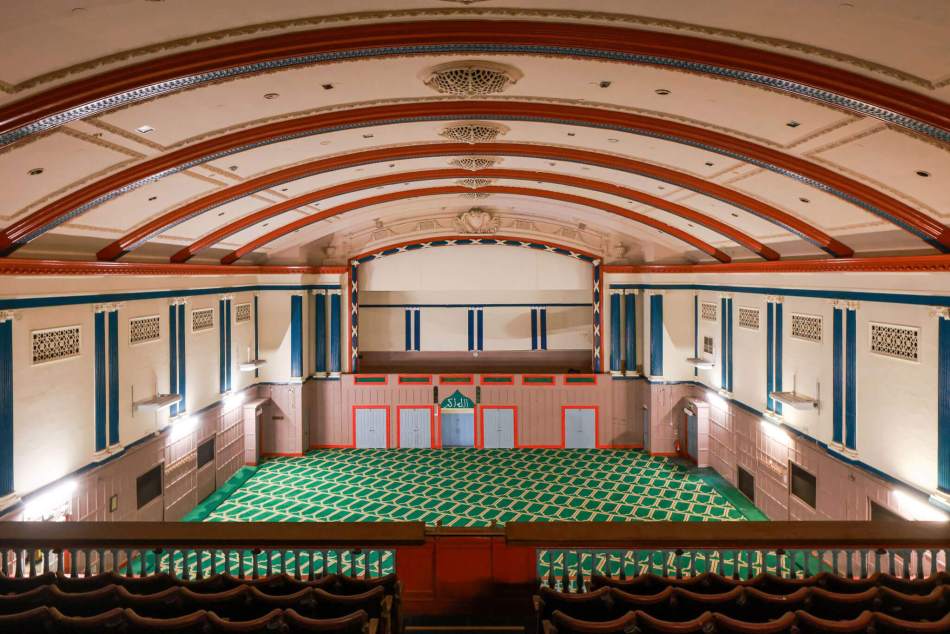
Jehovah’s Witnesses Assembly Hall, Wythenshaw, Manchester, Greater Manchester (former ABC)
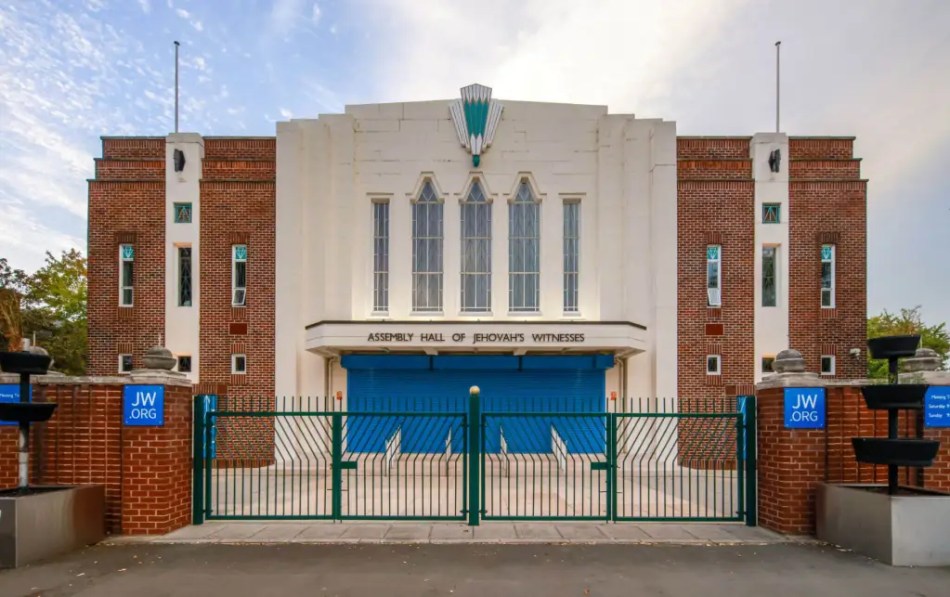
This Jehovah’s Witnesses Assembly Hall is housed in the former ABC cinema in Wythenshaw, Manchester, which was designed in the ‘Jazz Modern’ style. The building features a unique colourful interior with decorative plasterwork that resembles a church organ.
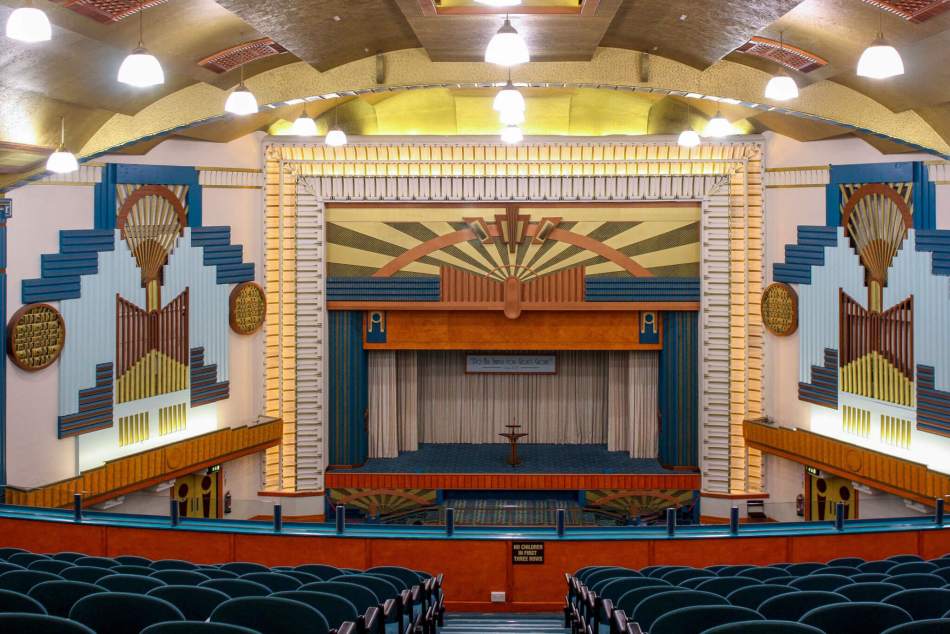
The ABC opened in 1934 and was originally operated by the Independent Forum Cinema Company, but was taken over in 1936 by Associated British Cinemas and renamed ABC in 1964. The cinema closed in 1974 and was used as a live theatre until the Jehovah’s Witnesses acquired it for use as an assembly hall.
A similar Jehovah’s Witness Kingdom Hall was established in the unlisted former ABC cinema in Southgate London. The communities have restored both to a high standard.
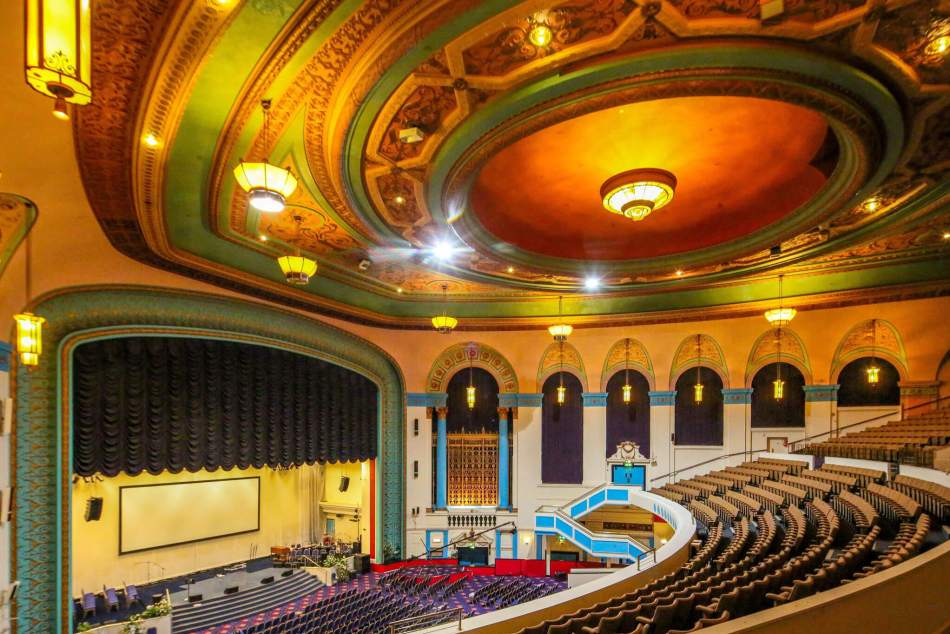
Ruach City Church, Kilburn, London (former Gaumont State ) Grade II*
The former Gaumont State, the largest cinema ever built in England, was completed in 1937 to designs by the celebrated cinema architect George Coles. The Art Deco exterior was inspired by the Empire State Building in New York, which had recently been completed, but the interior employed a more traditional classical style.

In 1981, the cinema closed and was converted into a bingo hall. After the closure of the bingo hall, the Gaumont was acquired by the Ruach City Church in 2008 and opened for worship in 2010.
The building was painstakingly restored and retains its original organ. The former cinema is ideally suited to the community’s lively, performative worship.
The Zoroastrian Centre, Harrow, London (formerly Ace Cinema, originally Grosvenor Cinema) Grade II*.
The Zoroastrian Centre occupies the former Ace Cinema, which was completed in 1936 to designs by F.E. Bromige. The distinctive cinema was listed in 1981 at Grade II and subsequently upgraded to Grade II* in 1984 in recognition of its unique sweeping Art Deco façade and interior.
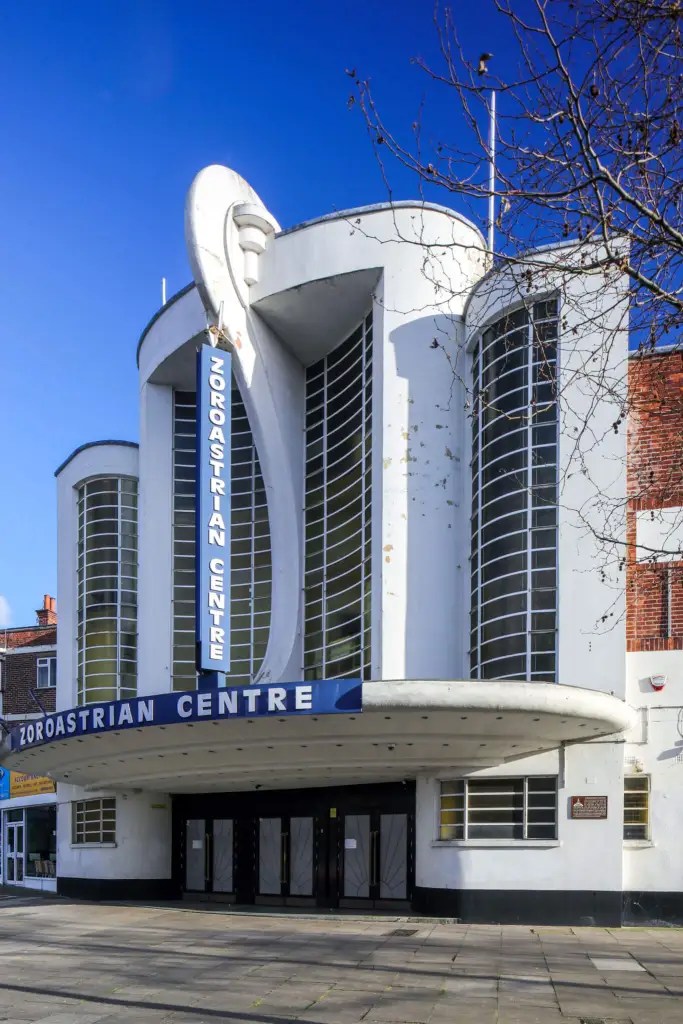
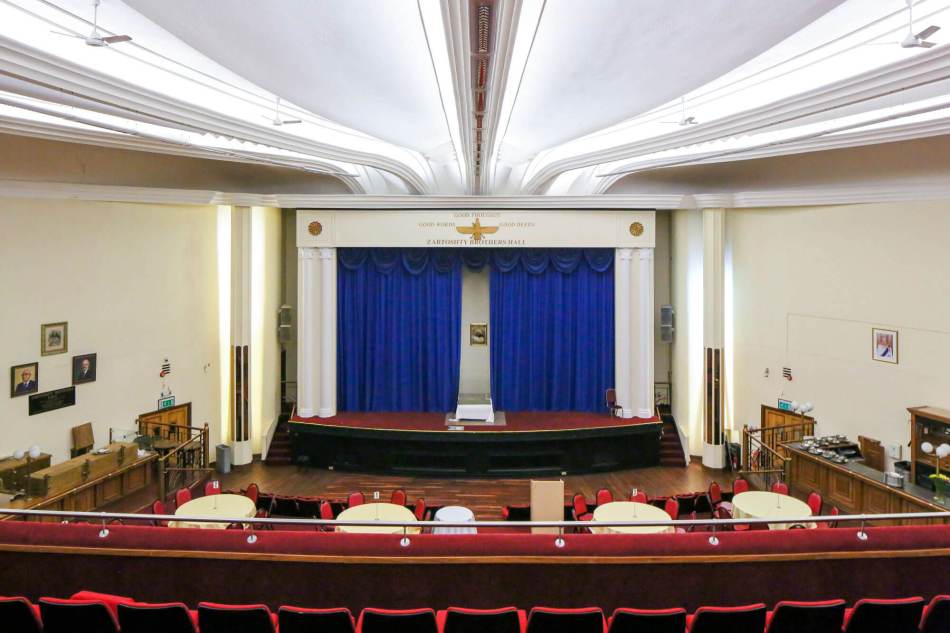
The Ace Cinema closed in 1986 and was used as a bingo hall until 1999, when it was acquired by the Zoroastrian Trust Funds of Europe, who undertook a costly restoration of the building. As a result of the work undertaken by the Zoroastrians, the cinema was removed from the Heritage at Risk Register in 2005.
The building is now used for religious ceremonies and community events, with the former projection room housing the Zoroastrian sacred fire.
The future of cinema buildings in England
Repurposed cinema buildings are once again facing threats, as the nighttime economy struggles and pubs, restaurants and bars have closed.
In contrast, many cinemas that have been converted into churches, mosques, and temples have remained in use and continue to flourish.
These buildings are surprisingly well-suited to worship and have become cherished landmarks for the religious communities that have given them a new life.
Leave a Reply