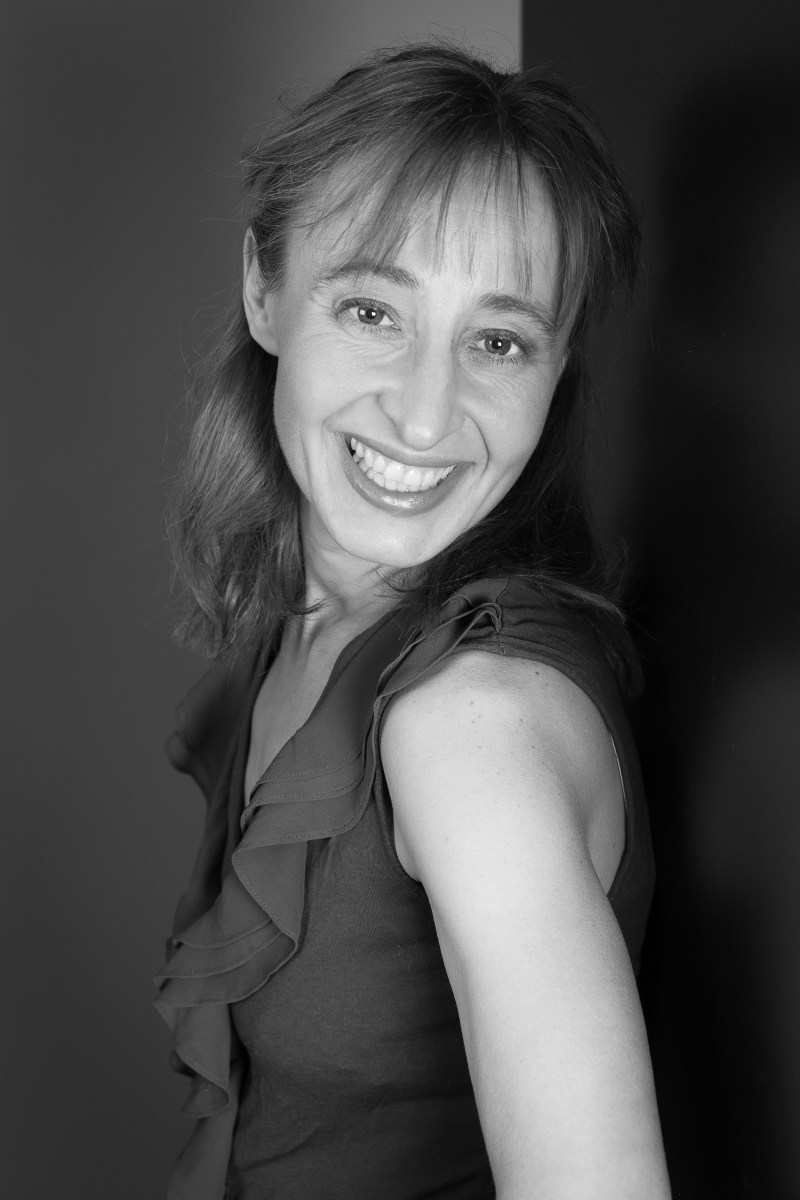
Hello and welcome back to our “An Interview With” series! Today it is my pleasure to have author and historian of the Second World War, Victoria Panton Bacon, on as our guest, in a timely post for Remembrance Day. Today also sees the release of Victoria’s first children’s book, Their Second World War.
Victoria is a ‘People Person’, and loves to write, particularly about the Second World War – her four published books all contain true stories of WWII, given to her by veterans who lived through it, or by family members wanting their loved one’s experiences to be recorded. In the past, she also founded and ran a charity called Elizabeth’s Legacy of Hope which raised funds for child amputees in developing countries, and she also worked for the Conservative Party and as a journalist and producer at the BBC.
Hello Victoria! It’s lovely to speak to you today. You are a historian of the Second World War, so it’s easy to start by asking what drew you to the period?
I began my writing about the Second World War in 2012, after finding my Grandfather, Alastair Panton’s, memoir of being an RAF pilot during the Battle of France in the summer of 1940 – during which time he was shot down three times, and again after this battle had ended and the Battle of Britain had begun; this time he was taken prisoner. I researched what he had documented and wrote it up and was delighted when it was published the following year as Six Weeks of Blenheim Summer.
I was then invited to various WWII veteran gatherings and began to be told, first hand, of more and more memories. These I could not ignore, and in 2020 Remarkable Journeys of the Second World War was published, a collection of eleven, again true and previously unpublished, stories of the war. This book was followed by a sequel, a collection of women’s memories: Remarkable Women of the Second World War, published in 2022.
You have just published a children’s book on the topic which came out of some of those previous non-fiction book for adults. What made you want to turn to writing for children, and why these stories?
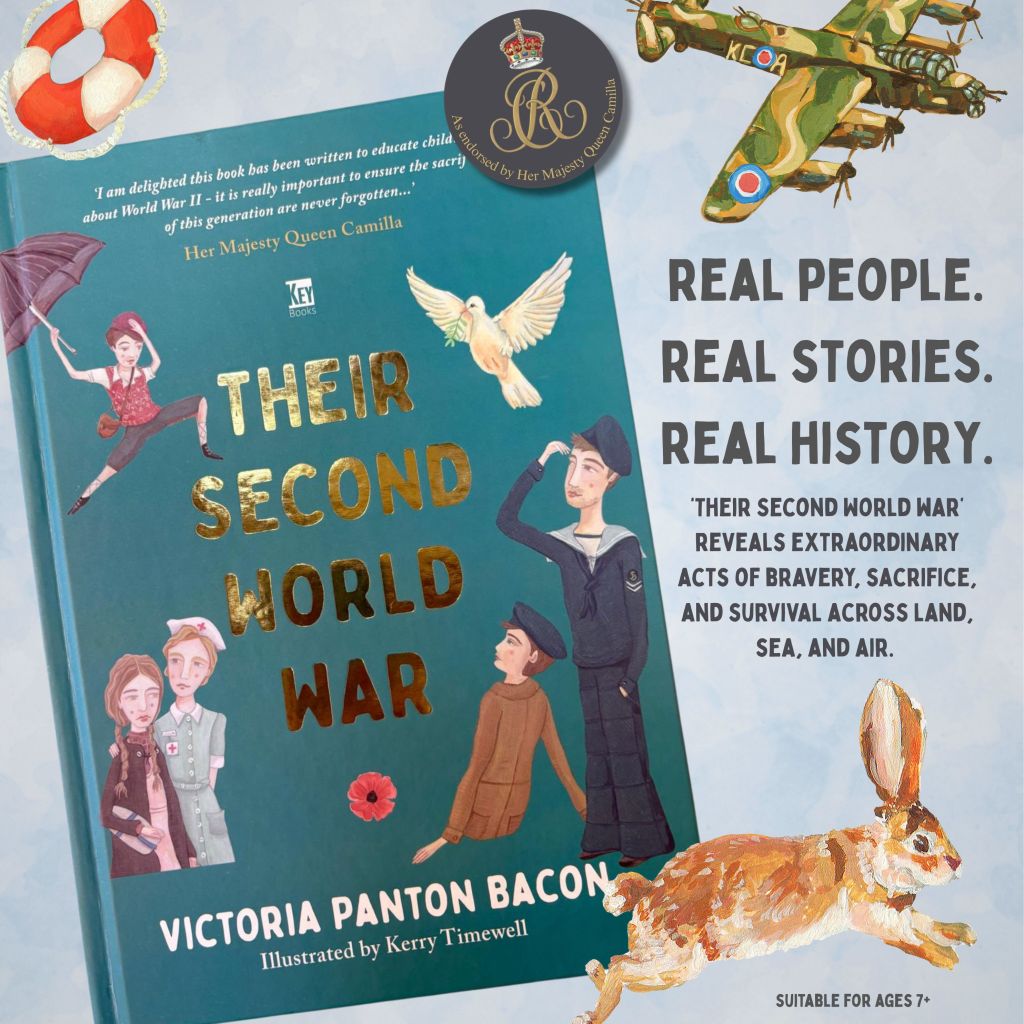
The World War II stories in my three published books are all true stories, previously unpublished, illustrating the reality of what it was like to be part of the Second World War. Because these are true stories they are vital historical testaments, important reading for anyone who yearns for a true understanding about the war – be they for adult or child. However, my adult books would not be suitable for a younger audience because many (not all) the chapters are too graphic; so I turned my hand to re-writing some of the memories to enable children to be informed by the truth too, not diminishing the pain and horror of war, but simply by writing appropriately – also with illustrations. The stories contained in Their Second World War are a selection of a variety of memories to illustrate many different aspects of the war as possible; six chapters drawn from my books, four are original memories given to me especially for the children’s book.
So as you started reworking these stories, what differences did you find in writing for a younger audience?
It is different because I had to keep putting myself in the ‘mind’ of a child; with every sentence thinking about how I would have reacted to what I was writing at that age, rather than my natural response to the words at the moment. The fact that these chapters are much shorter than those in the adult books does not mean they were necessarily easier or quicker to write. In some ways they are more challenging to write because the words can’t just ‘flow’ they need to be considered very carefully, constantly, for suitability.
Each profile contains direct words and quotes from the people you are discussing – it seems it was important to you for the children to hear original voices, the people’s stories in their own words?
Absolutely – this truth is the essence of the whole book. Each chapter (there are ten) is based on the true memories I have (had the privilege of) been given. Direct quotes are an essential part of each chapter – my words are written to put their words into context, to explain and set the scene with the quotes being the centre piece. Always remembering these stories are not mine, they have been given to me to share.
Although you focus on positives from each story, you don’t shy away from giving some of the realities of the war, such as difficult conditions for soldiers, and explaining what gas chambers were. How did you balance giving children the truths of the horrors that occurred, in a way suitable to the age group?
It is difficult, but – as mentioned before – I had to keep considering very carefully how I would react / respond to what was being written. When trying to protect young minds but inform them correctly too, I think it is important to stick to the facts as much as possible and lessen the descriptions of the awfulness of what has to be written in a Second World War book. The illustrations are also deliberately colourful – because in each chapter – including the Holocaust memory which was very hard to write suitably for this age group – does have messages of love, hope, strength – in midst of the painful situations described
You reiterate throughout the book how important it is for us to remember these stories now that the war generation are dying. Why is this so important for you?
This is very important to me because I truly believe that these are memories of immense courage, courage that if read about and known about can be – and is – inspiring and vital. This is a sadly passing generation … but there are those still with us who lived through the war, as children. These people I meet are proud that they were ‘there’, proud of their family members who served on the Frontline, or worked at home supporting the war effort that way. We need to keep talking about the War for them, to keep their loved ones memories alive. However, going forward in years to come when this generation has passed too, the Second World War should still be remembered, and remembered correctly, respectfully, properly – in a way only the truth can do.
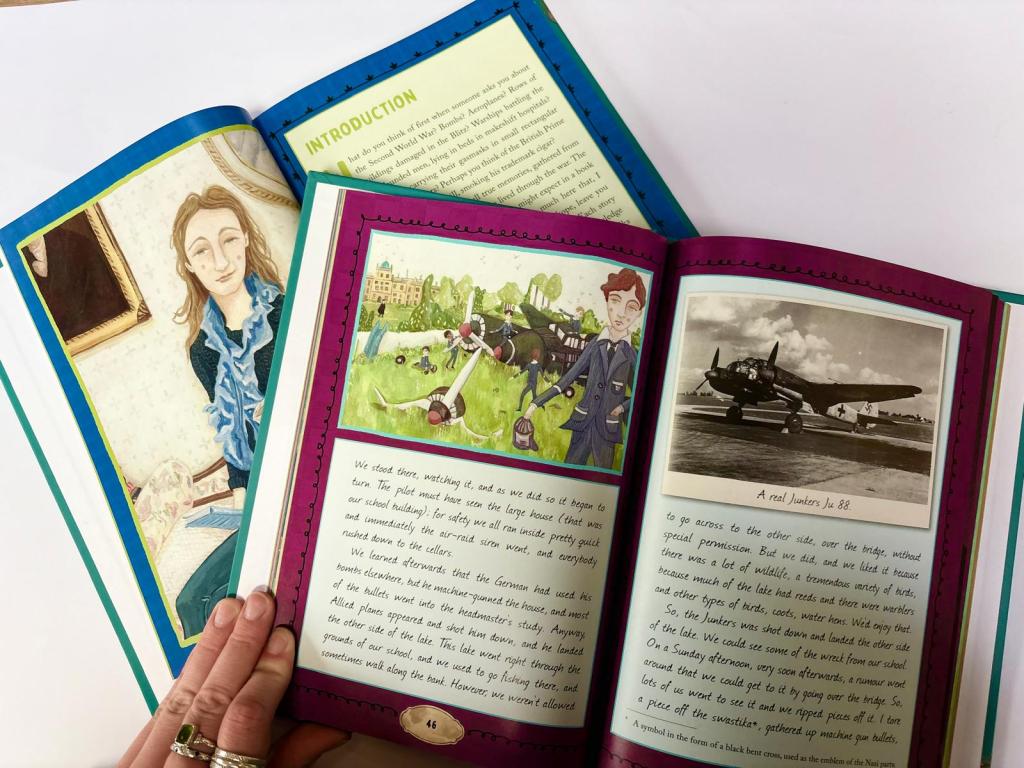
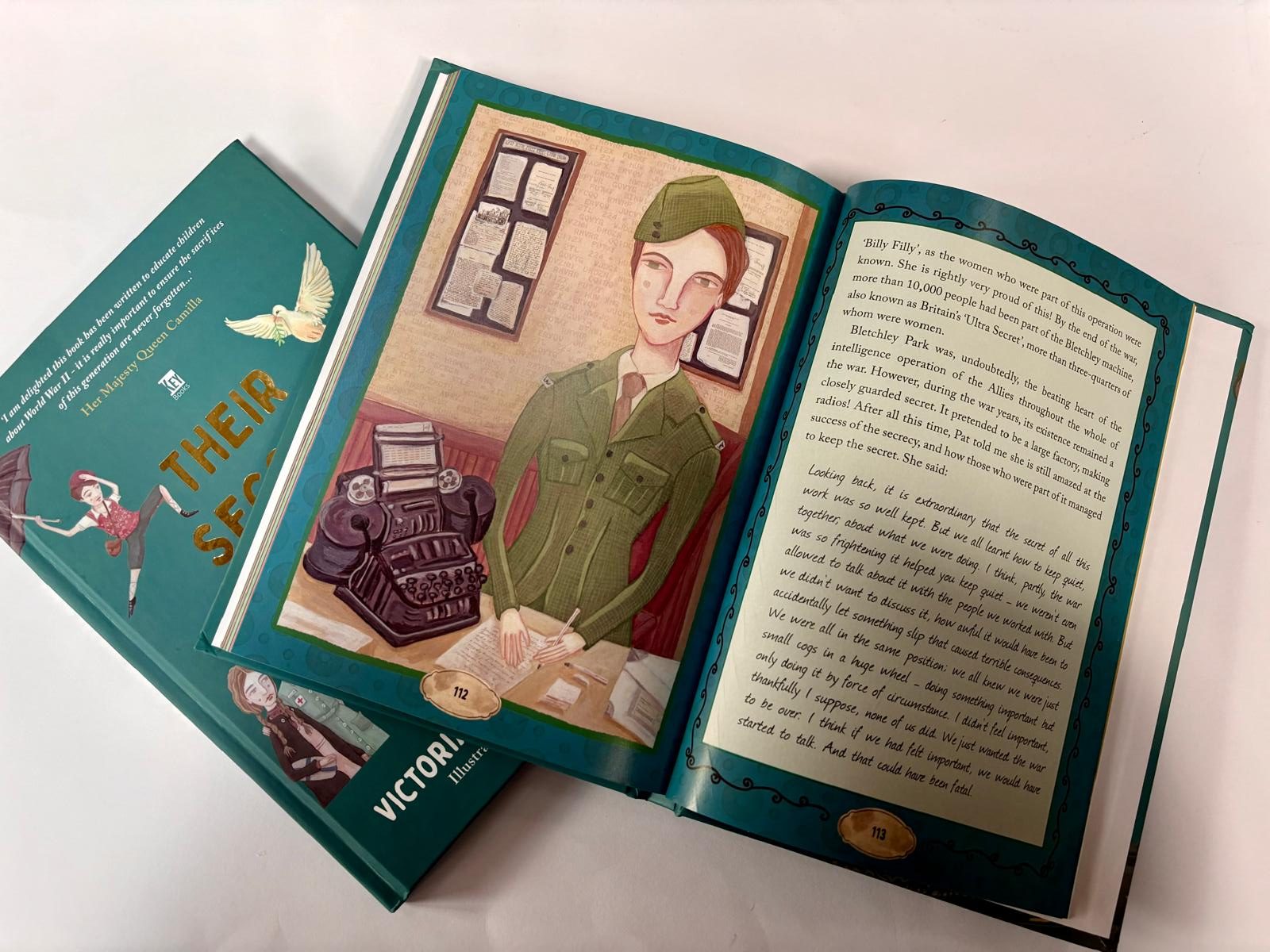
The book has a lovely mixture of illustrations and real photographs. Was this something you wanted from the start, or did it come from the editing process?
This really came from the editing process, by Key Publishing. I had already sourced the illustrations (from Kerry Timewell, who I think has done these wonderfully) – Key added the photographs; I think the finished product is delightful.
They certainly add a lot more humanity to the stories. What advice would you give to anyone wanting to write a children’s history book?
I – personally – think you really need to not only care about, but be absolutely fascinated in, the period of history you feel needs to be written about. Inject that passion into your writing. Then do lots of research and make sure you are not structuring your book in a way that has already been done. It needs have a ‘U.S.P.’ (unique selling point!)
It’s great advice – children’s books are hard work! Do you have any more projects you can tell us about?
Yes! Volume Two! I would love to begin to re-structure more of the stories in Remarkable Journeys and Remarkable Women of the Second World War … with illustrations again, as there is more vital historical information I am yet to share with children, which I would very much like to do. I would also like to write His Second World War; which would be a re-structuring of my first book Six Weeks of Blenheim Summer, which is my Grandfather’s (true) story of being an RAF Pilot during the Battle of France in the summer of 1940.
Thank you so much to Victoria for chatting with us today, I found it so interesting to get an insight into how children’s history books are written, and I hope you did too. If you have a young person in your life then do check out Their Second World War, or have a look at Victoria’s other books for yourself!
Previous Blog Post: The Origins of the Hundred Years’ War
Previous in An Interview With: Emily Murdoch Perkins, Historical Author
List of Blog Posts: here Blog Homepage: here
Buy my books via the pictures below! Or why not check out our shop?
Follow us:


Leave a Reply