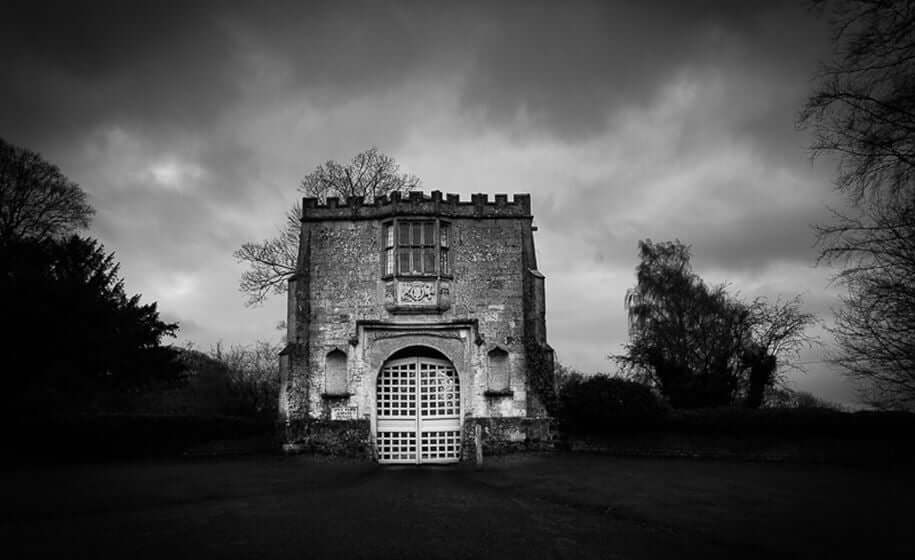
During the 16th and 17th centuries, a widespread belief in witches permeated all levels of English society. Witchcraft was initially deemed a capital offence in 1542 during the reign of Henry VIII, only to be repealed 5 years later.
Witch fever reached new heights when witchcraft was again classed as a felony in 1563 under Elizabeth I. It was an era that brought a tragic rise in accusations, resulting in the unjust punishment of thousands, mainly affecting economically disadvantaged and vulnerable women.
Even after the 17th century, people accused of and identifying as using magic fascinated the masses, yet were still pushed to the edges of society.
Here are some sites that were witness to events associated with witchcraft throughout English history.
1. Fisherton Anger (Salisbury), Wiltshire
It is impossible to say who the first person to be executed for witchcraft was due to the lack of documents and surviving evidence. However, from what does still exist, one of the first we know of is Agnes Mills (or Mylles) from Wiltshire.
She was executed at Fisherton Anger (now Salisbury) for having killed the infant William Baynton by means of witchcraft in April 1564.
Agnes’ story also highlights how supposed witchcraft could be a source of income for many women. Allegedly, Agnes was paid to commit the murder by Dorothy Baynton, the wife of the infant’s uncle and next in line as heir to Sir Edward Baynton, a wealthy family with royal connections.
Interestingly, another supposed witch named Jane Marsh was paid to help in the trial. She declared Agnes Mylles had undertaken the killing and that Dorothy Baynton had been the procurer. Afterwards, Agnes Mylles confessed and was hanged.
Unfortunately for Jane, the Bayntons threatened that unless she denied her statement about Dorothy, she would be left in prison herself. Jane spent 18 months in jail before revoking her statement.
2. Colchester Castle, Essex
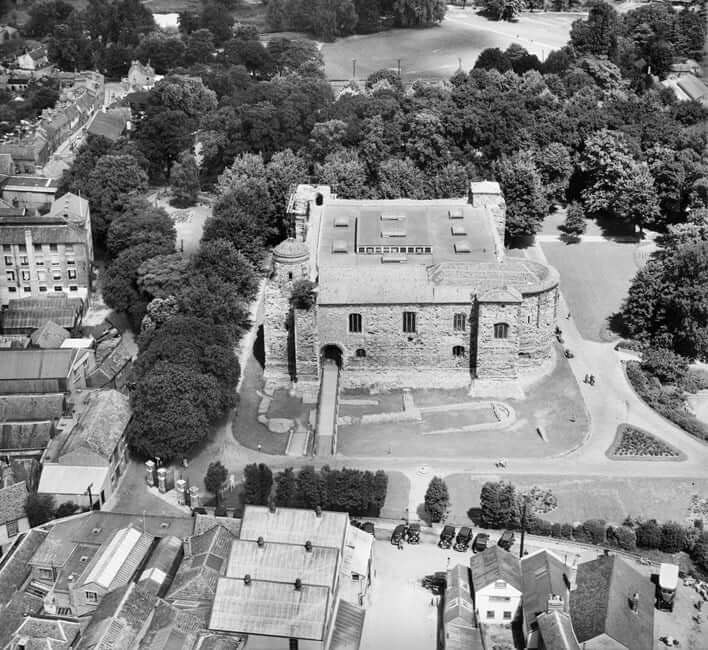
Self-proclaimed Witchfinder General, Matthew Hopkins, was the most notorious witch-hunter in the 1640s. He jailed and interrogated those he believed to be witches at Colchester Castle.
The interrogation took place in the castle’s dark cells, where many are believed to have died as a result of their incarceration before even being brought to court.
In Essex alone, around 1,000 people were accused of witchcraft from the 1500s to 1800s. They included Elizabeth Lowys, an active cunning woman, who was also among the first women known to have been sentenced to death for ‘murder by magic’ in 1564.
3. Tuesday’s Market Place, King’s Lynn, Norfolk
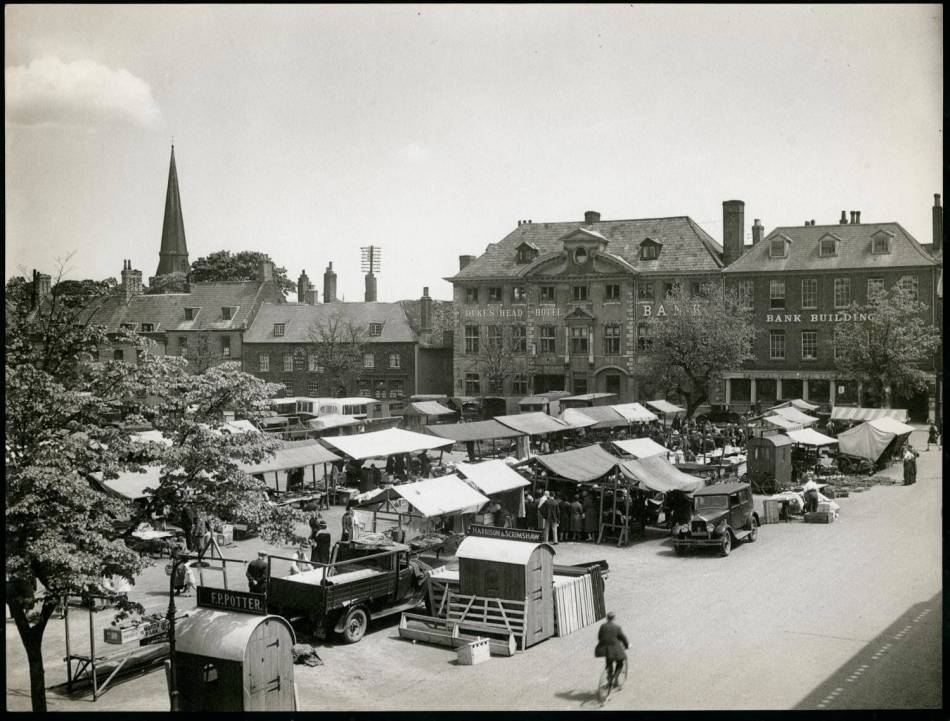
For many years during the 16th century, the market place in King’s Lynn was the scene of public executions of alleged witches. This probably included Mother Gabley, who was the first person condemned in Norfolk under the 1563 Act Against Conjurations, Enchantments and Witchcrafts.
Gabley was accused of causing the death of 13 men who had sailed from Spain to England. Allegedly, she boiled eggs in cold water, stirring vigorously to raise a storm at sea.
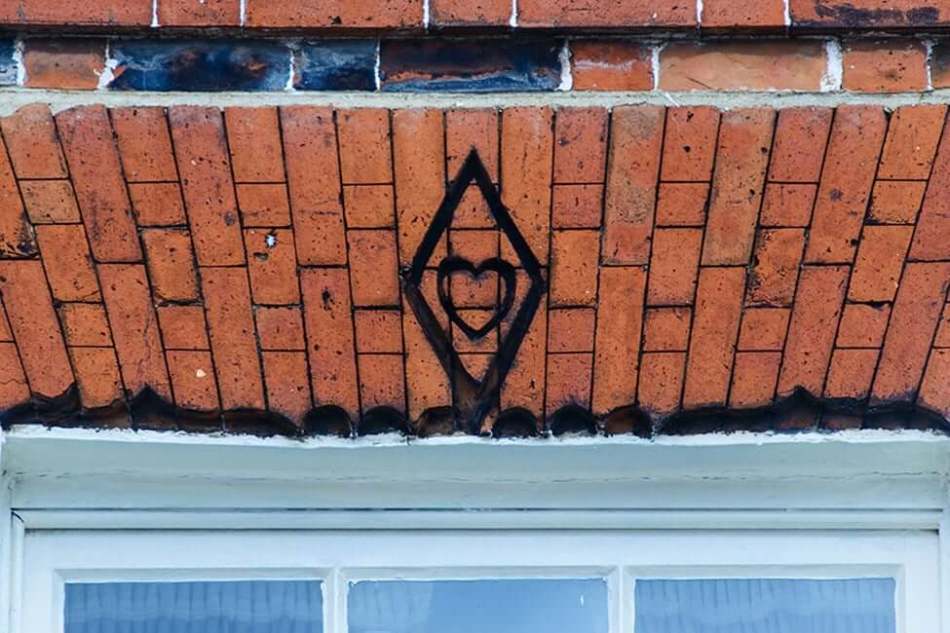
The most famous execution was of Margaret Read, who was found guilty of witchcraft in 1590 and burned alive. Legend has it that whilst being consumed by flames, Margaret’s heart jumped from her body and hit the wall opposite, leaving a permanent burn on the brick.
It’s a good story. But the front of the building in question actually dates to the early 18th century, and the heart and diamond motif probably relates to an early 20th century alteration to the window.
4. Mother Shipton’s Cave, Knaresborough, North Yorkshire
Mother Shipton is a legendary figure who, if she did exist, probably lived in York in the 1530s. Her story first appeared in a pamphlet in 1641, where she was said to have predicted that Cardinal Wolsey would not reach York in 1530.
Later accounts claim that she was born Ursula Soothtell in 1488. She was believed to have been a witch and an oracle who morbidly predicted the days of reckoning and tragedies that were to befall the Tudor monarchy.
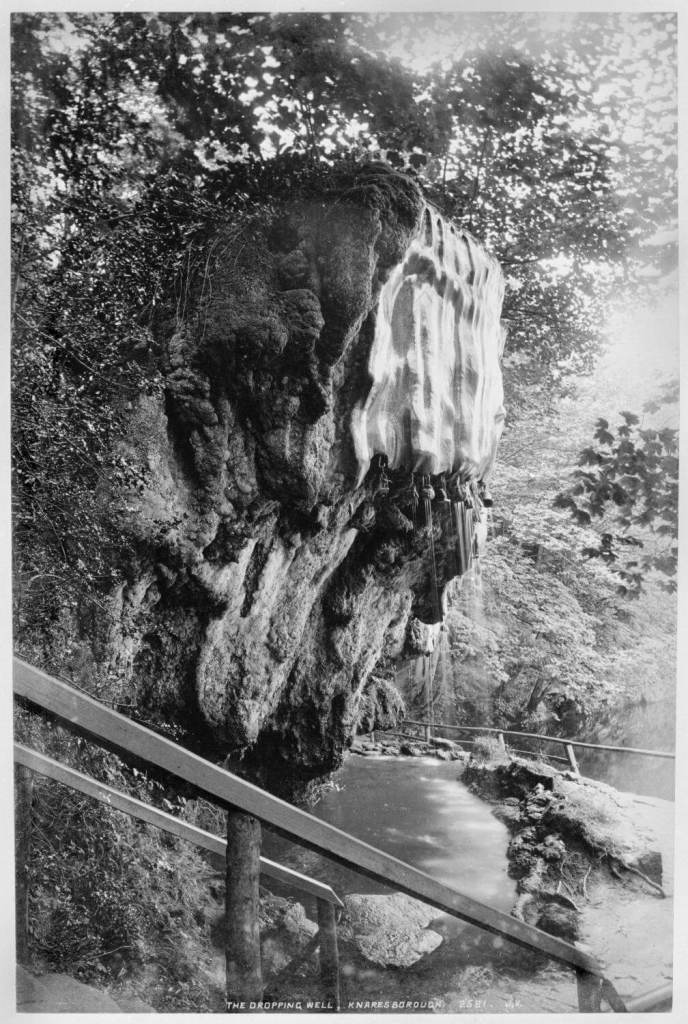
Mother Shipton was said to have died aged 73 in York. These later accounts also elaborated on her prophesies, claiming she foresaw the Spanish Armada in 1588 and the Great Fire of London in 1666.
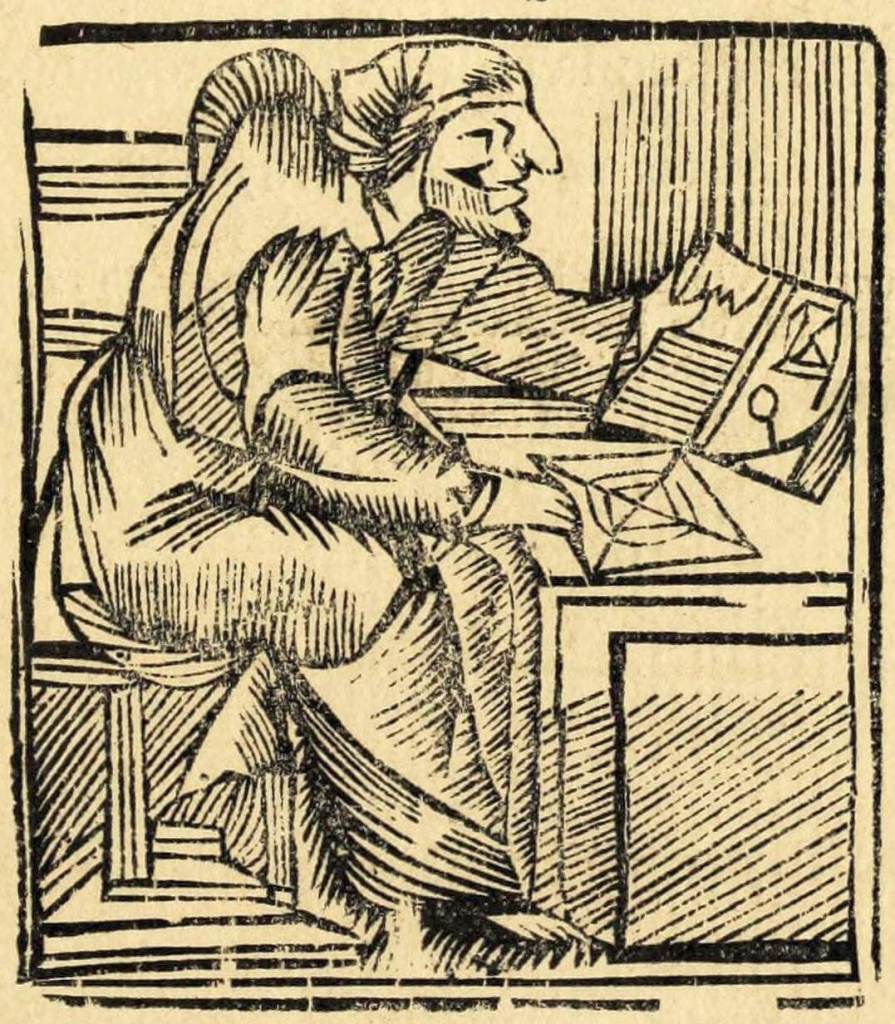
In 17th-century depictions, she was shown as an elderly woman with a deformed shape, portraying many of the classic tropes of a witch.
The claim that Mother Shipton was born at Knaresborough was first made in a pamphlet from 1686. The wells and springs of Knaresborough had been attracting tourists since the 16th century, and as the story of Mother Shipton remained popular in the 18th and 19th centuries, interest grew in her supposed birthplace.
In the 19th century, a house near Low Bridge in Knaresborough was promoted as the place where she was born, but, in the 20th century, she became associated with Mother Shipton’s Cave.
5. Pendle Hill, Lancashire
Pendle Hill is well known for its associations with witches. One of the most famous witch trials in English history was the Pendle witches in 1612, where 12 accused witches who lived in the Forest of Pendle (primarily women) were charged with the murders of 10 people using witchcraft.
The mass of confessions included in the trials recalled events of up to 18 years before and involved tensions between families, neighbours, landlords and tenants.
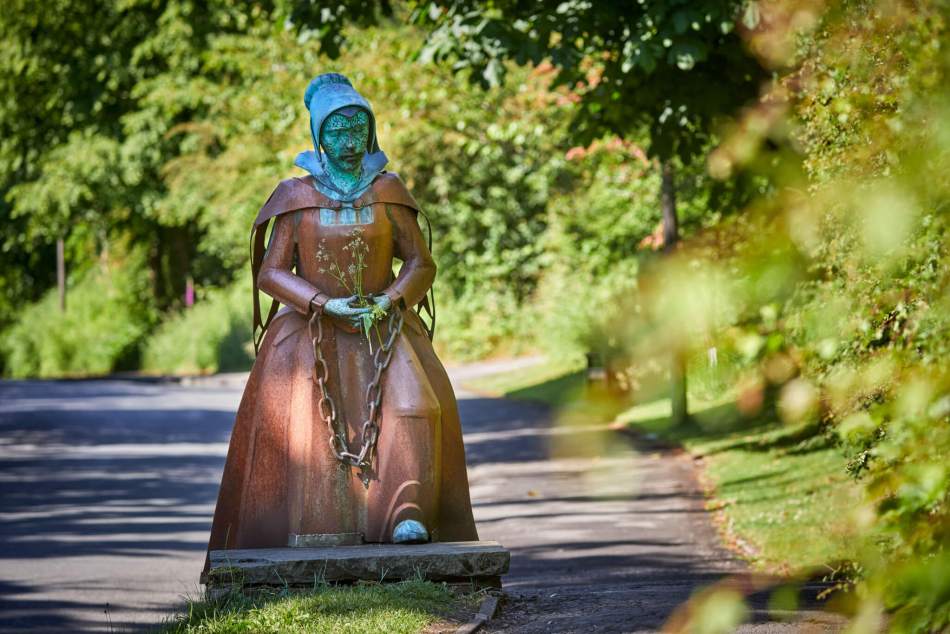
The events leading to the trials began on 18 March 1612, when Alizon Device was accused of witchcraft after a pedlar refused to buy her pins and claimed she had bewitched him. Her family, along with Anne Whittle and her daughter, were soon arrested and sent for trial.
Meanwhile, their family members held a meeting at Malkin Tower, in the Forest of Pendle, where a plot to free the prisoners and destroy the castle was discussed. The location of the site is still unclear, although it may be close to the present-day Malkin Tower Farm. The meeting was seen as a witches’ sabbath.
This led to further interrogations and the eventual involvement of several families, who were accused of witchcraft and plotting with the devil.
A key witness in the trials was one of the accused’s 9-year-old daughter, her testimony leading to the execution of her mother, sister, and brother. One of the accused died in custody, another was found not guilty, and the other 10 were found guilty and hanged.
6. Town Moor, Newcastle
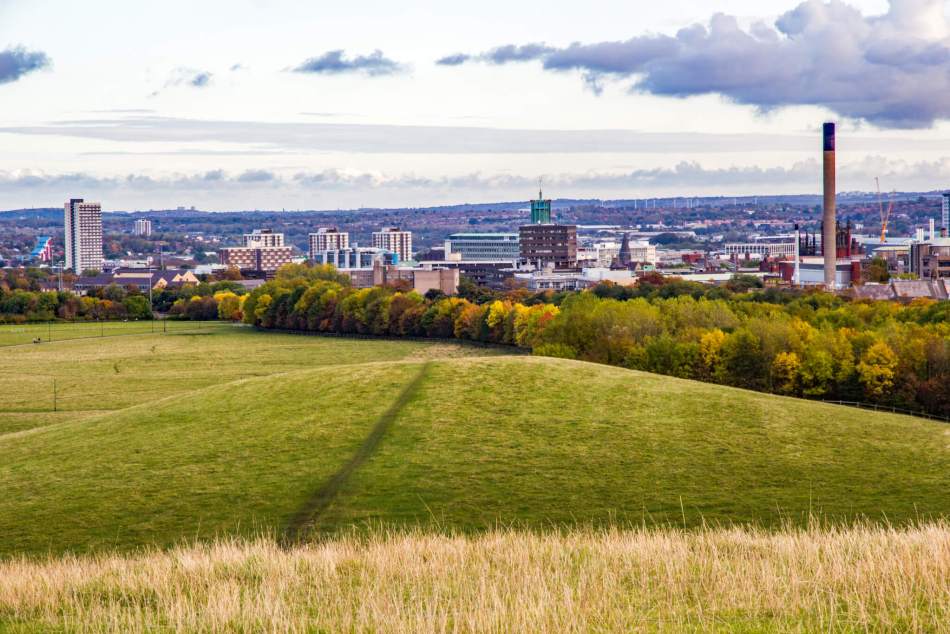
One of the largest mass executions in English witchcraft history took place in Newcastle in 1650.
It began in 1649 when 30 people were accused and brought to the town hall to be tried as witches. The trial involved being publicly stripped, searched for devil’s marks, and pricked with a pin.
Superstition believed that a witch could not feel pain. If the accused did not bleed, it was evidence against them.
Witchfinders often used retractable pins to ensure convictions, as they were paid per guilty verdict.
The trials ended with 14 women and a man condemned to death, and gallows were built on Town Moor to execute them publicly. All of the deceased were buried in unmarked graves at St Andrew’s Church in the city centre on Newgate Street.
In a twist of fate, the witchfinder who led the accusations against the group was later arrested, tried, and hanged for causing the deaths of 220 people.
7. York Castle Prison, York
Up until 1736, English law allowed courts to convict and execute people for witchcraft. However, once the law had been repealed, it didn’t mean that belief in magic was eradicated.
80 years later, a trial took place in Yorkshire that caused huge media attention. According to broadsheets from the time, a woman named Mary Bateman was executed for ‘witchcraft and murder’.
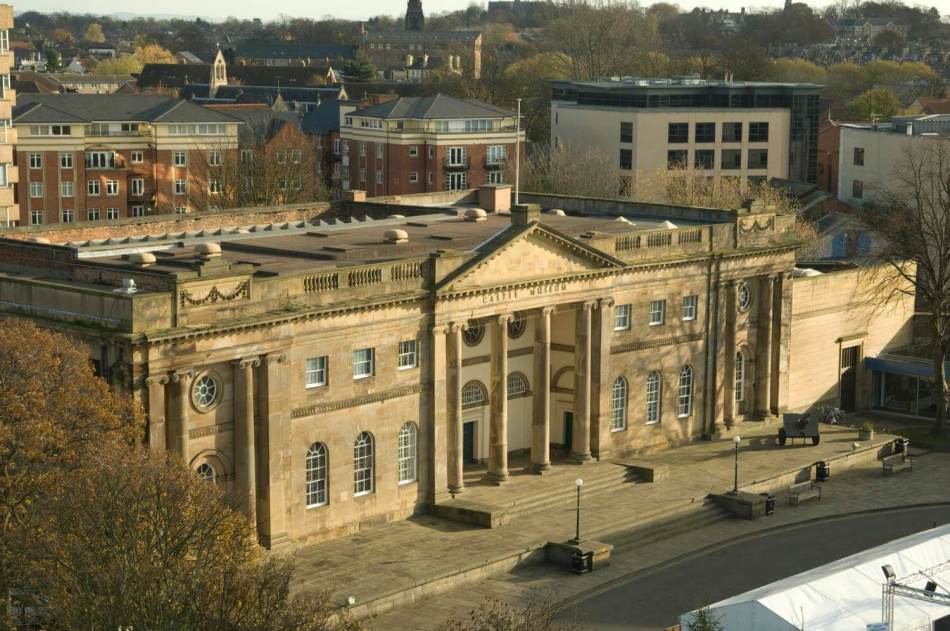
Mary wasn’t formally accused of witchcraft. In fact, she was prosecuted for fraud as well as murder, but the media highlighted her popularity for telling fortunes and making charms and referred to her as the ‘Yorkshire witch’.
It was her claims to be able to cure people which led to the death of her victim, Rebecca Perigo. In 1808, Mary treated Rebecca with white powders for a nervous or spiritual ailment, instructing her to mix them into a pudding. Rebecca died a week after eating it.
Authorities found corrosive mercury powder on Mary, leading to her arrest, charge of murder, and hanging at York Castle on 20 March 1809, just 3 days after her trial.
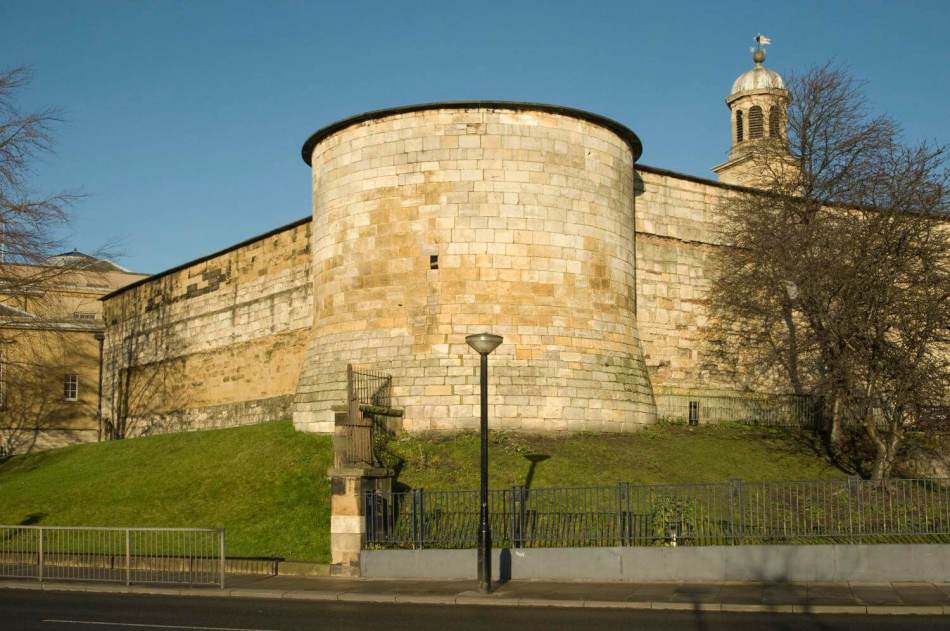
The story of the ‘Yorkshire Witch’ drew 5,000 people to witness Mary’s hanging, with more lining the road to see her coffin travel to Leeds General Infirmary, where hospital staff charged 3 pence to view her corpse.
The story of the ‘Yorkshire Witch’ and physical evidence of protective measures like witches’ marks demonstrate that belief in witchcraft and the supernatural was widespread until the late 19th century.
Over time, and throughout the 20th century, suspicions around witches and magic in England began to reduce. However, it’s important to remember the lives lost during past centuries, when the fear of the unknown, accusations and misunderstandings led to tragic consequences.
Discover your historic local heritage
Hidden local histories are all around us. Find a place near you on the Local Heritage Hub.
Further reading
Leave a Reply