This blog post was written by IHR Fellow Nilakshi Das.
Life history interviews are rarely simple acts of narrating one’s life story. They unfold as a dynamic, relational interaction in which the interviewer and interviewee jointly shape how a life story is told and later analysed. Oral Historian Penny Summerfield noted that ‘just as we were, inevitably, actively conducting each interview, so too our interviewees were devising appropriate performances in their meetings with us.’ In the act of storytelling, therefore, what emerges is a version of the past filtered through memory, interpretation, and performance.
Across the oral history interviews I conducted for my doctoral research, performativity emerged in how interviewees constructed specific narratives they believed aligned with the project’s aims. My project examined the educational experiences and career trajectories of South Asian scientists who studied science at British universities in the post-war period. It focused on the process of becoming a scientist through academic mobility and scientific work undertaken after returning to their home countries. The interviews illustrated how personal experiences intersected with historical and political changes and shaped academic, personal, and scientific lives.
Out of the 13 life history interviews I conducted, one captured these dynamics with particular clarity: my conversation with the cosmologist Dr Jayant Vishnu Narlikar. He is best known for his collaboration with Fred Hoyle and their development of the Hoyle-Narlikar theory of gravitation, in 1965, a radically controversial alternative to the emerging Big Bang paradigm. The interview took place at the Inter-University Centre for Astronomy and Astrophysics (IUCAA), where he continued his cosmological research until his death in May 2025. I was among the last people to interview him about his experiences of studying science in Britain and building a scientific career in India. As I stood outside his office in November 2023, a sign on his door proclaimed, ‘The Big Bang is an Exploding Myth,’ signalling his long-standing opposition to the Big Bang theory.

Jayant began his interview with a narrative structure that required little prompting:
‘Well, it’s nice to meet you, and I hope we can find some interesting topics to discuss. I have been in basically so far in four different cities. First was the Banaras. Second was in Cambridge. Third was in Bombay and fourth was in Pune. So, I have decided to divide my life into these four parts. Maybe you want to ask me something about this…..’

This opening of the interview mirrored the narrative structure of his published autobiography, My Tale of Four Cities, which lay on his desk during our conversation. The autobiography provided the narrative structure through which Jayant recounted his life across the four cities. Rather than constructing an account in the moment, he drew on a pre-composed structure carefully curated and refined over time. Nonetheless, the interview was not merely an echo of his autobiography, but a version reshaped by the context of its telling. The narrative process involved sifting, selecting, and deciding what to emphasise in order to construct a coherent scientific self that he considered relevant to the project’s aim. His emphasis on the transition from Banaras to Cambridge, his later reflections on the Mathematical Tripos degree, and his engagement with unorthodox epistemic models of the universe were all themes he regarded as central to the story of academic mobility and scientific work in both Britain and India. His comment ‘Maybe you want to ask me something about this,‘ made the performative dimension of this life history interview explicit, positioning me within the narrative and signalling his readiness to shape the interview around mutually recognised themes.
The narrative structure of Jayant’s account also speaks to a wider set of questions about how people construct their life stories. The concept of ‘narrative identity,‘ developed by Paul Ricoeur, offers a useful analytical lens for understanding how such stories take shape. Ricoeur argues that individuals construct their identities through storytelling, continually negotiating and renegotiating who they are in relation to the context, audience, and time. Life stories typically follow a temporal framework, in which childhood, in particular, often serves as a foundational temporal staging point from which subsequent stages of life are retrospectively interpreted. This chronological structure allows individuals to weave together past, present, and anticipated future, creating a cohesive and meaningful life story they believe others will understand and acknowledge. Jayant’s narrative exemplifies this process, showing how an experience articulated in autobiographical writing can take on completely new meanings when revisited several decades later in a life history interview. These stories emerge only through longer, reflective interviews that consider entire life trajectories rather than short, curated media interviews.
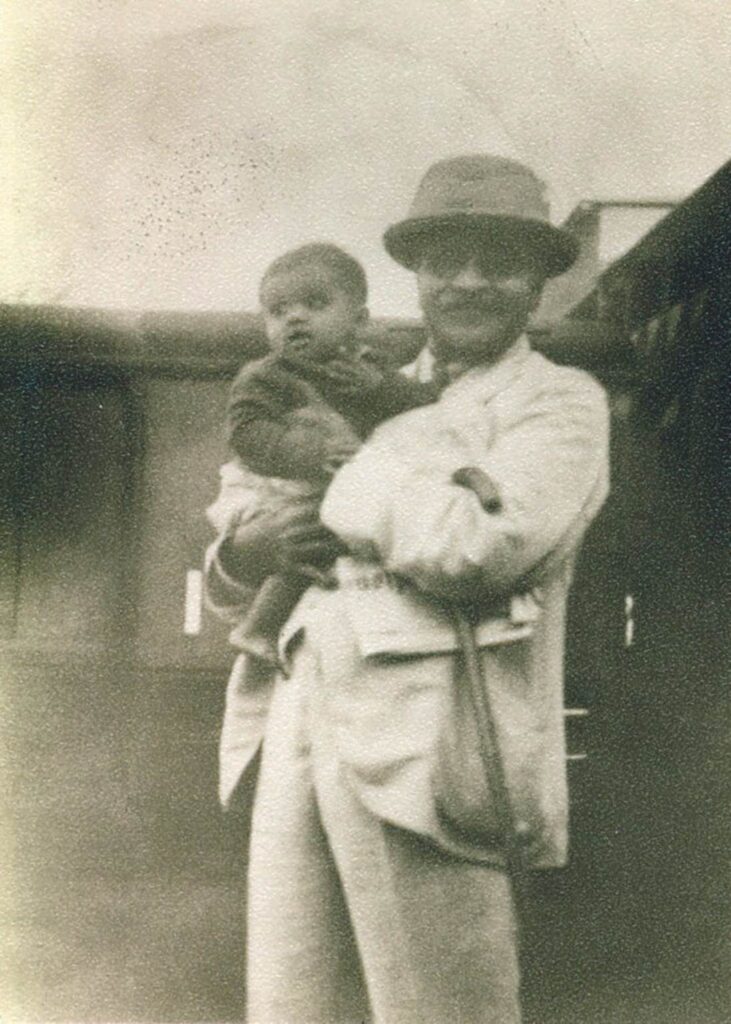
My approach to collecting scientists’ life stories reflects this understanding of memory and identities as dynamic processes. My aim is not to extract an objective account of the past, but to examine how interviewees remember, reinterpret, and reshape their experiences over time. Life histories show how people weave together different elements of memory to make sense of both past and present, and how these processes unfold within the interview encounter itself. My focus, therefore, lies less in verifying factual accuracy than in understanding how narrators construct their accounts and situate their stories within broader social and historical contexts.
Oral history has long attracted critiques, especially from documentary historians. The Marxist historian Eric Hobsbawm critiqued oral history because of the ‘slipperiness of memory’. Over the last 50 years, oral history advocates have contested these critiques, arguing that the epistemological concerns of validity, reliability, and fallibility of memory apply to all historical evidence. Inquiries regarding the authenticity of oral evidence are relevant to a considerably broader corpus of historical sources and to the common application of the interview methodology in the social sciences. Alessandro Portelli has persuasively argued that features of oral history, such as orality, subjectivity, narrative structure, memory, and the dynamics of the interview encounter are, in fact, distinctive strengths rather than weaknesses.
Understanding the life-history interview as a performative encounter does not imply that the stories told are inauthentic. Rather, performativity draws attention to this contextual, situated nature of remembering. It shows that the stories shared in an interview are no less true, but differently true: they reflect how people interpret and inhabit their pasts in the moment of telling. These stories embody memories of joy, frustration, tragedy, and triumph, revealing the complex entanglements of aspiration, changing identities, scientific works, and mobilities across countries. They expand the methodological possibilities of life history interviewing by preserving the voices of those nearing the end of their lives and by allowing them to choose how their stories are to be remembered. Life history interviews, in this sense, are not just a method of recovery but a site for knowledge production, where meaning is created through reflexive storytelling.
Further Readings
Abrams, Lynn. “Liberating the Female Self: Epiphanies, Conflict and Coherence in the Life Stories of Post-War British Women.” Social History 39, no. 1 (2014): 14–35.
Lummis, Trevor. Listening to History: The Authenticity of Oral History (Lanham, MD: Rowman & Littlefield, 1988), 27.
Portelli, Alessandro. “What Makes Oral History Different.” In Oral History, Oral Culture, and Italian Americans, edited by Luisa Del Giudice, 32. New York: Palgrave Macmillan, 2009.
Ricoeur, Paul. “Narrative Identity.” Philosophy Today 35, no. 1 (1991): 73-81.
Summerfield, Penny. Reconstructing Women’s Wartime Lives: Discourse and Subjectivity in Oral Histories of the Second World War (Manchester: Manchester University Press, 1998), 22.
Nilakshi Das has recently completed her PhD in History of Science. Her PhD was funded by the ESRC and jointly undertaken at the University of Leicester and the University of Warwick. The oral history interviews conducted for her project are intended to be deposited in the British Library as part of its Oral History of Science collection. Nilakshi holds an MSc in Education from the University of Oxford and an MA in Sociology from the University of Manchester, which was funded by the Commonwealth Scholarship. She is an IHR Fellow.
The post All the World’s a Stage: Performativity in the Life History Interview appeared first on On History.
Leave a Reply