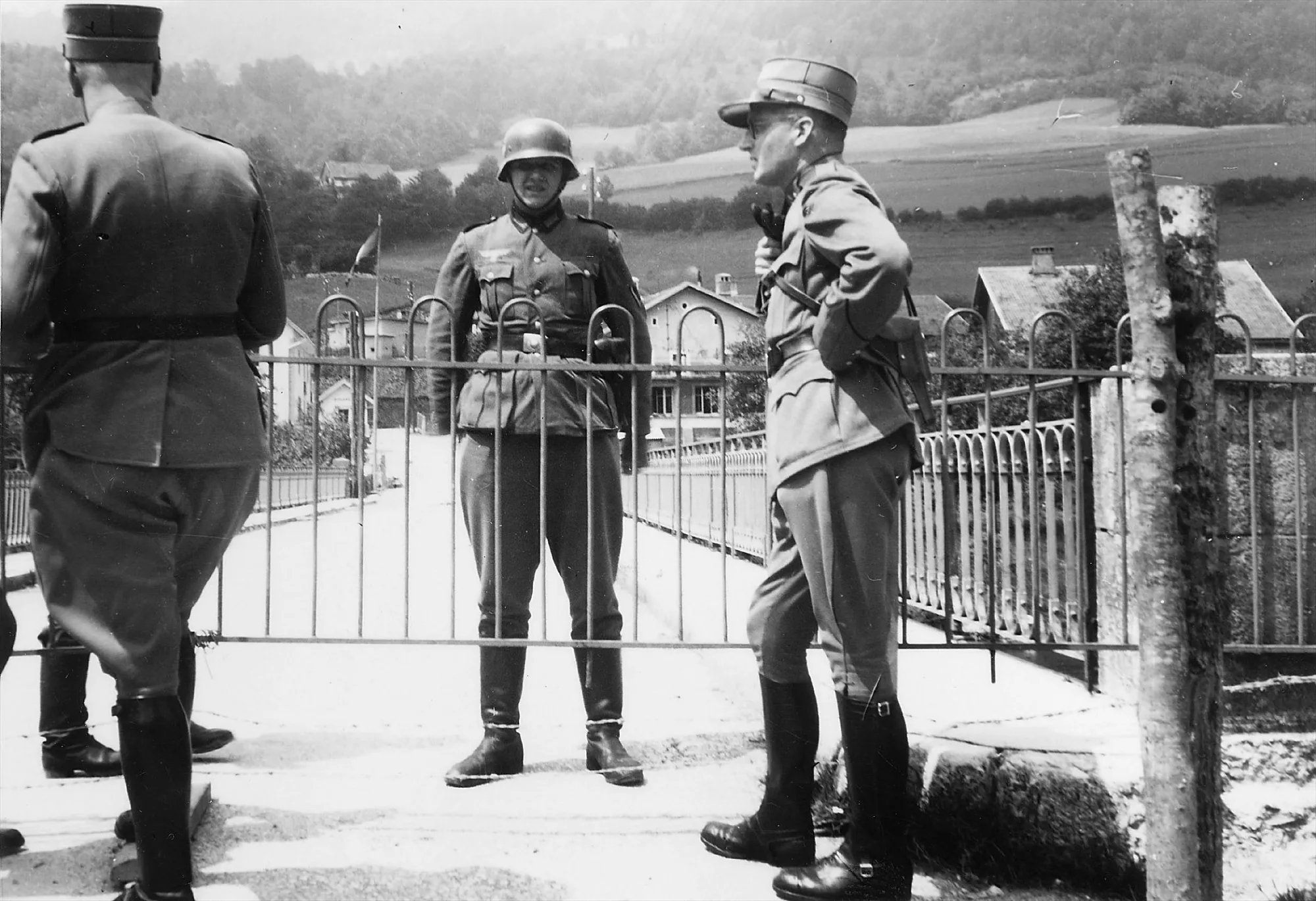
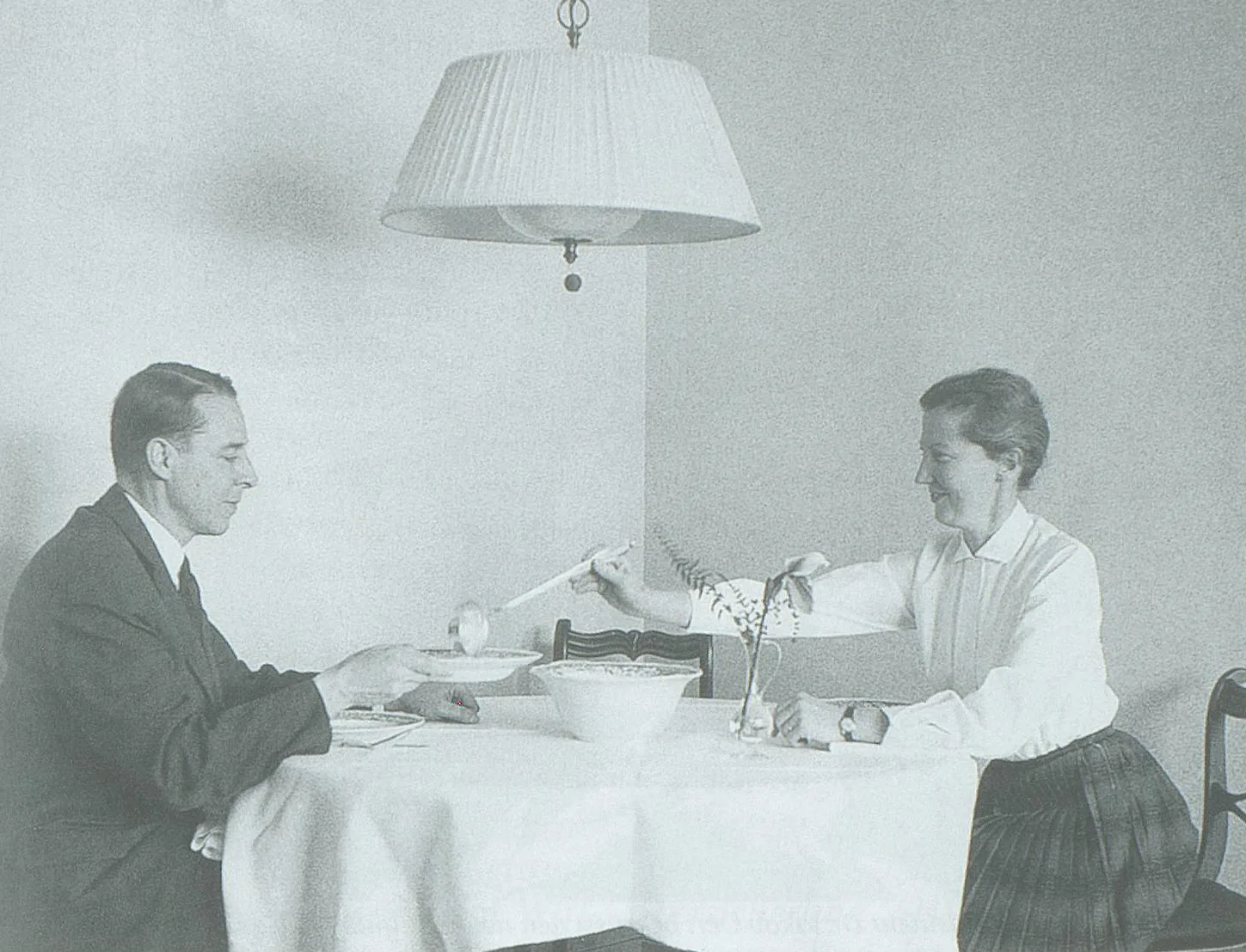
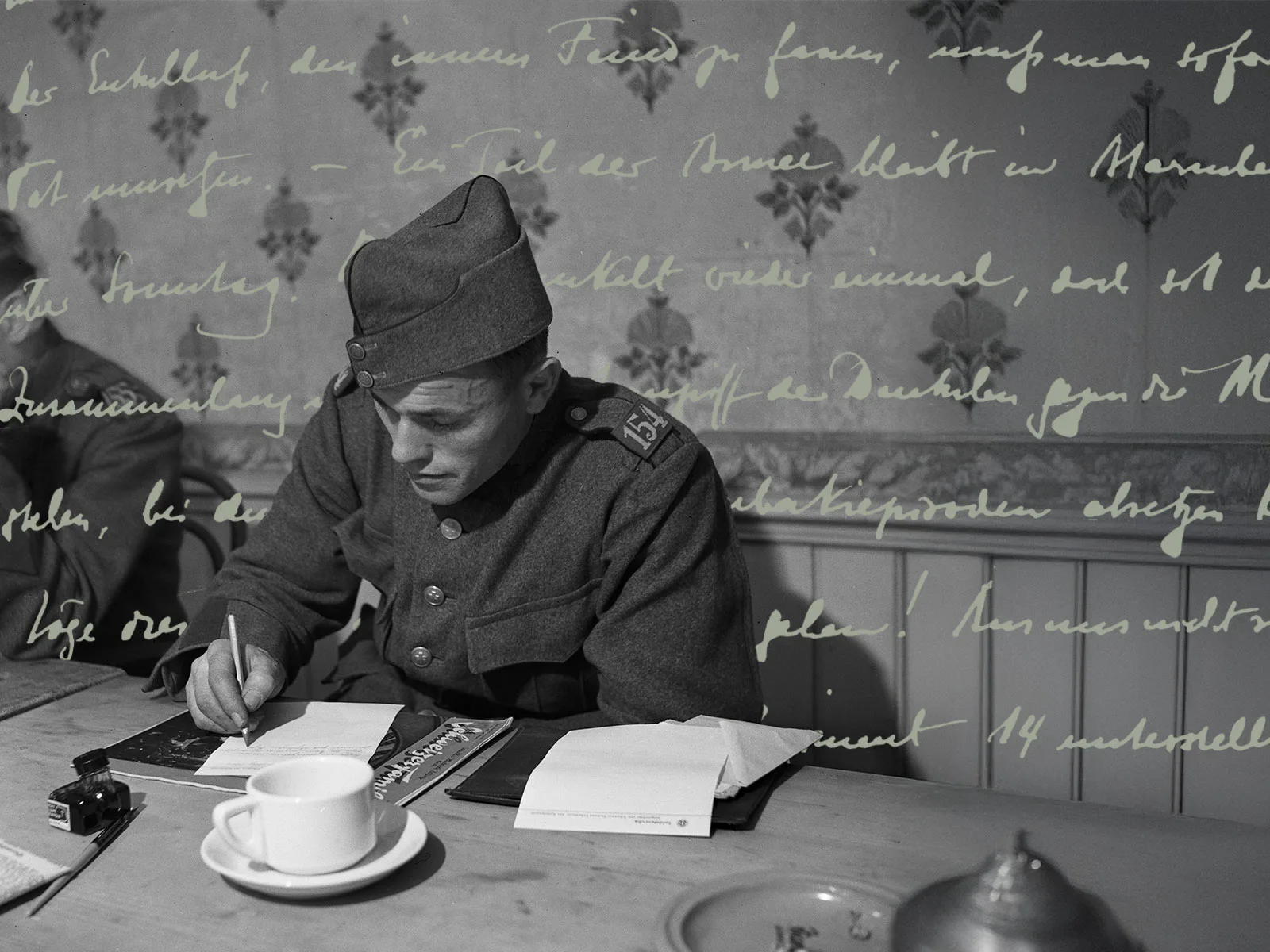
Medievalist Marcel Beck kept a diary throughout his military service. It reveals a different, rarely seen side of active service during the Second World War.
Blog
-

Marcel Beck and his thoughts on the post-war order – Swiss National Museum
Between 1974 and 1976, Marcel Beck published several short extracts in the Badener Tagblatt newspaper from a diary he had kept during the Second World War, and which was subsequently believed to have gone missing. It was acquired from a private owner by Jakob Tanner a few years ago. The diary consists of a total of 9 journals, whose more than 1,100 pages are covered in dense writing.Packed full of detailed descriptions and uncensored observations, this diary, which is being presented here for the first time, differs from the many surviving war diaries kept by military units and contains no trace of what Beck referred to in 1976 as the tendency to “see the past through rose-tinted spectacles”. It offers a fascinating insight into the world as experienced by a non-conformist conscript solider, who was always seeking to understand what was happening locally (in the “microcosm”) in terms of the broader horizons of interpretation of global politics (the “macrocosm”).
The first blog article reported on Beck’s everyday military life and his perception of the dramatic first year of the war. This second part deals with the period after Beck’s first discharge from active service at the end of 1940 and focuses on the political projects for the future in which he was involved.
-

Book Spotlight “Creolizing the Modern: Transylvania across Empires, Ithaca 2022”
Born in 1885 into a modest Romanian-speaking family in Transylvania, Liviu Rebreanu needed to learn both Hungarian and German to acquire a basic education in what was then the Kingdom of Hungary, and part of the Austro-Hungarian Empire. After getting higher education, he also learned the “foreign languages” taught through the imperial school system. To become a Romanian-language writer, he therefore needed to relearn Romanian. Following his migration to Romania, he wrote Ion, which literary critics celebrated as the first modern Romanian novel, centered on struggles over land ownership in rural Transylvania. In our book Creolizing the Modern. Transylvania across Empires, we show how Rebreanu put his childhood multilingualism to transimperial use as a means of survival and aspirational social mobility in an inter-imperial local situation shot through with the possibility of social mobility on a worldly scale. Pripas, the fictional village where Rebreanu’s novel is set, is a composite of two real villages where he grew up, both of which are located in the region of Năsăud/Nassod/Naszód. Part of Transylvania, the region was historically at the crossroads of several empires: Ottoman, Russian, Habsburg, and Austro-Hungarian. It constituted the eastern border of the Habsburg Empire and functioned as a separate administrative unit between 1762 and 1851. Empress Maria Theresa offered land to Romanian Transylvanian villagers living there, who became free if they were willing to defend the border and convert to Greek Catholicism. Land was collectively owned by peasant households and could not be alienated. Schools were opened for the children of soldiers on the border—the first schools where Romanian was the language of teaching in Transylvania. After the 1867 Compromise, which established the Dual Monarchy of Austria-Hungary, the former border region was reconfigured administratively, and former soldiers had to renegotiate their land rights.
Our book offers thick descriptions of transimperial positioning and transimperial agency. We develop such descriptions through a multilayered engagement with Rebreanu’s novel Ion, published in 1920. Throughout, we place the small scale of the textual detail in relation to the large scale of the world; we trace a link between macroscale politics emphasized in world-systems analysis and microlevel interactions and cultural production.
Engaging the novel as an extended case study allows us to place our theoretical arguments alongside the novel’s narrative, which offers consequential details for both literary and sociological analysis. We analyze Rebreanu’s novel, written by a trans-imperial subject, whose biographical and professional trajectory we trace, both as a product of inter-imperiality and as its chronicle.
Creolizing the Modern theorizes a relation between interimperiality and transimperiality. Our aim is to offer a framework for the analysis of world regions—like Transylvania—that have been controlled by various colonial and imperial powers throughout their early modern and modern history. We turn to Transylvania’s history to argue that its location at the crossroads of several empires is structurally comparable with that of other multilingual and inter-imperial locales (Galicia, the Caribbean, Taiwan, South Sudan). We build on Laura Doyle’s concept of inter-imperiality, where inter- refers “both to multiple interacting empires and to the multiple subject positions lived within, between, and against empires.”[1] We thus examine the constant tension between Habsburg, Ottoman, Austro-Hungarian, and Russian imperial formations and their afterlives as inter-imperial tensions and rivalries. We resist, however, the reification inherent in the assumption that empires interact with each other only as state formations by revealing connections, exchanges, and mobilizations across empires as well as below the state level. In distinguishing between inter-imperial rivalries and trans-imperial processes, we build on Kristin Hoganson and Jay Sexton’s work on trans-imperial connections. While focusing on the inter-imperial dimension draws attention to state formations rivaling and sometimes preceding the nation-state, trans-imperial communication, resistance, and negotiation by imperial subjects eschewed, undermined or, on the contrary, instrumentalized existing state structures. We untangle the fact that the actors who were engaged in anti-imperial struggles in Transylvania, in Hoganson and Sexton’s words, “positioned themselves inter-imperially (meaning between empires), but they also navigated [. . .] layered empires so as to advance their own interests”[2]—that is, they acted trans-imperially.
Both before and long after the failed Ottoman siege of Vienna in 1683, Armenian, Greek, and Jewish merchants passed through Transylvania following Ottoman commercial routes; they sometimes settled in Transylvania. While border military regiments purportedly protected the region against an ever-present Ottoman threat, there were exchanges with Romanian-speaking populations in Ottoman-dominated Moldova and Wallachia. Part of the Jewish population migrated to the region following persecution in Russian-dominated territories. Within the religious field, Orthodox believers taunted Greek Catholics as papists, while the latter insulted the Orthodox as Muscovites—both with inter-imperial connotations and yielding political tools of transimperial agency. In the book, we emphasize throughout that Hungary had its own imperial ambitions; Austro-Hungary was, among other things, a project designed so that Hungary might become equal with Austria as an imperial power. Transylvanian nationalisms, of all flavors, developed inter-imperially and retained an inter-imperial dimension while mobilizing transimperially, pitting different permutations of these religious, ethnic, and linguistic identities against each other. The European East, and Transylvania specifically, was thus a forcefield in which empires fought for control, often violently, impinging on each other’s policies.
In chapter 1, we frame the transimperial agency of peasants who pit the Austrian and Hungarian sides of the dual monarchy against each other. In chapter 2, we trace both banking and the rail system as trans-imperial methods of capitalist integration. In chapter 3, we position the enslavement of Roma people in Moldova and Wallachia within the Ottoman Empire in relation to the regulation pertaining to Roma in the Austro-Hungarian Empire. In chapter 4, we develop the concept of interglottism as transimperial linguistic and literary strategy. Chapters 5 and 6 work through the question of women’s labor, women’s citizenship and violence against women at the crossroads of empires that produced nationalisms which enlisted women’s transimperial agency. Finally, chapter 7 traces concepts like religious conversion as a form of transimperial positioning.
We imagined the project as an experiment, even a bit of a provocation. We ask two questions: What does it mean to see the world from the perspective of a small village in Transylvania? And what does it mean to see world literature from the perspective of the first Romanian-language modern novel, set in a fictional village in Transylvania, itself modelled on a real village? One of the most exciting things about this project is its collaborative dimension—one of us is a scholar of Comparative Literature; and one a sociologist of the world-system. Writing about Transylvania, we aspired to develop a methodology—requiring transnational, transregional and often transimperial interpretative lenses—at the intersection of our two disciplines.
[1] Laura Doyle: Thinking Back through Empires, Modernism/modernity 2/4 (2018), np.
[2] Kristin L. Hoganson, Jay Sexton: Introduction, in: Kristin L. Hoganson, Jay Sexton (eds.): Crossing Empires: Taking U.S. History into Transimperial Terrain, Durham 2020, pp. 1-22, quote p. 10.
-

Japanese Past, Nepalese Future: Pan-Asian Diplomacy and Japan-Nepal Relations, 1931–1939
“Nepal is a closed country.” These were the first lines penned by Byodo Tsushō, a Japanese Buddhist monk who published an account of his travels in Nepal in the 1935 issue of the Pan-Asianist journal, Dai Ajiashugi.[1] Three years earlier, Byodo Tsushō was sponsored by the Hongan-ji sect of Jodo Shinshu Buddhism to study in India and traveled throughout Burma, Afghanistan, and Nepal. Ever since Kawaguchi Ekai, the celebrated Japanese monk who travelled to Nepal and Tibet at the turn of the 20th century, Japanese Buddhist leaders maintained a fascination for the Himalayas as a site to rediscover lost Buddhist knowledge. However, Japanese interest in the Himalayas was not restricted to collecting Buddhist sutras. As Richard Jaffe has recently argued, the travels of Japanese Buddhist monks in South Asia were intimately tied with extending Japan’s diplomatic and economic influence in the region.[2] The termination of the Anglo-Japanese Alliance in 1923 marked a new phase in Japan’s participation in the so-called “Great Game.” Instead of affirming British imperial hegemony over Asia under the alliance, Japanese leaders by the 1920s and into the 1930s sought to challenge both British and Soviet imperial ambitions by courting reformist leaders in Afghanistan and Nepal through appeals to Pan-Asian solidarity.
At the time of Byodo’s travels, Nepal was ruled by the Ranas; a hereditary dynasty of prime ministers that had usurped power from the monarchy in the mid-19th century and reduced the Nepalese king to a figurehead sovereign. Nepal occupied a unique position in the British Indian Empire. Neither a colony, nor one of the many princely states that dotted the Indian subcontinent, nor fully independent, Nepal under the Ranas pursued a policy of alignment with Britain while leveraging the benefits of its alliance with the raj. Historians have generally understood Rana rule as repressive and corrupt. While this is undoubtedly true, reform-minded Rana ministers also sought alliances beyond Britain to assert Nepalese sovereignty, particularly after Britain formally recognized Nepal’s independence in 1923.[3] Japanese observers saw an opportunity to cultivate an ally in the Himalayas amid tensions with both the British Empire and Nationalist China. For their part, the Rana regime sought to leverage Japanese support for Nepal’s modernization while asserting, though cautiously, its political and economic independence from British India. Through the experiences and accounts of a monk, a military officer, and a diplomat, this article aims to draw attention to the possibilities and limitations of Japanese appeals to Pan-Asian solidarity to bring Nepal into the orbit of Japan’s emerging Greater East Asia Co-Prosperity Sphere. Japanese leaders framed economic and military aid to countries on the frontiers of Britain’s Asian Empire, such as Nepal, as part of the Pan-Asianist project of overthrowing European imperialism and laying the foundation of a new internationalism that was based on Asian self-determination and cultural rejuvenation that upheld Japan as the model for Asia to follow. However, the case of Nepal demonstrates that such aid was often deployed to challenge both British and Japanese economic imperialism and assert political sovereignty.
Byodo Tsushō and Nepal as Japan’s Past
When Byodo Tsushō described Nepal as a “closed country” he used the term sakoku (鎖国). This was a term used to describe Japan’s policy of “isolation” from the rest of the world during the Tokugawa shogunate (1600–1868). Scholars have long challenged the notion of Tokugawa isolationism by drawing attention to fact that although Japan’s connections with Europe during this period were limited to the Dutch, Tokugawa merchants maintained extensive trading networks with East and Southeast Asia well into the 19th century.[4] Yet, sakoku – and its inverse, kaikoku (開国) or “open country” – carried with it significant discursive meaning during the late 19th and early 20th centuries as Japan asserted itself as a modern nation-state and empire that could stand alongside the Great Powers of Europe and the United States. For Japanese nationalists, sakoku symbolized the oppression of the old feudal order under the Tokugawa shogunate. Whereas kaikoku represented the era of “civilization and enlightenment” (bunmei kaika, 文明開化) that the Meiji Restoration and its leaders ushered in for Japan. Thus, sakoku and kaikoku were placed within a linear historical framework that Japanese nationalists used to explain Japan’s rise as a modern and “civilized” power that could assume the task of bringing the rest of its Asian neighbors to higher stages of development and progress.[5]
In claiming that Nepal was a “closed country,” Byodo relegated Nepal to a lower stage of development in comparison to Japan. But the comparisons did not stop there. For Byodo, the resemblances between Japan and Nepal’s historical experiences were striking. Like Oda Nobunaga (1534–1592), who united Japan’s warring han (feudal domains) under a single banner during the Azuchi-Momoyama period, Nepal’s warring kingdoms and polities were united in 1774 under the Gorkha king, Prithvi Narayan Shah. Like Toyotomi Hideyoshi (1537–1598), who invaded Korea shortly after Japan’s unification to challenge Chinese hegemony, the rulers of the Shah dynasty invaded Tibet in 1784. This sparked the Sino-Nepalese War (1788–1792), which led to Chinese intervention and drove the Nepalese army back across the mountains, just as a Chinese intervention had helped to expel Hideyoshi’s army from the Korean peninsula. And just as the Tokugawa shoguns ruled in the name of the Emperor and enacted the sakoku edicts in the hope of staving off European imperial expansion into Japan, the Rana dynasty of prime ministers ruled in the name of the king and pursued a cautious, if not isolationist, foreign policy to preserve Nepal’s sovereignty from the imperial designs of China to its north as well as the British East India Company (EIC) to its south.
Yet there was one major difference between Nepal and Japan according to Byodo. Whereas Japan’s isolation was self-imposed, Nepal’s isolation was enforced by the British Indian government.[6] When the Shah kings turned southward after the Sino-Nepalese War, Nepal came into conflict with the EIC, which was also expanding its economic and political influence over northern India. Tensions between Nepal and the Company came to a head with the eruption of the Anglo-Nepalese War (1814–1816). Despite the success of the Company Army on the battlefield, Nepalese resistance was fierce, and the campaign became one of the costliest wars the EIC fought in its conquest of the Indian subcontinent. The Treaty of Sugauli (1816) led to Nepal ceding much of its southern conquests to the EIC and effectively confined Nepal to the Himalayas. Under the treaty, Nepal was compelled to accept a British Resident in Kathmandu. While the British Resident did not have as much power in Nepal as his counterparts further south in the Indian princely states, his presence enabled the EIC to direct Nepal’s foreign policy and intervene in Nepalese politics. In the ensuing power struggles between the Shah monarchy and the Ranas, the British tacitly backed latter.[7] The first Rana ruler, Jung Bahadur Rana, pursed a policy of alignment with Britain and aspired to modernize the country along British lines. However, Bahadur Rana was also adamant in asserting Nepalese independence from the Company. During his visit to Europe in 1850, Bahadur Rana insisted that he travel as a Royal Ambassador of the king and attempted to establish direct diplomatic relations with the British and French governments, thereby bypassing the role of the Resident in Nepal in managing the country’s foreign affairs. Although he was unsuccessful in this regard, Bahadur’s travels in Europe convinced him and his successors of Nepal’s need for reform.[8]
For much of the latter half of the 19th and into the early 20th centuries, the relationship between the British and the Ranas was a mutually beneficial one. The British were content to keep Nepal as a convenient buffer in the Himalayas against China and benefitted from recruiting Gurkha soldiers into the British Indian Army to help police Britain’s Asian empire. The Ranas on the other hand could rely on British support for the regime against internal disorder and foreign threats, the latter particularly from Tibet. Yet few ordinary Nepalese benefitted from this alliance between their rulers and the British. Despite the ambitions of Bahadur Rana to modernize Nepal, the pace of development was hindered by several factors. In addition to the frequent power struggles within the large Rana family over which of its many branches would secure political power, the British attempted to ensure that its Nepalese ally would not pursue foreign policy and trade decisions that were unmediated by the Resident.[9] An often-cited anecdote that illustrates the corruption and poor state of infrastructural development in Nepal under the Ranas describes that until the construction of the Tribuvan Highway in 1957, imported Rolls-Royce’s for the elite of Kathmandu were disassembled at the foothills of the Himalayas and carried up the mountains by hundreds of labourers before being reassembled in the capital.[10] When Byodo visited Nepal in the mid-1930s, he observed with shock that the conditions and rhythms of village life not only greatly resembled Japan’s Tokugawa past, but that the people he interacted with appeared to be blind in their loyalty to Britain.
Byodo used the analogy of a butterfly trapped in a jar to describe Britain’s economic and political stranglehold over Nepal. Referring to a kodoku magic ritual in which the practitioner entraps a butterfly as a charm to gain wealth on the condition that it is kept well-fed, Britain hoped that by keeping Nepal in the jar, it would continue to enrich the empire and ensure its hegemony in Asia. However, because Britain failed to keep Nepal “fed” by granting greater autonomy to the Himalayan kingdom even after Britain’s recognition of Nepalese independence in 1923, Byodo believed that a Nepalese Restoration along the lines of Meiji Japan was on the horizon. Already, Byodo saw signs of this in the Rana that ruled Nepal at the time of his visit, Juddha Shumsher Jung Bahadur Rana (r. 1932–1945). Juddha Shumsher embarked on an ambitious program of reform encouraging Nepalese industry, infrastructural development such as telegraph and telephone lines, and placing the trade balance between Britain and Nepal on a more equal footing. Crucially, Juddha Shumsher encouraged an independent foreign policy and sought to cultivate relations with other countries around the world, including Japan. Byodo interpreted the willingness of Juddha Shumsher to allow Japanese Buddhist monks to visit Lumbini, the birthplace of Gautama Buddha, as an indicator that Nepal was receptive to establishing close relations with Japan and that the day when Britain could no longer lean on its Nepalese ally would arrive soon.[11]
(Juddha Shumsher Jung Bahadur Rana c. 1940s, Wikimedia Commons, https://commons.wikimedia.org/wiki/File:Juddha_Shumsher_Jung_Bahadur_Rana_(cropped).png) Ide Tetsuzō and Japanese Military and Economic Aid to Nepal
As early as 1902, the Rana government expressed interest in pursuing closer relations with Japan. In that year, Chandra Shumsher Rana sent a group of eight Nepalese students to study in universities and technical institutions in Japan, particularly in the areas of industry and military science.[12] Such exchanges were permitted by the Anglo-Japanese Alliance and were mediated by the British embassy in Tokyo. However, the British authorities were also wary of the possibility of Nepal becoming a sanctuary for Indian revolutionaries who might benefit from such overseas connections. These fears were confirmed when Vasudev Ganesh Joshi and K.P. Khadilkar, both associates of the Indian nationalist Bal Gangadhar Tilak, attempted to covertly establish a weapons factory in Nepal. It was none other than Vasudev Joshi himself who convinced Chandra Shumsher Rana to send the students to Japan. The plot, which required weapons manufacturing machinery from Germany, failed to materialize.[13] Nevertheless, this incident alarmed British officials in Delhi and Kathmandu. Future interactions with Japanese visitors were carefully observed by the Resident and, after 1923, the British Ambassador.
One of these visitors was Colonel Ide Tetsuzō. From 1931 to 1933, Ide served as the military attaché to British India. During this time, Ide traveled to Afghanistan and Nepal meeting with various political and military leaders. Writing about his travels in the Dai Aijiashugi, Ide took a particular interest in Nepal. Like Byodo Tsushō, Ide also drew comparisons with the Tokugawa past regarding Nepal’s isolation, yet also emphasized racial and cultural similarities between Nepal and Japan. Ide wrote that unlike Afghanistan, Nepal was more prosperous, and that Kathmandu had all the trappings of a modern city. According to Ide, this reflected a relative openness towards modern culture (kindai bunka, 近代文化) while simultaneously holding onto tradition, a position that Japan also embodied in its transition from the Tokugawa to Meiji period. In addition to the similarities in physical appearance between Nepalese and Japanese, Ide also observed that Nepalese shared common martial tendencies (shobu no kiun, 尚武の気運). Ide was particularly impressed by the sight of Nepalese men carrying short swords girded around their waists just as the samurai had done in Japan centuries before. It was based on these common features that Ide believed the Nepalese could understand Japan and think of the Japanese as brothers.[14]

(Colonel Ide Tetsuzō (left) with a Nepalese Prince, in: Dai Aijiashugi 11 (1934), p. 41) Despite Britain’s formal recognition of Nepal’s independence, it was apparent to Ide that this did not reflect reality. For all the pomp and ceremony present at the Nepalese court during official audiences, and the deference and respect shown by the British Ambassador to the Ranas, it was painfully evident according to Ide that Nepal was still a British vassal state (eikoku no zokkoku, 英国の属国). When Juddha Shumsher met with Ide, he took the opportunity to ask about the feasibility of importing aeroplanes from Japan to create an air force. According to Ide, Nepal’s military equipment came partly from British surplus and partly from what it could purchase from Tibet. However, the Nepalese Army lacked air power. Ide hoped to meet this need and extend Japan’s economic and military influence in Nepal by suggesting to Juddha Shumsher that Japanese aircraft would be ideal for high-altitude flying and more cost-efficient than purchasing from Europe.[15] Shortly after Ide’s visit, Juddha Shumsher’s private secretary, Marichi Mansingh Bada Kaji, wrote to the Japanese consul in Simla to probe further. The inquires made by Bada Kaji reveal that Ide promised more to the Rana government than what he revealed in his account to the Dai Ajiashugi. Not only did Ide suggest that Nepal could purchase transport aircraft from Japan that could be converted into bombers, presumably to be deployed against Tibet in the event of border skirmishes, he also suggested that Japan could supply machinery for a smokeless ammunition factory. Bada Kaji also inquired about the expenses required to hire an experienced Japanese pilot and ground engineer to help train Nepalese recruits.[16]
However, not only was this plan to secure military aid from Japan beyond the Rana government’s budget, but it also went against an existing treaty signed between Britain and Nepal in 1923 on the issue of arms and ammunition imports. According to the treaty, Article 4 prefaced the provisions regulating arms imports into Nepal by stating a general principle that Britain and Nepal would, “use all such measures as it may deem practicable to prevent its territories being used for purposes inimical to the security of the other.” This was followed by Article 5 which stated that Nepal could import whatever arms, machinery, and war materiel it required either from or through British India provided that, “the British Government is satisfied that the intentions of the Nepal Government are friendly and that there is no immediate danger to India from such importations.”[17] Considering that the treaty was signed as the Anglo-Japanese Alliance was collapsing and amid growing British suspicions of Japanese intentions to challenge the imperial status quo in Asia, Britain was wary of any indicators that Nepal might gravitate towards Japan. The British Legation in Kathmandu kept a close watch on Japanese employed by the Ranas, and a 1937 report expressed alarm when it learned that the Japanese consul-general in Delhi was approached with the suggestion that Juddha Shumsher should be awarded a Japanese decoration as a precursor to establishing formal diplomatic relations. Although the report contained assurances that Nepal would not, “do anything which could conceivably disturb the existing relations with His Majesty’s government,” the response of the British Legation to the possibility of Nepal and Japan developing closer ties was telling.[18] A Japanese-trained air force on the borders of British India would be certainly out of the question!
Even without military aid, Japan’s commercial investments in Nepal during the 1930s were significant. The British Legation noted that nearly 70% of Nepal’s imports came from Japan, primarily textile goods. Since Britain could not interfere with the import of manufactured goods into Nepal that did not constitute a security threat to Delhi, Nepal was able to circumvent legislation that aimed to restrict Japanese textile products in British India. Not only was this concerning for the British Indian government, who believed that Japanese textile merchants would be able to take advantage of the situation and use Nepal as a base to sell their goods in India, the British Legation in Kathmandu also reported that Juddha Shumsher attempted to enlist Japanese assistance in developing an indigenous Nepalese textile industry that could compete against Britain and simultaneously reduce its dependency on Japanese goods.[19] In 1937, at an industrial exhibition in Kathmandu, he declared his intention to hire Japanese specialists in textile manufacturing and agriculture and send a group of Nepalese students to Japan for further training.[20] The latter field of study was particularly important as Nepal was heavily dependent on raw materials from India to make yarn, which the British Indian government could deprive Nepal from obtaining to protect Indian manufacturers. The Rana government deemed that the plan to hire Japanese experts would be too expensive and settled on sending a group of Nepalese students to spend a year in Calcutta studying Japanese before proceeding to Japan for their education. Although even this plan was shelved with the outbreak of the Second Sino-Japanese War (1937–1945), as late as 1939 Juddha Shumsher was still considering sending Nepalese students to Japan to help strengthen Nepal’s industrial development.[21]
Tatsuo Fukai and the Limits of Pan-Asian Diplomacy
In January 1939, the Japanese vice-consul in Delhi, Tatsuo Fukai, travelled to Nepal to meet with members of the Rana government. During his two-week stay in Nepal, Fukai wrote a series of letters to his wife detailing his travels and experiences in the country. In addition to the racial and religious commonalities that previous Japanese travellers emphasized between Japan and Nepal, Fukai was also awestruck by Nepal’s architectural splendor. When he arrived in the town of Bhatgoan, he noted with amazement that the Nyatpola Deval temple built in the 18th century greatly resembled the Horyuji pagoda in Nara.[22] Fukai’s impressions of Kathmandu are particularly telling of the ways that Japanese travellers to Nepal interpreted its history in manner that aligned with Pan-Asianist goals:
The Darbar Square is the heart of Kathmandu from where picturesque streets radiate in all directions. Artistic pagoda roofs, profuse carved wood-work, picturesque wayfarers with bright and fascinating dresses of all shades of colour all combine to give the Darbar Square a very attractive and indeed Japanese or Chinese appearance. What strikes me in Kathmandu is the absence of everything Indian. You may not understand what I mean, but for racial, political, economic, and other reasons which I have no freedom to disclose, it is perhaps inevitable that there is little lost between Nepal and India![23]
The Second Sino-Japanese War had been raging for over a year and a half. Japan was looking for diplomatic allies in a region that was becoming increasingly wary of its expansionist ambitions. Fukai emphasized racial, cultural, and even architectural similarities between Japan and Nepal to paint a picture of a country that would be sympathetic and favourably inclined to support Japanese interests in Asia. This was something that he also consistently pointed out in his conversations with members of the Rana government. Although Fukai was not able to meet with Juddha Shumsher himself, he met with three leading Ranas: Padma Shumsher, Commander-in-Chief of the Nepalese Army, and commanding generals Kaiser Shumsher and Baber Shumsher. Fukai expressed high admiration for the Ranas that he met and hoped that they might be potential allies in cultivating closer relations between Nepal and Japan.[24]
When the Second World War broke out in Europe, Juddha Shumsher pledged his support for the Allied war effort. However, this decision was far from unanimously favoured within the Rana family. A British Legation report expressed alarm at the overwhelming pessimism within the Nepalese military towards Britain’s ability to protect its Empire against German or Japanese invasion. Padma Shumsher and Baber Shumsher both believed that India would invariably fall to either Japan or the Soviet Union should Germany force Britain to surrender. But while Padma Shumsher and Baber Shumsher’s predictions were motivated less by pro-Axis sympathies and more by British failures on the battlefield and the poor state of the British Indian Army, Kaiser Shumsher was an admirer of German and Japanese military strength.[25] Fukai brought with him several films about Japan and recounted that after he screened them at the Royal Palace, Kaiser Shumsher had this to say:
It was not only interesting but very instructive. I was impressed by the similarity between our two races. You also take off shoes at the door, and a Japanese wife gives a graceful salute to her husband when he returns home […]. I must admit Japanese soldiers are far better than Gurkha soldiers. But why didn’t you bring films of war? Frankly speaking, we are more interested in warfare and the activities of your brave soldiers more than anything else.
Fukai was astonished. He specifically decided not to bring films depicting Japanese military exploits for fear that he would be seen as a propagandist. The next day, Kaiser Shumsher invited Fukai for a private audience. Kaiser Shumsher was an avid reader and had a vast library that greatly impressed Fukai. The general then revealed to Fukai that he kept a portrait of the Meiji Emperor that he ordered from London and had befriended Prince Chichibu (Yasuhito), the Emperor Hirohito’s younger brother, when he attended King George VI’s coronation in 1937. Fukai then saw an opportunity to ask Kaiser Shumsher about the true state of Nepal’s relationship with Britain and if he would be willing to give a statement on Japan’s war in China. At this point however, the conversation took a deflective and somewhat philosophical turn. In response to Fukai, Kaiser Shumsher stated that:
I prefer to be silent. Silence may be our message. I only hope that a peaceful solution will soon be found to the present tragic war between two great sister nations of Asia. No matter how silently and bravely you may bear sacrifices, war means that all human happiness ceases.[26]
Conclusion
What do these episodes reveal about the relationship between Japan and Nepal during the 1930s? Indeed, Japan’s interaction with Nepal reveals both the possibilities and contradictions of Pan-Asian diplomacy. Japan attempted to leverage its position in Asia amid tensions with China and Britain by appealing to countries like Nepal, who were formally independent of European rule and yet under pressure to remain within Britain’s sphere of influence, on the basis of anti-colonial solidarity. As the cases of Byodo Tsushō and Colonel Ide demonstrate, such invocations of cultural and historical similarities often went hand-in-hand with attempts to advocate for Japanese interests in the form of extending economic and military aid. However, Byodo Tsushō’s account betrays the imperial assumptions behind Japan’s Pan-Asianist rhetoric. Nepal could only be recognized as an ally insofar as it embodied the Japanese “spirit” and could be placed on a timeline of historical development that upheld Japan as the pinnacle of modernity.
On the other hand, while the Ranas were more than willing to avail themselves of Japanese technical and military expertise to strengthen Nepal and gain leverage over its neighbours, they also kept Japan at arm’s length. Although Japanese travelers to Nepal were perhaps too optimistic about the possibilities of cultivating an ally in the Himalayas, the Ranas played a delicate balancing act considering that as a landlocked country Nepal was entirely dependent on ports in British India. This partly explains the silence of Kaiser Shumsher when asked about the Second Sino-Japanese War. Moreover, both British restrictions on the export of raw materials and the influx of cheap Japanese manufactured goods worked in tandem to stifle the development on an indigenous Nepalese industry. The industrialization attempts of Juddha Shumsher were not only an attempt to compete with British India, but also to prevent Japanese products from flooding the Nepalese market at the expense of local merchants and manufacturers. While Japanese assistance would be welcome, it could never be allowed to challenge Nepal’s ambitions towards economic self-sufficiency to complement its formal independence.
Further Reading
Richard M. Jaffe: Seeking Sakyamuni: South Asia in the Formation of Modern Japanese Buddhism, Chicago 2019.
Hisao Kimura, Scott Berry (eds.): Japanese Agent in Tibet: My Ten Years of Travel in Disguise, London 1990.
Ram Kumar Pandey: Nepal-Japan Relations: Ties of Hands and Hearts, Kathmandu 2006.
Stefan Tanaka: Japan’s Orient: Rendering Pasts into History, Berkeley 1995.
John Whelpton: A History of Nepal, Cambridge 2003.
[1] Byodo Tsushō: Neparu no kinjo ネパールの近状 [The Current Situation in Nepal], in: Dai Ajiashugi 25 (March 1935), pp. 21–24, quote p. 21.
[2] See Richard M. Jaffe: Seeking Sakyamuni: South Asia in the Formation of Modern Japanese Buddhism, Chicago 2019.
[3] For a good introductory history of Nepal, see John Whelpton: A History of Nepal, Cambridge 2003.
[4] See for example Ronald Toby: State and Diplomacy in Early Modern Japan: Asia in the Development of the Tokugawa Bakufu, Princeton 1984.
[5] See Harry Harootunian: Towards Restoration: The Growth of Political Consciousness in Tokugawa Japan, Berkeley 1970 and Fukuzawa Yukichi: Datsu-A Ron 脱亜論 [Leaving Asia], in: Jiji Shimpo (March 16, 1885), pp. 40–42.
[6] Byodo: The Current Situation in Nepal, pp. 21–22.
[7] See chapters five and six of Baburam Acharya: The Bloodstained Throne: Struggles for Power in Nepal, 1755–1914, New Delhi 2013.
[8] Whelpton: A History of Nepal, pp. 46–49. See also Sagar S.J.B. Rana: Singha Durbar: Rise and Fall of the Rana Regime in Nepal, New Delhi 2017, pp. 26–36.
[9] See chapter 3 of Whelpton: A History of Nepal.
[10] Whelpton: A History of Nepal, p. 79.
[11] Byodo: The Current Situation in Nepal, pp. 22–24.
[12] Nepali Students in Japan – A Century Ago (1902 Meiji 35 Era), in: Embassy of Japan in Nepal, 22 March 2021, URL: <https://www.np.emb-japan.go.jp/itpr_ja/11_000001_00415.html> (Accessed August 2, 2023).
[13] Stanley Wolpert: Tilak and Gokhale: Revolution and Reform in the Making of Modern India, Berkeley 1961, p. 149.
[14] Ide Tetsuzō: Afugan, Neparu shisatsu ki アフガン、ネパール視察記 [Observations on Afghanistan and Nepal], in: Dai Ajiashugi 11 (March 1934), pp. 38–41, quote p. 40.
[15] Ide Tetsuzō: Afugan, Neparu jijō アフガン、ネパール事情 [The Situation in Afghanistan and Nepal], in: Dai Ajiashugi 13 (May 1934), pp. 33–36, quote p. 35.
[16] JACAR (Japan Center for Asian Historical Records), National Institute for Defense Studies: C01004095800: Nepāru-koku ni taishi heiki kyōkyū hō ni kansuru ken ネパール国に対し兵器供給方に関する件 [Concerning the supply of weapons to Nepal]: Letter from Marichi Mansingh Bada Kaji, Private Secretary to H.H The Maharaja, Nepal to the Consul General for Japan, Summer Hill House, Simla, British India, (September 13, 1934), pp. 1–5.
[17] JACAR (Japan Center for Asian Historical Records), Ministry of Foreign Affairs Diplomatic Archives: B04013510200: Buki dan’yaku no `neparu’ yunyū ni-seki suru Igirisu `neparu’ kyōtei 武器弾薬ノ「ネパル」輸入ニ関スル英国「ネパル」協定 [Agreement between Britain and Nepal on the importation of arms and ammunition to Nepal] Treaty between the United Kingdom and Nepal, together with Note respecting the Importation of Arms and Ammunition into Nepal, (December 21, 1923), pp. 2–3.
[18] The National Archives, UK: FO 371/22175: Annual Report on Nepal (1937), pp. 3–4.
[19] The National Archives, UK: FO 371/23547: Annual Report on Nepal (1938), pp. 5–6.
[20] The National Archives, UK: FO 371/22175: Annual Report on Nepal (1937), p. 3.
[21] The National Archives: FO 371/24715: Annual Report on Nepal (1939), p. 10.
[22] Tatsuo Fukai: Letters from Nepal, in: New Asia (January 1939), pp. 4–21, quote p. 16.
[23] Fukai: Letters from Nepal, p. 8.
[24] Fukai: Letters from Nepal, p. 20.
[25] The National Archives, UK: FO 371/24712: Political Department, India Office, British Legation in Nepal, Despatch No. 41 (July 9, 1940), pp. 4–7.
[26] Fukai: Letters from Nepal, pp. 17–20.

Aaron Peters is a Lecturer at Ambrose University located in Calgary, Alberta, Canada. His PhD dissertation (University of Toronto, 2022) entitled, “A Complicated Alliance: Indo-Japanese Relations, 1915-1952” brings together postcolonial theory and critical studies on the Japanese and British Empires to interrogate the interconnections between imperialism, nationalism, and internationalism by highlighting the encounters and exchanges between Japan and South Asia during the first half of the 20th century. His research interests range from Pan-Asianism and the Japanese Empire, Indian diasporic nationalisms, and the role of technology and foreign aid in the expansion of empire during the prewar and postwar periods in the Asia-Pacific region.
-

Book Spotlight: “Nordics in Motion: Transimperial Mobilities and Global Experiences of Nordic Colonialism, Journal of Imperial and Commonwealth History 51/ 3, (2023)”
This special issue on Nordic transimperial careers and experiences investigates Nordic people operating in the world of empires ranging from Southeast Asia to Africa, and from Europe to the Caribbean and North America.[1] It focuses on border-crossing individuals, addressing inter-imperial questions of race, otherness, and the civilizing mission, and tying into existing networks, while seeking to create new ones. Nordics in motion sought access, opportunities, and new beginnings, for authenticity and acceptance. They found personal success and failure. They were part of the transimperial social scenes and knowledge production, while at times claiming a role as outsiders critical of colonial rule.
This special issue has its origins in two earlier special issues in Finnish and Swedish. Editors Janne Lahti and Rinna Kullaa (Finland) and Gunlög Fur and John Hennessey (Sweden) discovered each other’s projects just before publication of their respective special issues on the colonial entanglements of Sweden and Finland. These were published in each country’s leading historical journal,[2] but the guest editors’ ignorance of developments in their neighboring country convinced them that more international cooperation was needed in the field of Nordic colonialism. At the initiative of Janne Lahti, a group of historians working on colonialism from across the Nordic countries formed a network with funding from the Joint Committee for Nordic Research Councils in the Humanities and Social Sciences (NOS-HS). The network held several international workshops and planned an international special issue to bring together scholars of different facets of Nordic colonialism and present this to an audience outside of the Nordic countries.[3]
Inspired by transimperial history this special issue explores a variety of individuals originating in the Nordic countries whose lives became entangled with European imperial ambitions and networks.
Mikko Toivanen (University of Warsaw) explores the career of Hjalmar Björling, who attempted to make a career in East- and Southeast Asia in the late nineteenth century. A Swedish-speaking Finn, Björling had a multifaceted identity even before traveling east, and attempted to capitalize on both Swedish and Finnish contacts while abroad. Contrasting with better-known stories of successful international businessmen, Björling’s story reminds us of how international mobility was no guarantee for fame and fortune even for Europeans at the apogee of modern imperialism. His attempts to gain prominence as a merchant, a planter in the Dutch East Indies and even as an author were all foiled, and he returned to Finland in the wake of a series of failures.
The article by Malin Gregersen (Linnaeus University) focuses on another major group of transimperial Nordic individuals: missionaries. Despite their small size, the Nordic countries sent out numerous missionaries during the modern Age of Empire, with Norway sending out more per capita than any other country. Gregersen describes how Norwegian and Swedish missionaries interacted with other Europeans and local society in Changsha in the 1920s, arguing that their specific Nordic identities were for the most part subsumed by their Europeanness until a crisis in 1927 forced the evacuation of all foreigners in the city.
Diana M. Natermann (University of Hamburg) investigates notions of manliness and whiteness in her contribution on Swedish mercenaries and administrators who worked for the Congo Free State. These Swedes worked in a variety of capacities, whether mercenaries, missionaries, steamboat captains or traders. Using ego-documents such as letters and diaries, she explores how Swedes tried to uphold their self-image and perceived superiority to the local population through European dining practices and other customs.
There is a similar micro-historical focus in Raita Merivirta’s (University of Tampere) article on Bror and Karen Blixen, the latter of whom was the author of Out of Africa (1937). As upper-class, well-connected individuals, the pair had few difficulties establishing themselves among the mostly British colonial elite of Kenya after moving there to set up a plantation. As with the Missionaries in Changsha, the Scandinavian identity of the Danish-Swedish Blixtens became most apparent in conjunction with a crisis: in this case, their loyalties were questioned with the outbreak of World War I.
Class and race are also prominent themes in Janne Lahti’s (University of Helsinki) article on the transimperial sojourns of Finnish artist Akseli Gallen-Kallela and his family. The Gallen-Kallelas also interacted with colonial high society in British East Africa, especially through Akseli’s mania for big game hunting, but they often expressed ambivalence about their neighbors and the treatment of locals. The family’s later travels to New Mexico brought them into the heart of another settler community that Lahti revealingly compares to their earlier East African stay.
A recurring theme throughout the special issue is the multifaceted identity that Nordic individuals could take on in transimperial situations. Deliberate fashioning of a self-identity was thereby a key expression of their agency in colonial contexts. Our focus on Nordics on the move shows the situational identities and shifting parameters and meaning of whiteness in imperial spaces. This is certainly true of Finnish settlers in early-twentieth-century Cuba, as described by Aleksi Huhta (University of Helsinki). These settlers had ambiguous ties to the United States, often emigrating to Cuba after first emigrating to the United States, but frequently falling between the cracks of U.S. immigration law and protective tariffs that often destroyed their fledgling businesses. At the same time, while sometimes viewed desirably for their “whiteness,” the Finns often failed to make significant inroads into local society, leading most to ultimately abandon the country.
Victor Wilson (Uppsala University) complements the special issue’s emphasis on modern colonial history with an investigation of early modern Swedish involvement in the slave trade. Although the role of the Swedish Caribbean colony of Saint Barthélemy in the slave trade is well known (especially during periods of war in Europe when Sweden’s neutral status made it attractive), Wilson reveals that Swedes also attempted direct slaving voyages of their own. Drawing on previously forgotten voyages, Wilson demonstrates that Swedish maritime men were inexperienced with the slave trade and therefore relied on other Europeans for equipment and contacts, making the voyages transimperial endeavors. In the main example discussed, Swedish neutrality did not prevent their ship from being boarded and a number of slaves confiscated by belligerent European powers, leading, together with other misfortunes, to the failure of the voyage.
As a reminder of the heterogeneity of and colonialism practiced even within the Nordic space, the final piece, by Carl-Gösta Ojala (Uppsala University) discusses Sámi mobility through transimperial networks. This could be voluntary or forced, as in the case of Sámi artifacts and human remains that circulated throughout Europe and Sámi who were exhibited in traveling “human zoos” or performances.
Interesting themes run throughout the essays in the issue, including the malleability of identity (whether national, racial or religious), the importance of contacts in transimperial endeavors and the possible failure of colonial enterprises. This special issue contributes to ongoing discussions on “colonialism without colonies” and on the positions, mobility, and range of opportunities available for people on the move in the world of empires. It expands the horizons of existing scholarship on Nordic colonialism and invites parallels to other “marginal” European imperial players like Switzerland and Poland.
[1] Journal of Imperial and Commonwealth History 51:3 (2023), URL: <https://www.tandfonline.com/toc/fich20/51/3?nav=tocList> (Accessed: 4 October 2023). The entire special issue is available open access.
[2] Historiallinen Aikakauskirja 4 (2020) and Historisk tidskrift 3 (2020).
[3] https://blogs.helsinki.fi/nordic-colonialism/ (Accessed: 4 October 2023).
-
![Book Spotlight “Nationaliser le panafricanisme. La décolonisation au Sénégal, en Haute-Volta et au Ghana (1945-1962) [Nationalising Pan-Africanism: Decolonisation in Senegal, Upper Volta and Ghana (1945-1962)], Paris 2023”](https://oldupexcise.in/wp-content/uploads/2025/12/1766425080_Book-Spotlight-Nationaliser-le-panafricanisme-La-decolonisation-au-Senegal-en.jpg)
Book Spotlight “Nationaliser le panafricanisme. La décolonisation au Sénégal, en Haute-Volta et au Ghana (1945-1962) [Nationalising Pan-Africanism: Decolonisation in Senegal, Upper Volta and Ghana (1945-1962)], Paris 2023”
At the end of the Second World War, a new international order was to be defined, requiring reconfigurations in and around colonial societies. Empires becoming obsolete as a form of power were to be dismantled and colonial societies were longing for a fundamental change. As the socio-political order was being redefined, how was the new belonging imagined by African people? What visions did different generations hold for the future of their societies and how were these visions integrated into the post-war reconstruction process? How did this local and global social reorganisation gradually acquire on a decolonising dimension? By focusing on the use of the term “Africa” by those who acted in its name, this book shows the extent to which its multiple and evolving definitions reflect the political and social transformation processes. Throughout these processes, a tension emerges between two major dynamics: Pan-Africanism and nationalism. While belonging to the community that is “African” was at some point synonymous to being anti-colonial, national independence eventually became a key to the decolonising process. This study explores how the processes of national and African identity formation were connected or combined within the emerging frameworks of the independent states.
The book focuses on the cases in three colonised territories of Senegal, Ghana (former Gold Coast), and Upper Volta (present-day Burkina Faso). These West African societies were fundamentally disrupted by long years of slave trade before becoming strategic spaces of colonial domination. Senegal and the Gold Coast, which had long-standing relationships with Western powers, were also central to West African imperial and regional circulations. These factors, in turn, shaped the political and African consciousness in the region. By examining both French and British colonies, this study aims to uncover a dynamic that is transcending imperial boundaries, often overlooked by imperial history. Upper Volta provides an interesting example of a territory that is more firmly rooted in a regional dynamic which extends well beyond imperial borders. As a colony created and suppressed along the lines of French imperial policy, its destiny was tied to French West Africa as a whole, while still maintaining connections with British West Africa through neighbouring Gold Coast.
The analysis does not solely focus separately on these three territories. The socio-cultural context of the West African region often enabled Africans to envision a wider sense of belonging beyond the confines of the colonial framework. Following global circulations, these practices of imagining a wider belonging extended to pan-African solidarity movements. By simultaneously studying multiple spaces and engaging in asymmetrical comparisons, we can challenge certain analytical categories such as colony, metropolis, and empire, and bring forth alternative perspectives. This approach avoids reducing colonization and decolonization as a mere metropolitan-colonial relationship and instead favors a transimperial perspective.
The multiplicity of scales is reflected in the lives of the actors examined in this study. While African political elites played a prominent role in negotiating reforms within the imperial regime, other social forces that strongly influenced policy decisions are also discussed in the book. Political parties, trade unions and student associations, among others, organised themselves at various levels. They sought to anchor themselves in a local community with a vision that was “African” while simultaneously engaging with international movements. These actors were not confined to one particular space or dimension. Instead, they navigated complex networks of socio-political relationships, both within their immediate communities and on broader regional and international level. The trajectories of individual activists could sometimes bear the marks of different dynamics, be it local or global, national, or pan-African.
Private archives, both written and oral, produced by these actors themselves are of primary importance for this study. Some students’ associations’ newsletters and some political parties’ organs are kept in European libraries. Other documents are reproduced in memoirs or studies left by former members. Despite their different political affiliations, the paths of political activists intersected at various levels. In this respect, the testimonies collected from former members of the National Liberation Movement and the African Independence Party are particularly valuable. While the parties that came to power at independence shaped national narratives, traces of the opposition parties that went underground for a long period are scarce in the proto-national collections of public archives. For instance, Joseph Ki-Zerbo’s visit to Kwame Nkrumah to ask him support for the newly formed National Liberation Movement illustrates the strategy of transimperial resistances adopted by these actors. Although some of these testimonies are being shared for the first time, these witnesses are ageing and their numbers are decreasing: this challenge underscores, in a way, the increasing importance of the collected stories.
However, it is crucial to critically contextualise the narratives of activist careers in order to assess the range of possible options that were available to the actors at the time. These first-hand sources are compared with public archives, which consist of documents produced or collected by colonial administration bodies as part of their surveillance activities or imperial reform projects. Although these documents should be approached with a certain level of caution, the preparatory drafts of political meetings and numerous pieces of correspondence attest to the oscillations and detours in the decolonisation process, contradicting the notion of a univocal narrative presented in colonial or nationalist historiography. Additionally, the registers of surveillance provide insights into both the norms that the colonial authorities thought to establish and the emergence of movements that subverted these very norms. The surveillance measures and censorship that were put in place, along with travel bans, paradoxically attest to the actual movements that crossed imperial borders to forge a Pan-African connection.
The book is divided into seven chapters. The first chapter examines the socio-economic situations of the West African colonies in the aftermath of the Second World War and the resulting claims from African people for better living conditions and more justice. It analyses the ways in which these social claims influenced the negotiation of eventual imperial reforms. In view of the reconstruction, the future of “African” societies was debated. To better understand the characteristics of the new emerging dynamic, the second chapter focuses on the organisation of two Pan-African congresses: the fifth Pan-African Congress in Manchester in 1945 and the constitutive congress of the African Democratic Assembly in Bamako in 1946. The third chapter changes the focus to look more closely at the itineraries of the three territories within which a “national” political scene was gradually being forged. The fourth chapter examines how, within each national scene, a political party came to be dominant. It analyses the political and discursive strategies of the new leaders who have built their legitimacy by attributing an “African” quality to themselves while disqualifying their “traditional” opponents.
While the reference to Africa was thus omnipresent, on the international scene the new national representatives disputed its definitions. The last three chapters question the increasingly apparent tensions between Pan-Africanist and nationalist dynamics. Chapter five highlights the Cold War context within which “African” positions were shaped. The international networks developed in both East and West sides could become simultaneously a gathering point for African activists and a platform for competition between them. For instance, while students from the British and French colonies agreed on the importance of forming a united front, disagreements arose as they delved into the practical details of its implementation, leading to disputes between the Makerere College Guild and Union Générale des Etudiants de Tunisie over control of the initiatives. Competitive tendencies were reinforced, as is described in chapter six, as each territory gained autonomy and independence. Pan-Africanism was never absent from the process, however. The final chapter examines the place given to this ideal within each “new nation”, through the many cultural projects that were put in place in the early years following their independence.
This history of the end of colonial empires is therefore also one of constant reinvention of Africa. In 1962, on the eve of the foundation of the Organization of African Unity, Pan-African ideals were almost all torn into national pieces. The nation-building processes took over to mobilize Pan-Africanism to their own end. While transimperial resistances against colonial domination were fueled by Pan-African ideas, the decolonizing process that ultimately led to the independence of nation states had the effect of once again confining this dynamic to a restricted national framework.

Sakiko NAKAO is an assistant professor at Chuo University (Japan), where she teaches courses in African history and French area studies. She earned her Ph.D. in History from École des Hautes Études en Sciences Sociales, France. Her research interest is centered on the making of African identity and the processes of decolonization in West Africa. She analyzes Pan-African movement and its connection to anti-imperialism from a transimperial perspective. Her recent project focuses on the function of the concept of “race” as a form of belonging and its impact on the Pan-African movement, as well as its eventual linkage with Pan-Asianism, which developed in the same period.
Among her publications are: Nationaliser le panafricanisme: décolonisation au Sénégal, en Haute-Volta et au Ghana (1945–1962), Paris, Karthala, 2023; “Fighting for national liberation in Africa: pan-African itineraries and national settlements”, in Anaïs Angelo (éd.), Politics of Biography in Africa: Borders, Margins and Alternative Histories of Power, Routledge, 2021; “Panafricanisme ou nationalisme ? Présence Africaine : une tribune des politiques culturelles au temps de la décolonisation », Présence Africaine, no 198, 2018 (pp. 193-210) ; “Fighting Marginality: The Global Moment of 1917-1919 and the Re-Imagination of Belonging”, L’Atelier du CRH, no. 18, 2018, co-authored with Fabian Krautwald and Thomas Lindner. -

Ein Wettlauf um Swahili-Manuskripte im Kenia der 1930er Jahre: Plädoyer für einen transimperialen Blick auf die Afrikalinguistik
I. Wissenschaftsgeschichte transimperial
In den letzten Jahren wurde vermehrt eingefordert, Wissenschaftsgeschichte aus transimperialer Perspektive zu untersuchen. National-imperiale Container müssten aufgebrochen werden, denn sie verdeckten oft mehr Entwicklungen als sie erklärten. Somit reiche die klassische Forderung Ann Laura Stolers und Frederick Coopers, Kolonie und Metropole in einem analytischen Raum zu betrachten,[1] nicht mehr aus. Sie sei dahingehend zu erweitern, dass Kolonien und Metropolen verschiedener europäischer Mächte gemeinsam in den Blick genommen werden. Damit gelangen erstens transimperiale Akteur:innen, deren Wissenspraktiken durch die Mobilität zwischen verschiedenen Kolonien und Metropolen geprägt waren, in den Fokus: europäische Missionare, Forschende und Kolonialbeamte, aber auch antiimperiale Aktivist:innen. Zweitens treten geteilte Wissensbestände in den Vordergrund: Christoph Kamissek und Jonas Kreienbaum sprechen von einer „imperial cloud“, einem transimperialen Wissensreservoir, in dem verschiedenste Akteur:innen Wissen abspeichern und abrufen konnten, wobei die cloud keineswegs homogen und gleichermaßen zugänglich war. Neben dieser gewollten oder ungewollten Kooperation werden aber auch, drittens, Politiken des imperialen Vergleichs und der Abgrenzung entlang nationaler Linien sichtbar. Oft genug bestimmte der nationale Wettbewerb die Wissensproduktion kolonialer Akteure.[2]
Insbesondere Akteur:innen aus den „Rändern des imperialen Europas“, die keinen Platz in den national-imperialen Darstellungen der Wissenschafts- wie der Kolonialgeschichte finden, geraten nun in den Blick. Dazu zählen die in jüngster Zeit beliebten Beispiele von Schweizern und Skandinavierinnen als Angehörige von Ländern ohne oder mit begrenztem überseeischem Kolonialbesitz. Und auch Deutsche fallen in diese Kategorie – vor der Begründung des Kolonialreichs 1884 und nach dem Ende der formalen Kolonialherrschaft im Ersten Weltkrieg. Diese Akteur:innen agierten nicht im Kolonialreich des eigenen Landes, sondern in „fremden“ Kolonien. Dort trugen sie zur kolonialen Wissensproduktion und Herrschaftssicherung bei, während sie eigene Interessen verfolgten. Und ihr Aufenthalt in den Kolonien prägte sie selbst und etwa die Entwicklung wissenschaftlicher Disziplinen in der vermeintlich nichtkolonialen Heimat.[3]
An einer Fallstudie wird im Folgenden gezeigt, wie eine transimperiale Perspektive Entwicklungen in der Formationsphase einer kolonial geprägten Wissenschaft fassen kann, die bislang oft übersehen wurden. Untersuchungsgegenstand ist die afrikanistische Sprachwissenschaft, die sich im deutschen Sprachraum um 1900 als Afrikanistik herausbildete. Gefragt wird nach den ideologischen und politischen Faktoren, den Vorstellungen, Netzwerken und Ressourcen, die die Wissensproduktion prägten. Die Episode führt in die britische Kolonie Kenia der 1930er Jahre, bevor anschließend diskutiert wird, wie eine transimperiale Perspektive für die gesamte Geschichte der Afrikalinguistik im 19. und 20. Jahrhundert gewinnbringend sein kann. Es wird einerseits gezeigt, welche zentrale Bedeutung imperiale Konkurrenz für die Forschungspraxis hatte. Die Zusammenarbeit über national-imperiale Grenzen hinweg war andererseits nicht weniger prägend: Diese umfasste Wissenstransfers, den Rückgriff auf geteilte Wissensbestände, aber auch die praktische Unterstützung in einer unvertrauten Umgebung.
II. Auf der Suche nach Swahili-Manuskripten in Kenia, 1936/37
Im Mittelpunkt steht im Folgenden der Hamburger Afrikanist Ernst Dammann (1904–2003), der wohl bedeutendste Vertreter der zweiten deutschen Afrikanistengeneration. Er war Schüler und enger Vertrauter Carl Meinhofs (1857–1944), der seit 1909 die international erste Professur für afrikanische Sprachen innehatte. Ganz in Tradition der missionarischen Afrikanistik erfuhr Dammann eine doppelte Ausbildung als protestantischer Theologe und akademischer Afrikanist. 1930 wurde er Mitarbeiter an Meinhofs Hamburger Seminar für afrikanische Sprachen, bevor er drei Jahre später mit dessen Zustimmung von der Bethel-Mission nach Tanganyika entsandt wurde, um vor Ort Mission und Afrikanistik zu vereinen. Doch Dammanns Interesse an der Bekehrung schwand schnell: Er nutzte seine Anstellung für linguistische Forschungen und insbesondere für sein Engagement in der deutschen Siedlergemeinschaft in der ehemals deutschen Kolonie, die er in seiner Doppelstellung als evangelischer Pastor und NSDAP-Ortsgruppenleiter in ihrer kolonialen Identität zu festigen versuchte. Dies, sein Engagement in einer siedlerdeutschen Kampagne gegen seine Missionsbrüder und offen artikulierte Gewaltphantasien gegen afrikanische Mitarbeiter:innen brachten ihn in Konflikt mit seiner Missionsgesellschaft, die ihn schließlich abberief. Dammann wollte jedoch in Ostafrika bleiben. Eine neue Aufgabe und Finanzierung mussten für ihn gefunden werden.[4]
Auf der nun anstehenden Forschungsreise legte Dammann zentrale Grundlagen für die philologische Beschäftigung mit der klassischen Swahili-Versdichtung. Bis heute bilden die in den Jahren 1936 und 1937 gesammelten und anschließend bearbeiteten Manuskripte die wichtigste Grundlage für neuerscheinende Editionen der islamisch geprägten utend̠i-Literatur der ostafrikanischen Küste. Dammann sollte zunächst für Meinhof eine Neuedition des über eintausend Strophen umfassenden Swahili-Epos „Chuo cha Herkal“ bzw. „Utend̠i wa Tambuka“ besorgen, das den Kampf Mohammeds gegen den oströmischen Kaiser Herakleios schildert. Auf der Insel Lamu vor der kenianischen Küste sollte er – so Meinhofs Wunsch – „mit einem eingeborenen Gelehrten die ganze Arbeit durch[gehen]“ und „Verbesserungen und Ergänzungen“ zur bestehenden Transkription und Übersetzung machen.[5]
Finanzierung
Zunächst stellte sich die Frage, wie der Aufenthalt Dammanns und seiner Frau Ruth in Kenia finanziert werden sollte, wenn die Gehaltszahlungen der Mission versiegten. Während Meinhof sich um eine Finanzierung durch die Deutsche Forschungsgemeinschaft (DFG) bemühte, fragte Dammann bei seinem zweiten akademischen Lehrer Diedrich Westermann nach, ob eine Förderung durch das Londoner International Institute of African Languages and Cultures, auch International African Institute (IAI), infrage käme.[6] Damit standen anfangs die zwei großen Geldtöpfe, aus denen Afrikanist:innen ihre Forschung finanzierten, als mögliche Geldquellen zur Debatte.
Das IAI, gegründet 1926 im Rahmen der Internationalisierung der Kolonialwissenschaften, war ein gemeinsames Projekt protestantischer Missionsgesellschaften, den mit ihnen verbundenen Afrikawissenschaftler:innen und europäischer Kolonialverwaltungen. Nach seiner Gründung traten jedoch die Spannungen zwischen seinem transnationalen Charakter, der sich in der Forschungspraxis zeigte, und der doch offensichtlichen Verwurzelung des Instituts im Britischen Empire, auch durch die initiale Rolle des britischen Colonial Office, zutage.[7] Langjähriger Ko-Direktor war der Berliner Ordinarius Westermann, dessen transnationale Karriere zwischen deutscher und britischer Afrikanistik und Mission, zwischen der Beratung des britischen Kolonialministeriums und der führenden Rolle in den nationalsozialistischen Kolonialwissenschaften nachgezeichnet wurde.[8] Insbesondere aus praktischen Gründen schien das IAI als Geldgeber vorteilhaft, da es sich durch Devisenprobleme als sehr schwierig erweisen sollte, von der DFG bewilligte Mittel in Tanganyika in britischen Pfund bereitzustellen.[9]
Doch persönliche Animositäten und ideologische Gründe sprachen gegen das IAI und für eine Finanzierung durch die DFG, die bis 1934 selbstverwaltend in für die einzelnen Disziplinen zuständigen Fachausschüssen gearbeitet hatte. Den auch für die afrikanistische Sprachforschung zuständigen Ausschuss leitete Meinhof ununterbrochen seit 1921. Zusammen mit dem Direktor des Hamburger Museums für Völkerkunde Georg Thilenius entschied er fast widerspruchsfrei über afrikanistische Forschungsmittel. Seine Zeitschrift für Eingeborenen-Sprachen wie auch die Forschungen der Hamburger Seminarmitglieder wurden somit von der DFG gefördert. Nach Meinhofs Zerwürfnis mit Westermann, unter anderem wegen dessen „Engländerei“, also seiner Arbeit am IAI und für die britische Regierung, wurden DFG-Anträge der Berliner Afrikanistik stets abgelehnt.[10]
Im Gegensatz zur zunächst möglich scheinenden transnationalen Finanzierung des Projekts durch das IAI wurde mit der Entscheidung für die DFG das Forschungsvorhaben in ein eindeutig nationalistisches Licht gerückt. Meinhof gab Dammann auf, von Tanga aus eine Eingabe an die DFG zu machen – er möge die Forderung nach mindestens 3.000 Reichsmark „irgendwie spezialisier[en]“, damit sie nicht beliebig wirke. Wichtig war Folgendes: „Beachten Sie bitte, dass in Ihrem Antrag irgendwie hervorgehoben werden muss, dass die Arbeit für das Ansehen der deutschen Wissenschaft im Auslande von Wichtigkeit ist. Sie können das mit gutem Gewissen sagen, denn es bedeutet etwas, wenn das grösste ostafrikanische Epos ganz und gar von Deutschen bearbeitet wird.“[11] Diese Argumentation war, wie Holger Stoecker feststellt, typisch für Anträge an die DFG in den kolonial geprägten Wissenschaften: „Insbesondere die nationalistisch aufgeladene Konstruktion eines wissenschaftlichen Wettbewerbs mit dem Ausland als Teil des ‚kolonialen Wettlaufs‘ erwies sich während der Zwischenkriegsjahre als erfolgversprechende Antragsrhetorik.“[12]
Doch war der „koloniale Wettlauf“ für Dammann und Meinhof nicht nur „Antragsrhetorik“. Schon zuvor hatte der überzeugte Kolonialrevisionist Dammann während seines Aufenthalts in Tanganyika die deutsche Sprachforschung in Ostafrika in einen Zusammenhang kolonialer Ambitionen und nationaler Konkurrenz mit den Briten gerückt, die nun die ehemals deutsche Kolonie beherrschten.[13] Dies fügt sich in den Kontext der kolonialen Rolle der Afrikalinguistik ein. So spiegelte die Institutionalisierung des Faches in den imperialen Metropolen – am Seminar für Orientalische Sprachen in Berlin (1887), am Hamburgischen Kolonialinstitut (1908) und an der School of Oriental (and African) Studies in London (1916) – die Herrschaftsansprüche von Briten und Deutschen wider: Linguistisches Wissen diente der Beherrschung kolonisierter Bevölkerungen, immer auch in Hinblick auf die wissenschaftlichen Bestrebungen der imperialen Konkurrenten. Und 1940, wenige Jahre nach der hier geschilderten Episode, dienten Meinhof die Verdienste deutscher Afrikanist:innen zur Rechtfertigung des Anspruchs Deutschlands auf ein neues Kolonialreich in Afrika – in der „neue[n] Zeit“, die „[d]ank dem Weitblick und der Tatkraft unseres großen Führers“ angebrochen sei.[14]
(Swahili-Dichtung „Qissati Yusufu“ („Die Josefsgeschichte“), geschrieben von Muhamadi Kijuma und 1937 an Ernst Dammann übersandt, heute Bestandteil der Sammlung Dammann der Staatsbibliothek zu Berlin, Orientabteilung, Hs. or. 9893) Vorbereitung
Betrachten wir die inhaltliche Vorbereitung der Forschungsreise Dammanns, bleibt von der stolzen Darstellung nationaler Verdienste in Abgrenzung zu den britischen Konkurrenten wenig übrig. Meinhof und Dammann waren sich bewusst, dass ihnen die bisherigen deutschen Vorarbeiten zum „Herkal“ ohne Kontakte zu afrikanischen Experten an der nördlichen Swahili-Küste wenig nützen würden. Um mit diesen in Kontakt zu treten, waren sie auf ihre britischen Kolleg:innen angewiesen, die sich ebenfalls mit der Erforschung der klassischen Swahili-Dichtung beschäftigten. Wie die Dammann-Schülerin Gudrun Miehe feststellt, unterschied sich deren Forschungspraxis von der deutscher Afrikanisten: Im Gegensatz zu Meinhof, der Manuskripte mit seinen ostafrikanischen Mitarbeitern in Berlin und Hamburg durcharbeitete, verbrachten seine britischen Kolleg:innen längere Zeit an der Swahili-Küste und standen in engem Kontakt mit dortigen Gelehrten.[15]
So setzten Meinhof und Dammann ihre Hoffnung auf die wichtigste britische Kennerin der Swahili-Dichtung: Alice Werner, die seit 1922 die erste britische Professur für afrikanische Sprachen innehatte. Während ihres Aufenthalts an der kenianischen Küste Anfang der 1910er Jahre hatte sie mit dortigen Gelehrten Manuskripte der islamischen Swahili-Dichtung gesammelt und bearbeitet. Anschließend blieb sie mit ihnen in Briefkontakt und erhielt Manuskripte und Hilfe bei der Interpretation unverständlicher Textstellen. Diese Kontakte machte sich Meinhof nun zunutze. Auf sein Bitten schrieb Werner ihre Informanten in Kenia an und verfasste Empfehlungsschreiben, die Dammann vorlegen konnte. Auch nach Werners Tod im Juni 1935, den Meinhof als einen „erhebliche[n] Verlust“ für die Arbeit Dammanns sah, blieb Werner für seine Forschung bedeutend. So ließ sich Dammann Werners Swahili-Editionen nach Tanga schicken. Und auch das „Testimonial“, das Meinhof für die Reise verfasste, wohl insbesondere um das Vorhaben gegenüber britischen Stellen in Kenia zu begründen, verweist auf die Verbindung zur „late Dr. Alice Werner, who was for many years Professor in the School of Oriental Studies, London“.[16]
Wettlauf
An die Vorbereitungen schloss sich der Erwerb von Handschriften und die eigentliche philologischen Arbeit am „Herkal“ mit Werners einstigen Informanten Mbarak al-Hinawy in Mombasa und Muhamadi Kijuma auf Lamu an. Beide hatten bereits Erfahrung in der Arbeit mit Europäer:innen, deren Interesse an Swahili-Manuskripten und Vorstellungen über die Swahili-Dichtkunst sie bedienten und prägten. Auf die transkulturelle Übersetzungsarbeit, die den Texten eine neue, teilweise der bisherigen Interpretation widersprechende Deutung verlieh, soll hier nicht weiter eingegangen werden.[17] Aus transimperialer Perspektive ist interessant, dass sich die anfangs angedachte Neubearbeitung des „Herkal“ zu einem Wettlauf um den Erhalt und die Edition anderer, bislang unveröffentlichter Swahili-Manuskripte entwickelte. Dies erfolgte, als der Brite William Hichens ins Bild trat. Hichens hatte während seiner Tätigkeit in der britischen Kolonialverwaltung in Kenia mit dem Sammeln und Publizieren von Swahili-Manuskripten begonnen. Während sich Dammann und Hichens anfangs über fachliche Fragen der Swahili-Poesie und die Interpretation einzelner Textstellen austauschten, sah Dammann nun in ihm eine Konkurrenz, die er gegenüber Meinhof als einen Wettstreit zwischen deutscher und britischer Afrikanistik deutete:
Ich habe den Eindruck, daß der auch Ihnen wohl bekannte Mr. Hichens sehr dahinter her ist Material zu bekommen. Schon aus diesem Grunde freue ich mich, wenn ich Verschiedenes mit nach Hause bringen kann. Es sollte mir leid tun, wenn die Engländer mit allem Material über den Berg gehen würden.[18]
Das zuvor nur am Rande relevante Auffinden neuer Manuskripte wurde nun zum Politikum. Dammann sah sich in einem Wettlauf mit Hichens, bisher unveröffentlichte Texte zu sammeln und zu edieren. Aus „nationalen Gründen“ sollte „über die alte Poesie der Suaheli mehr in Deutschland publiziert w[erden], als es in den letzten Jahren der Fall war“. Meinhof stimmte ihm zu und bewilligte „[v]on Herzen […] Ihre ganzen Bemühungen über die weiteren Erwerbungen von Handschriften […] Auch ich bin der Meinung, dass wir den Engländern in diesen Sachen den Vorrang nicht lassen sollten.“ Gegenüber seinem Vertrauensmann in der Auslandsorganisation der NSDAP bezeichnete Meinhof Dammanns Erfolge im Auffinden von Manuskripten und deren Bearbeitung als „ganz ausserordentliche[n] Erfolg der deutschen Wissenschaft“.[19]
Der Wettlauf gipfelte darin, dass Hichens Dammann bei einer Handschrift des „Herkal“ zuvorkam, über deren Erwerb er mit Mbarak al-Hinawy verhandelte. Ende 1936 teilte dieser Dammann mit, dass er sich mit Hichens geeinigt hatte und sie das Manuskript gemeinsam ins Englische übersetzen wollten – Dammann ging leer aus.[20] Aber auch in kleinere Details übertrug sich der Wettlauf. Vor der Abreise von Lamu bat Dammann Meinhof, für seine Informanten Geschenke zu besorgen und nach Lamu zu schicken. Die Geschenke sollten „die Leute willig machen uns später Material zu senden und Auskunft zu geben“. Dammann war darauf angewiesen, dass er mit den lokalen Experten in Kontakt blieb, um die gesammelten Texte vollständig transkribieren, übersetzen und interpretieren zu können. Und er hoffte auf weitere Manuskripte, die ihm nach Deutschland nachgeschickt würden. Daher dürfe man, so Dammanns Frau Ruth an Meinhof, „nicht hinter Fräulein Prof. A. Werner zurückstehen schon aus nationalen Gründen, wir können aber nicht gut fragen, was sie geschenkt hat“. Es müsse „billig sein, dabei aber doch etwas hergeben“.[21]

(Ernst Dammann und Muhamadi Kijuma, 1936 von Ruth Dammann auf Lamu aufgenommen. Universität Bayreuth, Sammlungen des Instituts für Afrikastudien) III. Ausblick
So ist festzuhalten: Erst die wahrgenommene Konkurrenz mit einem britischen Sammler führte dazu, dass 1936/37 bisher unveröffentlichte Swahili-Manuskripte gesammelt, transkribiert und übersetzt wurden (und diese bis heute in Deutschland liegen und als Grundlage für neuerscheinende Editionen der Swahili-Versdichtung dienen). Voraussetzung für die Finanzierung der Forschung durch die DFG war – nachdem eine transnationale Finanzierung durch das Londoner IAI ausgeschlossen wurde – die Darstellung der Forschung in einem nationalen Wettlauf mit Großbritannien. Genauso bedeutend war jedoch die Zusammenarbeit mit britischen Swahili-Expert:innen, auf deren Wissen und Praktiken Dammann aufbaute und die Kontakte zu ostafrikanischen Gelehrten herstellten, ohne die er weder an Manuskripte gekommen wäre noch deren Bearbeitung vor Ort hätte vornehmen können.
Eine transimperiale Perspektive ist jedoch nicht nur für die konkrete historische Situation angebracht, in der deutsche Akteure in einer fremden Kolonie unter den Vorzeichen des Kolonialrevisionismus und des Nationalsozialismus forschten, sondern für das Verständnis der gesamten Geschichte der Afrikalinguistik gewinnbringend: von der Herausbildung der afrikanistischen Sprachforschung in der Mitte des 19. Jahrhunderts bis weit ins 20. Jahrhundert. Drei Beispiele sollen dies verdeutlichen: So begann die Erforschung einer afrikanischen Sprache in aller Regel erstens mit protestantischen Missionaren, für die die linguistische Arbeit Voraussetzung für die Erstverkündigung war. Dabei handelte es sich nicht selten um Deutsche (oft schwäbische Pietisten), die in Diensten britischer Missionsgesellschaften standen – transimperiale Existenzen per se. Der Erstbeschreiber des Swahili Johann Ludwig Krapf (1810-1881) bewegte sich etwa zwischen preußischem König und britischer Regierung, zwischen Basler Mission und Church Missionary Society, zwischen europäisch-christlichem Sendungsbewusstsein, sprachlicher Unterstützung britischer „Strafexpeditionen“ und frühen deutschen Kolonialträumen.[22]
Zweitens: Als sich die Kolonialwissenschaften nach der Begründung des überseeischen Kolonialreichs in den 1880er Jahren in Deutschland institutionalisierten, trat der Missionar und Swahili-Lehrer Carl Gotthilf Büttner für eine sprachliche Nationalisierung der Afrikanistik ein. Deutsche Forschung zu afrikanischen Sprachen sollte mit der Gründung des Berliner Seminars für Orientalische Sprachen (SOS) nunmehr auf Deutsch erfolgen und sich nicht länger an eine transnationale Öffentlichkeit richten, die durch die Strukturen der britischen Missionsgesellschaften und des Britischen Empires geprägt war.[23] Dreißig Jahre später wurde die Existenz des SOS das ausschlaggebende Argument, mit dem der britische Premierminister von der Einrichtung der School of Oriental and African Studies (SOAS) überzeugt werden sollte. Hinter den Deutschen wollte man kolonialwissenschaftlich nicht zurückfallen.[24] So kam es auch: Während das SOS längst vergessen ist, ist die SOAS heute die wohl wichtigste Institution, in der der Globale Norden den Süden erforscht.
Und doch: Dem Konkurrenzdenken der durchweg kolonialistischen Afrikalinguisten stand drittens der anhaltende Wissenstransfer gegenüber, den man keinesfalls missen wollte. So erfuhren die Afrikalinguisten der SOAS nach Kriegsende vom Tod Carl Meinhofs im Jahre 1944. Aus Deutschland zu hören, dass sich der glühende Kolonialrevisionist zum fanatischen Nationalsozialisten entwickelt hatte (der mit seinen Kollegen im Rahmen der NS-Kolonialwissenschaften etwa an einer deutschen Swahili-Orthographie für das kommende Kolonialreich feilte, das den SOAS-Afrikanisten ihr Wirkungsfeld nehmen sollte), führte nicht etwa zu einer Distanzierung von Meinhof und der deutschen Afrikanistik. Stattdessen hielten sie überaus warmherzig den fachlichen wie menschlichen Austausch und Meinhofs Einfluss auf die britische Afrikalinguistik in höchsten Ehren.[25]
Weiterführende Literatur:
Balbiani, Florian: Mission – Kolonialismus – Nationalsozialismus: Ernst Dammann und die Hamburger Afrikanistik, 1930–1937, München 2023.
Brahm, Felix: Wissenschaft und Dekolonisation: Paradigmenwechsel und institutioneller Wandel in der akademischen Beschäftigung mit Afrika in Deutschland und Frankreich, 1930–1970, Stuttgart 2010.
Esselborn, Stefan: Die Afrikaexperten: Das Internationale Afrikainstitut und die europäische Afrikanistik, 1926–1976, Göttingen 2018.
Pugach, Sara: Africa in Translation: A History of Colonial Linguistics in Germany and Beyond, 1814–1945, Ann Arbor 2012.
Stoecker, Holger: Afrikawissenschaften in Berlin von 1919 bis 1945: Zur Geschichte und Topographie eines wissenschaftlichen Netzwerkes, Stuttgart 2008.
[1] Ann L. Stoler, Frederick Cooper: Between Metropole and Colony: Rethinking a Research Agenda, in: Ann L. Stoler, Frederick Cooper (Hg.): Tensions of Empire: Colonial Cultures in a Bourgeois World, Berkeley, Los Angeles, London 1997, S. 1-56.
[2] Daniel Hedinger, Nadin Heé: Transimperial History: Connectivity, Cooperation and Competition, in: Journal of Modern European History 16/4 (2018), S. 429-452; Christoph Kamissek, Jonas Kreienbaum: An Imperial Cloud? Conceptualising Interimperial Connections and Transimperial Knowledge, in: Journal of Modern European History 14/2 (2016), S. 164-182.
[3] Claire L. Blaser, Monique Ligtenberg, Josephine Selander (Hg.): Transimperial Histories of Knowledge: Exchange and Collaboration from the Margins of Imperial Europe, in: Comparativ 31/5,6 (2021); Bernhard C. Schär: From Batticaloa via Basel to Berlin: Transimperial Science in Ceylon and Beyond around 1900, in: The Journal of Imperial and Commonwealth History 48/2 (2020), S. 230-262.
[4] Vgl. ausführlich zu Dammann Florian Balbiani: Mission – Kolonialismus – Nationalsozialismus: Ernst Dammann und die Hamburger Afrikanistik, 1930–1937, München 2023.
[5] Staatsarchiv Hamburg (im Folgenden StA HH), 364-13 Abl. 2002/04-86: Meinhof an Dammann, Tanga, 18.1.1935.
[6] Ebd.: Dammann, Tanga, an Meinhof, 18.12.1934.
[7] Zum IAI vgl. Holger Stoecker: Afrikawissenschaften in Berlin von 1919 bis 1945: Zur Geschichte und Topographie eines wissenschaftlichen Netzwerkes, Stuttgart 2008, S. 176-188; Stefan Esselborn: Die Afrikaexperten: Das Internationale Afrikainstitut und die europäische Afrikanistik, 1926–1976, Göttingen 2018.
[8] Peter Kallaway: Diedrich Westermann and the Ambiguities of Colonial Science in the Inter-War Era, in: The Journal of Imperial and Commonwealth History 45/6 (2017), S. 871-893.
[9] StA HH, 364-13 Abl. 2002/04-86: Meinhof an Dammann, Tanga, 1.2.1935.
[10] Holger Stoecker: Afrika als DFG-Projekt: Die staatliche Förderung der deutschen Afrikaforschung durch die Deutsche Forschungsgemeinschaft, 1920–1970, in: Michel Espagne, Pascale Rabault-Feuerhahn, David Simo (Hg.): Afrikanische Deutschland-Studien und deutsche Afrikanistik: Ein Spiegelbild, Würzburg 2014, S. 147-166, hier S. 147-150.
[11] StA HH, 364-13 Abl. 2002/04-86: Meinhof an Dammann, Tanga, 18.1.1935.
[12] Stoecker: Afrika als DFG-Projekt, S. 151.
[13] Vgl. etwa Ernst Dammann: Deutsche Mitarbeit an der Erforschung ostafrikanischer Sprachen, in: Das Hochland 5 (1934/35), S. 132-136, hier S. 133.
[14] Carl Meinhof: Die neue Zeit, in: Zeitschrift für Eingeborenen-Sprachen 31/1 (1940/41), n. pag.
[15] Gudrun Miehe: Preserving Classical Swahili Poetic Tradition: A Concise History of Research up to the First Half of the 20th Century, in: Gudrun Miehe, Clarissa Vierke (Hg.): Muhamadi Kijuma: Texts from the Dammann Papers and other Collections, Köln 2010, S. 18-40, hier insb. S. 27.
[16] StA HH, 364-13 Abl. 2002/04-86: Meinhof an Dammann, Tanga, 18.1.1935; 31.1.1935; 20.8.1935; Emmi Meyer an Dammann, Tanga, 22.1.1936; Schleswig-Holsteinische Landesbibliothek Kiel (im Folgenden SHLB Kiel), Cb 179, Kasten 9: Meinhof, Testimonial, 8.5.1936.
[17] Siehe dazu Balbiani: Mission – Kolonialismus – Nationalsozialismus, S. 88-98.
[18] StA HH, 364-13 Abl. 2002/04-86: Dammann, Lamu, an Meinhof, 3.8.1936.
[19] Ebd.: Dammann, Lamu, an Meinhof, 14.9.1936; Meinhof an Dammann, Lamu, 8.9.1936; Meinhof an Robert Fischer, Auslandsorganisation der NSDAP, Berlin, 18.8.1936.
[20] SHLB Kiel, Cb 179, Kasten 8: Mbarak al-Hinawy, Mombasa, an Dammann, 27.11.1936.
[21] StA HH, 364-13 Abl. 2002/04-86: Dammann, Lamu, an Meinhof, 4.10.1936; StA HH, 364-13 Abl. 2002/04-221: Dammann, Lamu, an Emmi Meyer, 26.11.1936.
[22] Vgl. zu Krapf etwa Jochen Eber: Johann Ludwig Krapf: Ein schwäbischer Pionier in Ostafrika, Riehen/Basel 2006.
[23] Sara Pugach: Africa in Translation: A History of Colonial Linguistics in Germany and Beyond, 1814–1945, Ann Arbor 2012, S. 52-53.
[24] Ian Brown: The School of Oriental and African Studies: Imperial Training and the Expansion of Learning, Cambridge 2016, S. 10-13 u. S. 24-27.
[25] A. N. Tucker: Obituary: Carl Meinhof, in: Bulletin of the School of Oriental and African Studies 12/2 (1948), S. 493-496.

Florian Balbiani is a PhD student at the Centre for Transcultural Studies at the University of Erfurt. His work focuses on the transimperial history of colonialism, Christian missions, and linguistic knowledge in East Africa. His research project, titled “Exploring Swahili: African Linguistics in Germany, Britain, and East Africa, 1843-1945”, aims to investigate the ideological and political factors, as well as the concepts, networks, and material conditions that shaped the production of knowledge about the East African vernacular Swahili. This investigation encompasses, on the one hand, the competition and cooperation among European missionaries, colonial officials, and Africanists from a transimperial perspective. On the other hand, it examines the contributions of African actors, ranging from scholars on the Swahili coast to lecturers in the colonial academic institutions in Europe.
Publication:
2023: Mission – Kolonialismus – Nationalsozialismus. Ernst Dammann und die Hamburger Afrikanistik, 1930–1937 (= Hamburger postkoloniale Studien, vol. 8), München. -

Cosmopolitan Anticolonialism: The Transimperial Networks of the Hindusthan Association of Central Europe in Weimar Era Berlin
In Weimar era Berlin, Indian students and anticolonialists networked with other exiled communities from subject and colonial nations through the Hindusthan Association of Central Europe (HACE), officially known in German as the Verein der Inder in Zentraleuropa, forging a form of cosmopolitan anticolonialism.[1] Already during the First World War, Germany had attracted anticolonial revolutionaries from across the world to Berlin, including from India, Egypt, Persia, Algeria, and Tunisia, who established anti-colonial groups with German funding to fight against the British and French empires. Among these, the Indian Independence Committee (IIC) was one of the more active and prominent groups.[2] As Berlin became a hub for anti-imperialists, in the 1920s exiles from other oppressive and colonial regimes – from Russia, China, Indonesia, and Persia – increasingly flocked to the universities in the German capital.[3] Transcending empires and nations, the exiled communities in Berlin networked through various student associations that often assumed a more cosmopolitan and political character when more radical anticolonialists joined.
Indeed, in Weimar era Berlin, veterans from the IIC such as Virendranath ‘Chatto’ Chattopadhyaya, Chempakaraman Pillai, M. P. T. Acharya, Tarachand Roy, Surendranath Kar, and L. P. Varma were joined by newcomers such as A. C. N. Nambiar and his wife Suhasini Nambiar (nee Chattopadhyaya, Chatto’s younger sister), Jaya Surya Naidu (son of the famous poetess Sarojini Naidu and Chatto’s nephew), Zakir Hussain, Muhammad Mujeeb, Khwaja Abdul Hamied, Gangadhar Adhikari, Monindra Kumar Sen, and Saumyendranath Tagore, many of them students at Berlin’s universities. In the German capital, they formed new and joined several existing anti-imperial organisations, the most important being the HACE, operating under the auspices of the Central Association of Foreign Students (Hauptgemeinschaft ausländischer Studierender). Founded in 1921, the HACE was a broad, all-encompassing organisation that brought together the growing Indian student population, mostly men but also a few women, and veteran Indian anti-colonial revolutionaries in Weimar era Berlin. Chatto’s younger sister Suhasini was one of the few women involved in the organisation. Despite its claim to cover central Europe, the HACE did not operate outside of Germany, or even Berlin for that matter, but there were other Indian student organisations in Munich and Vienna, for example.[4]
The social and political history of the HACE – and its transimperial networks – has elided scholarly attention to date, partly due to the lack of archival sources. In this essay, I draw primarily on contemporaneous newspaper reports from the Bombay Chronicle (Bombay) to illuminate the social and political activities of the HACE and to bring to light the ways in which these activities were entangled with other exiled communities in Weimar Berlin. While the HACE, according to Gerdien Jonker, ‘offered an academic rather than a political forum’ and was ‘mainly occupied with engaging in an intellectual encounter with German society and translating key concepts from one cultural tradition to the other’, as I explore in this essay, when some of the more radical Indians in Berlin joined in the early 1920s, the organisation often took on a more political role.[5] Indeed, when Chatto joined around 1922, the HACE merged with the Indian Club he was running at Georg-Wilhelm-Straße 7-11 in Halensee.[6] As K. A. Hamied recalled, the HACE was an organisation ‘where all Indians used to meet frequently and discuss mostly politics and the question as to how to make India free from British rule’.[7] In fact, Indians in the HACE often combined the social with the political, networking with other colonial and subject groups at their social events, thus constituting a radical cosmopolitanism.
The HACE was initially primarily a social student organisation for Indians in Berlin and operated alongside other foreign student associations. The first president was Tarachand Roy, a lecturer in Hindi at the University of Berlin, and the secretary was Kanailal Ganguly.[8] A veteran of the Ghadar Party in the United States, Surendranath Kar became president in 1923 until his sudden death in November 1923. The HACE held a wake to Kar at the Indian Club in Halensee.[9] At some point in 1924, Zakir Husain, who was then studying in Berlin and later became the third president of independent India, became president of the HACE.[10] After Husain left Berlin in late 1926, Roy became president of the organisation again, while P. J. Reddy, a young student at the Technical Academy (Technische Hochschule), became its secretary. In his capacity as secretary, Reddy facilitated contact between M. K. Gandhi in India and the Chinese Student Association in Berlin in May 1927, signalling the cross-cultural exchanges between Indians and Chinese in the Weimar era.[11] Throughout the mid-to-late 1920s, the HACE had a revolving cast of presidents, vice-presidents, and secretaries, Hindus and Muslims united in the cause for Indian cultural life in exile and, in some ways, it served as an unofficial representation of India in Berlin.[12] In addition to the regular monthly meetings, often held at the Indian club house in Halensee and later, from April 1927, in the Alexander von Humboldt-Haus (today’s Literaturhaus) in Fasanenstraße 23 in Charlottenburg, the HACE organised social events such as Winter Festivals and cultural evenings that were targeted at both Germans as well as other exiled communities.
The Social and Cultural Life of Indians in Berlin
A brief exploration of some of the social events organised by the HACE illuminate the transimperial and cosmopolitan character of the association, revealing the entangled lives of exiled communities in Weimar Berlin. For example, on 21 December 1925, under the auspices of the HACE, the Indians in Berlin held a ‘National Evening’ in the White Hall at the Charlottenburg Palace, which drew in more than ‘500 guests of different nationalities and classes’.[13] A report of the event in the Bombay Chronicle noted: ‘[t]he Hall was decorated with [Indian National] Congress flags (white, green, red), pictures of political leaders as well as with mottos written in Devanagari, Urdu, and German characters’. While it was a social event for all Indians in Berlin, it was still political in nature. In fact, as the report stated:
[a]fter the opening song ‘Bande Mataram’ by Mr. S. K. Haldar, Mr. M. Mujeeb, the Vice-President, in welcoming the guests on behalf of the Hindusthan Association of Central Europe, Berlin, explained that as the Indian National Congress with Mrs. Sarojini Naidu at its helm would meet next week in Cawnpore, the Indians who are far away from dear old country express their hearty greetings to that national body through that gathering. That is why it was called National Evening.
After the opening and welcoming address, Husain and Roy delivered lectures, followed by words from ‘Prof. Dr. Hahn, the Chief Physician of Berlin Government Hospital, Prof. von Glasenapp, and Dr. Wagner’. While billed as a ‘National Evening’ and connecting with German prominent figures, it was a truly transimperial event, where ‘representatives of other associations, viz., Russian, Persian, Turkisthan, and Chinese, expressed their good will and moral support to Indians in their struggle for freedom’. The evening ended with a burlesque written by Naidu, then living in Berlin, as well as a ‘performance of Caucasian folk dancing’.[14]
On 24 July 1926, the HACE held a ‘Summer Festival’ in the Kurfürstenpark in Halensee. Attended by several students and lecturers from the University of Berlin, the Deutsche Allgemeine Zeitung reported that only the ‘brown skins and occasional turbans’ revealed that this was an Indian gathering, suggesting that it was well-attended by Germans as well.[15] Five months later, on 17 December 1926, the HACE held another ‘Indian Evening’ to welcome Jawaharlal Nehru, who had arrived with his father, Motilal Nehru, in the autumn. Organised with only a week’s notice, the event attracted ‘nearly 300 people of all nationalities of the East and West’, replete with Indian songs and recitals, an ‘Indian dance by an Italian lady called Mme. Vernice married to a Russian painter of fame’, accompanied by Jawaharlal Nehru on piano.[16] In fact, though it was Jawaharlal Nehru’s 36th birthday but he still attended the ‘Indian Evening’. The most spectacular event of the evening was a performance by the African American dancer Louis Douglas, who turned up after his performance at the Opera House had finished around midnight, and ‘showed his great powers in the “Impression of Dances” in which he is a master’. Accompanied by his wife, Douglas presented ‘[a]ll the serious, comical, melancholy – as well as acrobatic – sides of Euro-American dancing’, as the audience ‘cheered him several encores to which he gracefully responded by several other dances’. The HACE had paid for the hall and the jazz band, while all performers performed for free, and there was ‘plenty of dancing which lasted up to 3 o’clock at night’.[17]
Another event deserves mention. At an ‘Indian Winter Festival’ held on 20 January 1928, the new president of the HACE, Gangadhar Adhikari, a student at the University of Berlin and prominent communist, delivered the welcoming speech followed by ‘an Indian song on the harmonium by Mr. Das of Hyderabad’.[18] Later in the evening, Das accompanied ‘Miss Sinha, a young Bengali lady, who happened to be here for some reason or other, attired in her Indian national costume’ on violin while she sang two songs. In addition to Das on violin, ‘a Javanese student in exile from Holland’ also ‘performed Javanese and European songs on violin’. The night also featured ‘a first class Russian Balalaika Band playing Russian and Georgian music to the extasy of the audience’ as well as Russian-Caucasian dances. A Chinese magician, who was ‘an expert on the German variety stages’, performed his tricks to the ‘gaping surprise of the onlookers’, though his tricks were ‘very much like Indian [tricks] but more appealing to the European audience’. It was certainly a lively event with ‘plenty of dance to the Jazz Band till 3 next morning’. While the event attracted many Indians and other nationalities, attendance at the HACE’s social events had begun to dwindle by that time: ‘meetings were attended by scarcely a dozen Indians’, which made them ‘miserable in the eyes of the European guests unlike the Chinese functions here’, one report noted.[19]
A cursory look at these events organised by the HACE reveal not only the lively community and social life of the Indians in Berlin, but also open a window onto the cross-cultural, cosmopolitan, and social world of anticolonialism. At these events, the social was political. Indeed, while the HACE organised social events that drew in other colonial subjects and exiled communities, the organisation did not shy away from more political events. This manifested itself in several ways.
The Anticolonial Politics of the Hindusthan Association of Central Europe
As evidence of the central role of Berlin in the global landscape of anticolonialism, when prominent Indian independence leaders came to Berlin during trips to Europe, the HACE often hosted meetings for these figures, even if they did not always agree with their politics. In doing so, the HACE was one of the global nodes of anticolonialism that connected activists from Germany to India and across the colonial world. For example, when Indian National Congress (INC) leader Motilal Nehru and his son, Jawaharlal, visited in late 1926, Chatto arranged for Jawaharlal Nehru’s attendance at the founding congress of the League Against Imperialism (LAI) in Brussels in February 1927 as a representative of the INC.[20] He also arranged for the attendance of Mohamed Barkatullah, a veteran of the Ghadar Party, then living in Berlin. The HACE was represented in Brussels by Naidu, Hamied, and Monindra Kumar Sen, while Nambiar represented the Indian newspaper The Hindu, and Chatto officially represented the Hindoo Journalists Federation in Europe.[21] A month after the Brussels congress, the HACE held their first meeting in the Alexander von Humboldt-Haus in Fasanenstraße, the headquarters of the Association of Foreign Students, to decide on their official relationship with the LAI. Naidu reported on the Brussels congress and suggested that the HACE should become a member of the LAI, but in the end, after protests from Acharya, it was decided that everyone could join individually to maintain the HACE’s independence from the Comintern.[22]
(Indian delegates at the inaugural congress of the League Against Imperialism, Brussels, 10–15 February 1927. From left: Virendranath Chattopadhyaya (no. 8), Suhasini Nambiar (no. 9), Jawaharlal Nehru (no. 10); from right: Jaya Surya Naidu (no. 3), Mohamed Barkatullah (no. 4), in: Das Flammenzeichen vom Palais Egmont, Berlin 1927, Facing Page 174) In early February 1928, the Indian Statutory Commission, also known as the Simon Commission after its chairman Sir John Allsebrook Simon, travelled from Britain to India to study the potential for Indian constitutional reform and the prospect of greater autonomy for India. The Simon Commission did not include any Indian delegates and was met with widespread condemnation from all major Indian organisations and figures, including the INC and Nehru, Gandhi, and Muhammed Ali Jinnah. On 10 February 1928, the HACE held a public meeting, ‘considered to be the first propaganda meeting of the Association’, to condemn the Simon Commission as well.[23] After speeches from Naidu, Adhikari, and Bakar Ali Mirza, a student at Oxford University then visiting Berlin, a Yugoslavian student spoke and compared British rule in India to the former Ottoman rule in his country and a Russian student drew comparisons to Tsarist rule in Russia. While remaining politically independent from the INC, the HACE passed a resolution ‘congratulating the [Indian National] Congress on its courage in adopting the independence goal as their resolution and wishing it Godspeed in its new programme’.[24]
Throughout 1928, as several Indian leaders travelled to London for talks with the British government, many of them passed through Berlin. S. Srinivasa Iyengar, a veteran Indian freedom fighter and INC-member, had condemned the British Labour Party for supporting the Simon Commission and staged numerous protests in India. In Berlin, he delivered a lecture on the INC and independence at the University of Berlin as well as at the HACE’s headquarters in the Alexander von Humboldt-Haus, ‘covering chiefly the question of unity regardless of religion, caste, or province, as well as the problem of mass organisation’.[25] Addressing the unique position of the Indians in Berlin, ‘Mr. Iyengar said that he finds the German people and German educational and industrial institutions much more sympathetic to Indians than are institutions in England’.[26]
In India in 1928, Yusuf Meher Ali, a young freedom fighter and socialist leader, had founded the Bombay Youth League and become a vociferous critic of the Simon Commission. In November that year, at the initiative of A. A. Shaikh, the new secretary of the HACE, the HACE held a meeting to support the Bombay Youth League. At the meeting, it was resolved to ‘support the Bombay Youth League and particularly youths of the Bombay Presidency for doing an intensive propaganda against the Simon Commission that had been thrust upon the people of India’.[27] Another strong critic of the Simon Commission was the veteran Indian nationalist leader Lala Lajpat Rai. When the Simon Commission reached Lahore, Lajpat Rai staged a massive non-violent protest, but the police retaliated and Lajpat Rai was severely injured. He died from his injuries on 17 November 1928. A few days later, the HACE held a special condolence meeting to condemn the brutality of the Government of India and the police.[28] While the HACE united the Indians in Berlin and connected them to other subject and colonised communities in exile, the organisation was also well-informed about the political situation in India and, to some extent, focused less on the plight of Indians in Berlin.
Lajpat Rai was not the only veteran Indian nationalist leader to pass away during those years. From within their own ranks, the former secretary of the HACE, P. J. Reddy, had tragically died in a boxing match on 30 January 1929. At a special meeting a week later, which brought together Naidu, Varma, Acharya, Roy, and Shaikh, the HACE moved to send their condolences to the family and establish a Reddy Memorial Fund to ‘commemorate the memory of one who devoted all his energies to the welfare of the association’.[29] Similarly, when the veteran Indian revolutionary Shyamaji Krishnavarma, founder of the Indian Home Rule Society, India House in London, and editor of The Indian Sociologist, died in Geneva on 30 March 1930, the HACE took notice.[30] Perhaps most striking, when Motilal Nehru, former president of the INC, died on 6 February 1931, the HACE held a meeting to commemorate his death. Attended by many Indians and Germans side by side, the HACE passed the following resolution: ‘The Hindusthan Association of Central Europe and friends lament with the entire Indian nation in the great tragic loss caused by the death of Pandit Motilal Nehru and hopes that the soldiers of freedom will double their speed inspired by the great memory he has left behind’.[31] Transversing India and Germany, these commemoration events in Berlin connected the HACE to a longer history of the Indian revolutionary movement in exile, while also connecting the organisation to contemporary events in India.

(HACE meeting in the Alexander von Humboldt-Haus, Fasanenstraße 23, 6 May 1930, to protest the arrest of M. K. Gandhi in India. Saumyendranath Tagore is standing and speaking, M. P. T. Acharya is sitting on the floor in the back, and Jaya Surya Naidu is sitting to the far right, Wikimedia Commons, Bundesarchiv, Bild 102-09732 / CC-BY-SA 3.0, https://commons.wikimedia.org/wiki/File:Bundesarchiv_Bild_102-09732,_Berlin,_Inder_protestieren_gegen_Verhaftung_Gandhis.jpg) The failure of the Simon Commission led to a series of Round Table Conferences in London in the early 1930s. Prominent Indian leaders such as B. S. Moonje, the president of the Hindu Mahasabha, and V. J. Patel, a member of the INC, visited Berlin in connection with the meetings.[32] Arriving in Berlin in early April 1931 after his visit to London, the HACE arranged tea for Moonje in the ‘Indian restaurant of Mr. Sobhan’ and also invited Fritz Grobba, the new head of the Oriental Section of Department III of the German Foreign Office (Auswärtiges Amt).[33] After a welcome speech by Tarachand Roy, Mr. Alim, the new president of the HACE, asked Moonje to prevent communal quarrels in India and join Gandhi’s non-violence campaign. Moonje blamed the quarrels on ‘black sheep in all camps’ and advocated instead for an Indian army, which had been promised by the British in the Round Table Conferences.[34] Naidu and the new secretary of the HACE, Ram Manohar Lohia, also addressed the meeting and denounced Moonje’s militaristic ideas.
When Patel visited in early July 1931, he struck a different tone than Moonje. Rather than blaming communal problems on ‘black sheep in all camps’, Patel said that it was the British who fanned the flames of dissent and exploited communal quarrels to keep India under British rule. Hindus and Muslims, he said, were united in their struggle against the British. Much to the dismay of many of the Indian communists in Berlin, Patel also denounced communism and warned against another foreign doctrine influencing Indian politics and the freedom struggle. During his week-long stay in Berlin, Patel gave talks to various audiences at the Hotel Eden as well as the University of Berlin under the auspices of the HACE as well as the Indian National Union in Berlin, a new rival organisation set up by Devendra Nath Bannerjea.[35] While perhaps disagreeing with some of these visiting Indian leaders, the HACE still hosted meetings to discuss their ideas. At the same time, the fact that many of these figures visited Berlin points to the importance of the exiled Indian community in Weimar era Berlin.
However, by that time, the HACE’s importance had started to diminish. At some point in 1930, the HACE moved to premises at Burgstraße and then on to Klopstockstraße 55. By then, the HACE was marred by internal disagreements, largely between the older generation and newer students. In fact, when the prominent Indian nationalist Subhas Chandra Bose arrived in Berlin in July 1933, he ‘found the general body of students at loggerheads with some of the older permanent residents’.[36] As it happened, in the early 1930s, the HACE’s activities declined before the association eventually ceased to exist around 1933 due to internal disagreements, after little more than ten years of existence. On the advice of Bose, Indian students in Berlin decided to organise a new Indian Students’ Association to replace the defunct HACE and invited older Indian residents to join as associated members, an invitation that many accepted, though Pillai declined and ‘vainly tried to thwart’ the new organisation.[37]
The end of the Weimar era and the arrival of Bose, in many ways, foreshadowed a new era for the Indians in Berlin. Along with the HACE, the older generation disappeared. Some were expelled by the Nazis, while some left voluntarily, and others even collaborated with the Nazis.[38] For more than a decade, however, the HACE was both a central cultural and political organisation for Indians in Berlin. It transcended student politics and embraced national politics, serving as a connection between politics in India and Indians in exile. At the same time, it connected the Indians in Berlin to other exiled communities, especially communities from subject or colonial nations, forging a form of anticolonial cosmopolitanism in the Weimar era.
Further reading
Brückenhaus, Daniel: Policing Transnational Protest: Liberal Imperialism and the Surveillance of Anticolonialists in Europe, 1905–1945, New York 2017.
Jonker, Gerdien: On the Margins: Jews and Muslims in Interwar Berlin, Leiden: 2020.
Kuck, Nathanael: Anti-colonialism in a Post-Imperial Environment—The Case of Berlin, 1914–33, in: Journal of Contemporary History 49/1 (2014), pp. 134–59.
Laursen, Ole Birk, Anarchy or Chaos: M. P. T. Acharya and the Indian Struggle for Freedom, London 2023.
Louro, Michele: Comrades Against Imperialism: Nehru, India, and Interwar Internationalism, Cambridge 2018.
Manjapra, Kris: Age of Entanglement: German and Indian Intellectuals Across Empire, Cambridge 2014.
Oesterheld, Joachim: Aus Indien an die Alma Mater berolinensis – Studenten aus Indien in Berlin vor 1945, in: Periplus: Jahrbuch für Außereuropäische Geschichte 14 (2004), pp. 191–200.
[1] Nathanael Kuck: Anti-colonialism in a Post-Imperial Environment—The Case of Berlin, 1914–33, in: Journal of Contemporary History 49/1 (2014), pp. 134–59.
[2] Jennifer Jenkins, Heike Liebau, Larissa Schmid: Transnationalism and Insurrection: Independence Committees, Anti-colonial Networks, and Germany’s Global War, in: Journal of Global History 15/1 (2020), pp. 61–79.
[3] Fredrik Petersson: Hub of the Anti-Imperialist Movement: The League against Imperialism and Berlin, 1927-1933, in: Interventions: International Journal of Postcolonial Studies 16/1 (2013), pp. 49–71.
[4] Joachim Oesterheld: Lohia as a Doctoral Student in Berlin, in: Economic and Political Weekly 45/40 (2–8 October 2010), pp. 85–91.
[5] Gerdien Jonker: On the Margins: Jews and Muslims in Interwar Berlin, Leiden 2019, p. 55.
[6] Education in Germany, in: Modern Review (February 1922), p. 255; Orientals in Berlin and Munich: S I S and D I B reports, L/PJ/102, file 6303/22, India Office Records, British Library, London. In some reports, Chatto’s Indian Club in Halensee is referred to as ‘Hindustan House’, not to be confused with the Indian restaurant Hindustan Haus, which opened in Uhlandstraße in 1929.
[7] K. A. Hamied: An Autobiography: A Life to Remember, Bombay 1972, p. 36.
[8] German Interest in Indian Culture, in: Modern Review (May 1922), pp. 630–1.
[9] Die Indische Kolonie Berlins, in: Vorwärts (15 November 1923), p. 6; Bhupendra Nath Datta, In Memoriam of Surendranath Kar, in: United States of India 1/7 (February 1924), pp. 5–6.
[10] Joachim Oesterheld: Zakir Husain: Begegnungen und Erfahrungen bei der Suche nach moderner Bildung für ein freies Indien, in: Petra Heidrich, Heike Liebau (eds.): Akteure des Wandels: Lebensläufe und Gruppenbilder an Schnittstellen von Kulturen, Berlin 2001, p. 113.
[11] Mohandas K. Gandhi: Collected Works of Mahatma Gandhi, XXXIII, January–June 1927, New Delhi 1969, pp. 315–6.
[12] Jonker, On the Margins, p. 64.
[13] Indians in Berlin: A National Evening, in: Bombay Chronicle (1 March 1926), p. 9.
[14] Ibid.
[15] Indisches Sommerfest, in: Deutsche Allgemeine Zeitung (26 July 1926), p. 3.
[16] Our Berlin Letter: Reception to Pundit J. Nehru, in: Bombay Chronicle (19 January 1927), p. 10.
[17] Ibid.
[18] Our Berlin Letter: An Indian Winter Festival, in: Bombay Chronicle (13 February 1928), p. 9.
[19] Ibid.
[20] Michele Louro: Comrades Against Imperialism: Nehru, India, and Interwar Internationalism, Cambridge 2018, pp. 31–3.
[21] List of Delegates and Organizations attending the Congress against Colonial Oppression and Imperialism, League against Imperialism Archives, ARCH00804, International Institute of Social History, Amsterdam.
[22] A Berlin Letter: The Brussel Congress Criticized, in: Bombay Chronicle (9 April 1927), p. 15; Ole Birk Laursen: Anarchy or Chaos: M. P. T. Acharya and the Indian Struggle for Freedom, London 2023, pp. 144–5.
[23] Indians in Berlin: Simon Commission Boycott Approved, in: Bombay Chronicle (14 March 1928), p. 9.
[24] Ibid.
[25] Bound for Moscow: Mr. Srinivasa Iyengar’s Indictment of British Labour Party: Ex-Congress President Greeted in Berlin, in: Bombay Chronicle (6 August 1928), p. 9.
[26] Ibid.
[27] Bombay Youth League: Support of the Hindusthan Association of Central Europe, in: Bombay Chronicle (17 December 1928), p. 8.
[28] Lala Lajpat Rai, in: Bombay Chronicle (21 January 1929), p. 7.
[29] A Tragic Accident in Berlin, in: Bombay Chronicle (4 May 1929), p. 9.
[30] Late Shamji Krishna Varma, in: Bombay Chronicle (7 April 1930), p. 5.
[31] Hindusthan Association of Central Europe: Tribute to Late Motilalji, in: Bombay Chronicle (9 March 1931), p. 7.
[32] Politische Beziehungen Indiens zu Deutschland, RZ 207/77415, Politisches Archiv des Auswärtiges Amts, Berlin.
[33] Dramatic Portrayal of National Movement, in: Bombay Chronicle (4 April 1931), p. 9.
[34] Ibid.
[35] “Congress Has Decided to Win Freedom First”, in: Bombay Chronicle (27 July 1931), p. 7; India’s Salvation Lies in the Hands of Indians Alone, in: Bombay Chronicle (28 July 1931), p. 9; Mr. Patel Sees Storm Ahead, in: Bombay Chronicle (10 August 1931), p. 1. Maria Framke: Manoeuvring Across Academia in National Socialist Germany: The Life and Work of Devendra Nath Bannerjea, in: N.T.M., 31/3 (2023), pp. 307–32.
[36] Mr. Subhas Bose Goes to Berlin, in: Bombay Chronicle (28 August 1933), p. 7.
[37] Ibid.
[38] Daniel Brückenhaus: Policing Transnational Protest: Liberal Imperialism and the Surveillance of Anticolonialists in Europe, 1905–1945, New York 2017, pp. 169–81; Maria Framke: Shopping Ideologies for Independent India? Taraknath Das’s Engagement with Italian Fascism and German National Socialism, in: Itinerario 40/1 (2016), pp. 55–81.

Dr Ole Birk Laursen is a historian of modern South Asia, with a particular focus on anti-colonialism, transnationalism, exile, and anarchism. He has published extensively on the history of South Asian anti-colonialism in early twentieth-century Europe, and his first book “Anarchy or Chaos: M. P. T. Acharya and the Indian Struggle for Freedom (London: Hurst, 2023), traces Acharya’s life, activities, and movements across India, Europe, North America, the Middle East, and Russia, the book explores the lived experience of transnationalism and transimperialism in the first half of the twentieth century. In doing so, it illuminates connections and dissonances between empires and nation-states as well as intellectual discourses on freedom during the struggle for independence.
Publications
– Spaces of Indian Anticolonialism in Early Twentieth Century London and Paris, in: South Asia: Journal of South Asian Studies, 44/4 (2021), pp. 634-650.
– “I have only One Country, it is the World”: Madame Cama, Anticolonialism, and Indian-Russian Revolutionary Networks in Paris, 1907–1917, in: History Workshop Journal, 90 (Autumn 2020), pp. 96–114.
– “Anarchism, pure and simple”: M. P. T. Acharya, Anti-Colonialism and the International Anarchist Movement, in: Postcolonial Studies, 22/3 (2020), pp. 241–255.
– Anti-Colonialism, Terrorism and the “Politics of Friendship”: Virendranath Chattopadhyaya and the European Anarchist Movement, 1910–1927, in: Anarchist Studies, 27/1 (2019), pp. 47–62.
– Anarchist Anti-Imperialism: Guy Aldred and the Indian Revolutionary Movement, 1909-1914, in: Journal of Imperial and Commonwealth History, 46/2 (2018), pp. 286–303. -

World Expositions as Transimperial Nodal Points and/or Dead Ends: Bogdanov in Paris (1878) and Rostock´s Anatomy in Chicago (1893)
Introduction
In 1893, the Anatomical Institute of the University of Rostock, by the German Baltic Sea Coast, participated in the World’s Columbian Exposition in Chicago and was awarded a bronze medal, as well as a certificate for its exhibition of “preparations of the human skeletal elements”.[1] The certificate has recently been rediscovered in the collection of that very institute and its visual language speaks all too well to the colonial self-understanding of the Empires of the time.
(The illustrations on the certificate accompanying the bronze medal awarded to Rostock´s Anatomy abound with colonial symbolism: At the bottom Christopher Columbus ships the four continents to Chicago – with “civilized” Europe in the first seat. At the top left, America leans on a bison, praising three children at the top right, symbolizing the future “races” of America. While the white child owns symbols of civilization (book and hammer), the Black one holds a twig of cotton, and the native American carries the bow of a hunter and gatherer. Photo: Anna-Maria Begerock, Institute for Anatomy, Rostock University Medical Centre, Germany) Historians have shown that world expositions of the late 19th and early 20th centuries were systematically advancing notions of colonialism, empire, and racial hierarchies. The history of these giant expositions starts with the Great Exhibition in the Crystal Palace in London’s Hyde Park in 1851. After its immense success, international expositions became a frequent event in Western European and American cities, with Paris alone staging expositions universelles in 1855, 1867, 1878, 1889, and 1900. For Robert Rydell, these world fairs put “the nations and people of the world on display for comparative purposes”.[2] This was particularly obvious in the establishment of “primitive” colonial villages at the 1889 Paris exhibition and followed by ethnographical displays at succeeding world expositions, which highlighted the contrast to the displays of European and North American “progress.” At Chicago’s world fair, anthropologists created similar racialized narratives of civilization and progress: approaching along the Midway Plaisance, visitors would not only pass amusements like the Ferris Wheel, but also ethnographic villages of “primitive” peoples before entering the so-called White City where technological, cultural, scientific, and other “white” achievements were presented in fourteen so-called Great Buildings. Visitors strolling the exhibition grounds would thus be able to observe different “racial types” presented by peoples from many regions of the world illustrating the evolution of humankind from “primitivism” to “civilization,” all to convey the message that some “races” were meant to rule the world, while inferior “races” were to be disciplined or had to face extinction.[3]
But while global expositions clearly advanced a racialized colonial worldview, they were also transnational and transimperial events. Scholars have characterized these world fairs as “knots in what together constituted a worldwide web.”[4] For historian Emily S. Rosenberg, they were “the most important nodes in the transnational currents of this period,” despite their “seemingly local and ephemeral nature.”[5] With thousands of exhibitors from all over the world and millions of visitors, global fairs were obvious places of exchange across national and imperial boundaries. This became even more true with the 1893 Columbian Exposition in Chicago, where Rostock’s Anatomy participated. Here, a new element was introduced: a World Congress of experts.[6] It brought together several new groups of professionals that would subsequently create their own transnational “epistemic communities,” as Rosenberg summarizes.[7]
In this essay, we will take a closer look at two specific contributions to world fairs in the field of anthropology: Rostock’s already mentioned participation in Chicago in 1893 and the visit of Russian anthropologist Anatoly Bogdanov to the Paris exposition universelle of 1878. We will argue that only one of them triggered new transimperial connections, while the other was unsuccessful in leaving a mark. We thus use these examples to remind us of the potential and limits of transimperial approaches.
1. A transimperial nodal point: Anatoly Bogdanov and the 1878 exposition universelle in Paris
Scientists in the Russian Empire too appreciated world exhibitions as world-spanning means of presentations of new “breakthrough discoveries” and technologies, as well as places of exchange with various colleagues from other countries. In 1867, the Society of Devotees of Natural Science, Anthropology, and Ethnography (OLEAE) organized a Russian Ethnographic Exhibition in Moscow.[8] It was such a success that it was decided to arrange a new, even more extensive one. In 1873, a special committee was put to the task of organizing it. One of the organizers was Anatoly Bogdanov, professor at the then Moscow Imperial University.[9] As an anthropologist, he had earned a reputation far beyond the borders of his native Russia, amassing a large collection of skulls from excavations in various parts of what was the Central Russian Empire, as well as from Central Asia, and adjacent China. The largest collections were established at his workplace, in the Institute and Museum of Anatomy at Moscow Imperial University.
To publicize the idea of a new World Fair, he was sent to Germany and France in 1878 to invite foreign colleagues, to order some exhibits for the new exposition and to enlarge the Russian collections.[10] He welcomed the possibility to attend the Paris exposition universelle of 1878, where Russian scientists also set up an anthropological department which was highly appreciated by foreign colleagues. There, Bogdanov presented skulls and their replicas from the kurgans,[11] his area of interest, which was not easily accessible for researchers from other parts of the world, for example Germany. The replicas Bogdanov presented, were made of paper-mâché, a material that allowed for great precision and was easy to produce on a large scale at low cost.

(In order to allow his colleagues to also conduct concise anthropological studies of various skulls found in the Russian empire, Bogdanov sent paper mâché copies to various European collections. This particular label is from such a copy sent by Bogdanov to Berlin, still in the collection of the BGAEU. Photo: Barbara Teßmann) Following his presentation in Paris, Bogdanov sent his replicas of his “Russian skulls” to his international colleagues, for instance to Florence where they served anthropologists’ craniological measurements.[12] Berlin also received a batch of replicas, where famous German anthropologist Rudolf Virchow praised them for their excellent quality, fidelity to the original, and manufacturing, at a 1878 Berlin meeting of the Berlin Society for Ethnology, Anthropology and Prehistory (BGAEU).[13] While Berlin received replicas, the University of Freiburg was given four original skulls from the kurgans of the Russian Empire.[14] The collection of the BGAEU does hold these skull replicas until today.
Back home, Bogdanov and other Russian scientists started preparing the Russian Anthropological exhibition, which was held from April to September 1879. Scheduled to take place at the same time was the International Anthropological Congress, where many famous scientists from all over the world participated with presentations of their latest achievements in the field. Among those attending were the top scientists of the time: P. Broca, A. Quatrefages, G. Mortillet, P. Topinard, and others.[15] Russia’s earlier anthropological presentation at the exposition universelle in 1878, the contacts Bogdanov had established there, and most probably also the interest awoken by the replicas he sent, had helped to secure the interest of these international scholars and thus helped to make the Russian Anthropological exhibition a success.
In the aftermath, and upon Bogdanov’s instigation, the Anthropological Museum was founded in Moscow, with the aim to be able to present the exhibition’s “objects”, including of course, the skulls and their replicas.[16] Today the collection comprises 90,000 human remains, i.e., skulls, individual bones and postcranial skeletons, also of European individuals. These human remains are still used for anthropological teaching and research.[17]
As this example shows, world fairs did serve as nodes in transnational networks also in the field of anthropology and race science. They were places where experts networked and initiated cooperations, where they exchanged knowledge and objects, and contributed to an image of a world of empires ordered according to racial hierarchies. In this sense, world expositions could be transimperial nodal points.
2. The dead end: Rostock´s Anatomical Institute and the 1893 Columbian Exposition in Chicago
In 1887, Hans Friedrich was a doctoral candidate at the Anatomical Institute at the University of Rostock. Following a call of the medical faculty of his alma mater, he began to search for a method to determine volume differences of the medullary cavities of human bones. Earlier studies, focusing on weight and volume differences, had not led to good scientific results. Finally, Friedrich filled the cavities of his test “material”, bones of two white (!) men of different ages, with Wood’s metal liquid; after cooling the metal and removing the cortical bone with caustic potash (maceration), he could then determine the volume. He found larger voids in older bones which he ascribed to osteoporosis. Having concentrated on the longest long bone and other lower limb bones, he held back somewhat on an overall interpretation, but tried to extrapolate the volume differences to the entire skeleton.[18] Convinced of Friedrich’s findings, his supervisor, Professor Albert von Brunn, sent the bones and his study to the 1893 World’s Columbian Exposition in Chicago.[19] Obviously, his instincts were right, as the “Anatomisches Institut der Universität Rostock” won a bronze medal for this exhibit.
In all likelihood, Friedrich’s study was thought to be merely the starting point for further studies, like the extension of his method to “white” (e.g. female) bones. Later, like other anthropological studies in its time, it was probably thought to be applied to other “races”. Friedrich had started his experiment with bones of two white males. However, his professor, von Brunn, did anthropological teaching and anatomical training in the spirit of his time: anatomical knowledge served the comparison of races. He had prepared an Australian skeleton[20], and had examined Peruvian mummy heads and skulls as well as the skeleton of a “Filipino”.[21] Thus, it seems only natural that von Brunn would have tested his doctoral student’s technique on other “races”, in order to determine volume differences for each “race”. However, Brunn died in 1895 before following up on Friedrich’s work and Friedrich moved on to different fields of interest.
Did the presentation in Chicago trigger any further engagement with Rostock’s method of bone measurements? Certainly, the World’s Columbian Exposition would have been the right place for this. What is known today as “the greatest of all American world fairs”[22] took place from May 1st to October 30th in 1893. With over 250,000 objects displayed by around 65,000 exhibitors from 46 nations[23], and over 28 million visitors[24], the World’s Columbian Exhibition outshined all previous world fairs. Celebrating the 400th anniversary of Christopher Columbus’s arrival in the New World in 1492, it exhibited everything from the latest advances in science and technology to spectacular attractions. Here, the first dishwasher was presented, a fully electrified kitchen, Bell presented the possibility of long-distance calls and visitors were entertained with an amusement park, circus performances, and an artificial ice rink for skaters, to name just a few. Out of the over 5,000 German exhibitors, Krupp had the largest exhibit.[25] There was a German university exhibition which for the first time provided a comprehensive overview of recent research at Germany’s academies, with the University of Rostock being among the participants[26] and “Hagenbeck’s Menagerie” presented a “human zoo”.[27] The organizers aimed to enrich the scientific value of the exhibition with the introduction of scientific conferences, among them a large anthropological congress.[28] In addition, visitors could even test the latest anthropological knowledge on themselves, by getting measured by experts in the anthropological building in the “White City”.[29]
In Rostock, Germany’s participation in the Chicago fair was seen as a big achievement. Rostock’s leading newspaper marvelled: “The result of the award ceremony at the world exhibition in Chicago turned out to be extremely favourable for Germany”.[30] In the Institute for Anatomy, Friedrich’s experiment was most probably seen as a huge success for the university as well, and most of all, for himself and his professor. However, Friedrich’s study did not seem to have had any significant impact in anthropological circles neither at home nor abroad. The objects he created, as well as the certificate he received, are still on display at the Anatomical Institute. But although his findings were published twice in Germany at the time, presented by Professor von Brunn in a scientific talk before the “Naturforschende Gesellschaft zu Rostock” and sent to the Chicago exposition, no citation or reference to his study can be found in other studies.[31] Perhaps what enabled Bogdanov’s success in 1878 was that, as opposed to Friedrich and von Brunn, he attended the Paris exposition in person. He used the occasion to establish contacts with scientific peers that he could draw on for organizing the anthropological congress in Moscow the following year. Not having been in Chicago, Rostock’s anatomists had not had the chance to build similar networks. In the end, it might have been the lack of impact of Friedrich’s study that convinced Dietrich Barfurth, von Brunns successor as professor for anatomy in Rostock, not to participate in the next North American world fair: the 1904 exposition in St. Louis.[32] For Friedrich, von Brunn, and the Anatomical Institute, Chicago was a dead end.
Conclusion
Out of the two examples discussed here, only one underlines that world expositions could be places of networking, of transnational exchanges, and transimperial flows as in the case of Bogdanov and the Paris exposition of 1878. The other shows no such success. Rostock’s award-winning anatomical technique was not applied by international colleagues, nor did it become a standard procedure in anthropological examinations comparing “races”. This serves as a reminder, that it is necessary not only to assume the existence of global or transimperial interconnections where they seem likely, but to empirically verify whether they emerged or not. Or, to cite a seminal article by Frederick Cooper: We need to ask “about the limits of interconnection” as much as we need to interrogate “the specificity of the structures necessary to make connections work”.[33] It is this awareness of the limits of globalization, of the simultaneity of connections and disconnections that has been foregrounded in recent debates about the “futures of global history” and is equally relevant for students of (trans)imperial history.[34]
Further Reading
Karge, Wolf 2015: Mecklenburger zeigen’s der Welt: Die Weltausstellungen in Chicago 1893 und St. Louis 1904, in: Ernst Münch, Mathias Manke (eds.): Kapitäne, Konsul, Kolonisten: Beziehungen zwischen Mecklenburg und Übersee, Lübeck 2015, pp. 405–426.
Мариям Мустафаевна Керимова: Всероссийская выставка 1867 г. – новый этап в развитии этнографической науки [Mariam Mustafaevna Kerimova: The 1867 All-Russian Exhibition – a new stage in the development of ethnographic science], in: Вестник Томского государственного университета 476 (2022), pp. 5–13.
Rosenberg, Emily S.: Transnational Currents in a Shrinking World, in: Emily S. Rosenberg (ed.): A World Connecting, 1870–1945, Cambridge, London 2012.
Rydell, Roberts W.: All the World’s a Fair: Visions of Empire at American International Expositions, 1876–1916, Chicago, London 1987.
Schumacher, Gert-Horst, Wischhusen, Heinzgünter: Anatomia Rostochiensis: Die Geschichte der Anatomie an der 550 Jahre alten Universität Rostock, Berlin 1907.
* The authors would like to thank Prof. Martin Witt for his kind help with Friedrich’s work, as well as Wolf Karge for supplying important texts and plans from the archives.
[1] During the reconstruction of the building hosting the Anatomical Institute in the 1990s the medal got lost.
[2] Roberts W. Rydell: All the World’s a Fair: Visions of Empire at American International Expositions, 1876–1916, Chicago, London 1987, p. 5.
[3] Emily S. Rosenberg: Transnational Currents in a Shrinking World, in: Emily S. Rosenberg (ed.): A World Connecting, 1870–1945, Cambridge, London 2012, p. 896; also see Astrid Böger: Envisioning the Nation: The Early American World’s Fairs and the Formation of Culture, Frankfurt a. M., New York 2010, p. 114.
[4] Alexander C. T. Geppert: Fleeting Cities: Imperial Expositions in Fin-de-Siècle Europe, Basingstoke 2010, p. 3.
[5] Rosenberg: Transnational Currents, p. 887.
[6] Anonymus: Unsere Weltausstellung: Eine Beschreibung der Columbischen Weltausstellung in Chicago 1893. Chicago 1894, p. 16.
[7] Rosenberg: Transnational Currents, pp. 895f.
[8] Мариям Мустафаевна Керимова: Всероссийская выставка 1867 г. – новый этап в развитии этнографической науки [Mariam Mustafaevna Kerimova: The 1867 All-Russian Exhibition – a new stage in the development of ethnographic science], in: Вестник Томского государственного университета 476 (2022), pp. 5–13.
[9] Today Moscow State University.
[10] Анатолий Петрович Богданов: Поездка в Германию и Францию летом 1878 года [Anatoly Petrovich Bogdanov: A trip to Germany and France in the summer of 1878], Moscow 1878, p. 7.
[11] Rudolf Virchow: Verhandlungen der Berliner Gesellschaft für Anthropologie, Ethnologie und Urgeschichte, Berlin 1878, pp. 220–256, here p. 221.
[12] G. L. Sera: La successione spaziale e cronologica dei tipi etnici nell’Europa settentrionale ed orientale, in: Archivio per l’Antropologia e la Etnologia 50/fasc. 1–4 (1920), pp. 38–64.
[13] Virchow was the leading anthropologist of the BGAEU at the time. See Virchow: Verhandlungen, p. 221.
[14] Daniel Möller: Die Geschichte der Anthropologischen Sammlung Freiburg, Marburg 2015, p. 51.
[15] Екатерина Исаевна Балахонова: 130 лет Музею антропологии Московского университета имени М. В. Ломоносова: события и люди [Ekaterina Isaevna Balakhonova: 130 years of the Museum of Anthropology of Lomonosov Moscow University: Events and people], in: Вестник Московского университета 23/4 (2013), pp. 1–22.
[16] Дмитрий Николаевич Анучин: Антропологический музей Московского университета [Dmitry Nikolaevich Anuchin: The Anthropological Museum of Moscow University], in: Русский антропологический журнал 12 (1907), pp. 236–247.
[17] See website <http://www.antropos.msu.ru/museum.html> (accessed: 8 January 2024).
[18] Hans Friedrich: Die Markräume der Knochen der Unterextremität eines fünfundzwanzigjährigen und eines zweiundachtzigjährigen Mannes: eine von der Med. Fakultät gekrönte Preisschrift, Rostock 1888; Hans Friedrich: Metall-Ausgüsse der Markhöhlen von den Knochen der Unter-Extremität eines 25jährigen und eines 82jährigen Mannes; hergestellt im Anatomischen Institut zu Rostock, Rostock 1888; Sitzungsbericht der Naturforschenden Gesellschaft zu Rostock, Sitzung am 28. April 1888, in: Archiv des Vereins der Freunde der Naturgeschichte in Mecklenburg 42 (1888), p. XII.
[19] Adolf Wermuth: Amtlicher Bericht über die Weltausstellung in Chicago 1893 erstattet vom Reichskommissar, Vol. 1, Berlin 1894.
[20] Ursula Thiel: Biographie und wissenschaftliches Werk der Ordinarien am Anatomischen Institut zu Rostock von 1789 bis 1921, Dissertation, Universität Rostock, 1965, p. 49.
[21] See Rostocker Zeitung, no. 345, 28.07.1886; Sitzungsbericht der Naturforschenden Gesellschaft zu Rostock, Sitzung am 19. Januar 1888, in: Archiv des Vereins der Freunde der Naturgeschichte in Mecklenburg 42 (1888), pp. III–IV; Sitzungsbericht der Naturforschenden Gesellschaft zu Rostock, Sitzung am 2. Februar 1889, in: Archiv des Vereins der Freunde der Naturgeschichte in Mecklenburg 43 (1889), pp. II–VI.
[22] Chaim M. Rosenberg: America at the Fair: Chicago’s 1893 World’s Columbian Exposition, Charleston 2008, p. vi.
[23] Rosenberg: America at the Fair, p. ix
[24] Norman Bolotin, Christine Laing: The World’s Columbian Exposition: The Chicago World’s Fair of 1893, Urbana, Chicago 2002, p. vii.
[25] Rosenberg: America at the Fair, p. 239.
[26] Adolf Wermuth: Amtlicher Bericht über die Weltausstellung in Chicago 1893 erstattet vom Reichskommissar, Vol. 2, Berlin 1894, pp. 977, 1005.
[27] Anonymus: Unsere Weltausstellung, pp. 356ff. On “human zoos“ see Pascal Blanchard et al.: MenschenZoos: Schaufenster der Unmenschlichkeit, Hamburg 2012.
[28] Anonymus: Unsere Weltausstellung, p. 16.
[29] Anonymus: Unsere Weltausstellung, p. 176.
[30] Rostocker Zeitung, 4.11.1893, evening issue, p. 1. The newspaper did not report on Rostock´s anatomy being awarded a bronze medal. But the official report states it (Wermuth: Amtlicher Bericht, Vol. 1, Anlage 6, p. 51) and the medal and certificate confirm it as well.
[31] Friedrich: Markräume; Friedrich: Metall-Ausgüsse; Sitzungsbericht der Naturforschenden Gesellschaft zu Rostock, Sitzung am 28. April 1888, in: Archiv des Vereins der Freunde der Naturgeschichte in Mecklenburg 42 (1888), p. XII.
[32] Wolfgang Karge: Mecklenburger zeigen’s der Welt: Die Weltausstellungen in Chicago 1893 und St. Louis 1904, in: Ernst Münch, Mathias Manke (eds.): Kapitäne, Konsul, Kolonisten: Beziehungen zwischen Mecklenburg und Übersee, Lübeck 2015, pp. 405–426, here p. 421f.
[33] Frederick Cooper: What is the Concept of Globalization Good For? An African Historian’s Perspective, in: African Affairs 100 (2001), pp. 189–213, here p. 189.
[34] See Jeremy Adelman: What is Global History Now?, in: https://aeon.co/essays/is-global-history-still-possible-or-has-it-had-its-moment, 2.3.2017; Richard Drayton, David Motadel: Discussion: The Future of Global History, in: Journal of Global History 13 (2018), pp. 1–21.
-

The Anti-Imperialism of Economic Nationalism: Transimperial Protectionist Networks in Anticolonial Ireland, India, and China
Beginning around 1870, the protectionist US Empire sparked a global economic nationalist movement that spread like wildfire across the imperial world order. Late-nineteenth-century expansionists within the Republican Party got things started in the 1860s when they enshrined what was then known as the “American System” of protectionism – high protective tariffs coupled with subsidies for domestic industries and internal improvements – as official US imperial economic policy. By 1900, American System advocates within the GOP carved out a protectionist colonial US empire in the Caribbean and the Asia-Pacific to insulate itself from the real and perceived imperial machinations of the more industrially advanced British, who had unilaterally embraced a policy of free trade in the 1840s.[1] Influential late-nineteenth-century economic nationalist politicians and intellectuals within Germany, France, Russia, and Japan made sure that their empires followed Uncle Sam’s protectionist playbook, rather than British-style free trade.
The late-nineteenth-century US Empire’s combination of economic nationalism, industrialization, and continental conquest made the American System the preferred model for Britain’s imperial rivals like Germany, France, Russia, and Japan, as I explore in my new book, Pax Economica: Left-Wing Visions of a Free Trade World.[2] One unintended consequence of this protectionist transformation of the imperial order was also that the American System helped inspire anticolonial nationalists within the remit of the British Empire where free trade had been forced upon them, most notably Ireland, India, and China. While British imperial power was exercised differently in each place, their lack of tariff autonomy remained a common denominator. As a result, early-twentieth-century Ireland, India, and China became unusual laboratories wherein the American System of protectionism was refashioned from an economic weapon of the imperial order into a defensive tool to undermine it.
How the American System of Protectionism Became a Transimperial Anti-British Export
Britain’s other late-nineteenth century imperial rivals were quick to follow the protectionist path of the US Empire. Nationalists in France, Russia, Germany, Japan, and the Ottoman Near East were seduced by the American System’s successful combination of protectionism, industrialism, nationalism, militarism, and empire-building.[3] The Long Depression (c. 1873–1896) sped up this “neomercantilist” countermovement, as one Anglophobic rival after another sought to insulate themselves from the full force of global market competition and uncertainty through economic nationalist legislation.[4] But this Anglophobic depression-driven search for economic self-sufficiency didn’t just require high tariff walls; colonial expansion was also deemed necessary to monopolize each empire’s access to raw materials and to export surplus populations and capital. By the turn of the century, the American System of protectionism ruled the imperial economic order; British adherence to free trade became the exception.
This transimperial anti-British protectionist phenomenon is key to understanding why, in relatively rare cases where colonies felt the direct coercive effects of British free-trade imperial policies – as in Ireland, India, and China – leading anticolonial nationalists also turned to American System-style policies. In other words, the transimperial embrace of the US Empire’s expansionist brand of economic nationalism was, however ironically, also reflected within anticolonial nationalist networks crisscrossing the US, British, Japanese, and German empires.
(Friedrich List, 1845, Wikimedia Commons, https://commons.wikimedia.org/wiki/File:Friedrich_List_1845_crop.jpg) The irony was even more acute because the American System of protectionism had been devised explicitly for industrialising Euro-American empires, not for colonial spaces like Ireland, India, and China. For leading American System theorists like the German-born US citizen Friedrich List (1789–1846), author of the highly influential protectionist text The National System of Political Economy (1841), such “uninstructed, indolent” areas were supposed to remain exploitable colonial sources of raw materials and export markets for surplus manufactured goods and populations for the industrializing Euro-American imperial metropoles. They were not intended to become anticolonial sites of infant industrial protectionist agitation.[5] And yet this was precisely what transpired in these early-twentieth-century colonial spaces.
The American System’s Transimperial Influence Within Anticolonial Ireland, India, and China
The era’s systemic racial hierarchical structures contributed to coercive free-trade policies within the confines of the British Empire as applied to Ireland, India, and China. British imperial policymakers subscribed to the belief that the “white” settler colonies of Australia, Canada, New Zealand, and South Africa were an extension of the metropole, whereas “uncivilized” colonies and semi-colonies like Ireland, India, and China were deemed racially inferior and thus couldn’t be given fiscal autonomy.[6] Racism thus helped justify why Irish, Indian, and Chinese tariffs (or their lack) fell under the coercive free-trade dictates of British colonial administrators.[7] Or as Indian nationalist economist Romesh Chunder Dutt put it in 1902, “in India the Manufacturing Power of the people was stamped out by protection against her industries, and then free trade was forced on her so as to prevent a revival.”[8]
Lacking the ability to set their own tariffs, Irish, Indian, and Chinese anticolonial nationalists got creative with grassroots methods of protectionist protest such as the boycott. The term “boycott” itself had recently been introduced by way of late-nineteenth-century Ireland, stemming from the colony’s anticolonial protestations against British monopolization and taxation of Irish lands. One particularly ruthless British land agent in late Victorian Ireland named Charles Cunningham Boycott became emblematic of this colonial exploitation. Irish renters organized themselves to stop doing business with Boycott, hence the term’s inspiration.[9] By focusing narrowly on the defensive anti-imperial aspects of the American System of protectionism and utilizing grassroots methods of organizing and economic protest, anticolonial nationalists in Ireland, India, and China sidestepped the imperial expansionist impulse that normally accompanied the American System’s implementation.
The American System of economic nationalism began making noticeable anticolonial nationalist inroads within Ireland in 1905 when Arthur Griffith (1871–1922) kickstarted the Sinn Féin Party with a speech in Dublin. In it, Griffith noted Friedrich List’s influence on his own anticolonial opposition to British free trade: “I am in economics largely a follower of the man who thwarted England’s dream of the commercial conquest of the world […] Frederich [sic] List.” Griffith wished to put List’s National System “in the hands of every Irishman” to cast “aside the fallacies of Adam Smith and his tribe.” Griffith drew upon List as well as American System economist Henry Charles Carey (1793–1879) in putting forth his protectionist plan for procuring Irish independence.[10]
In India, much as in Ireland, opposition to British free-trade imperial policies fuelled anticolonial nationalist passions. Indian nationalist leaders viewed the American System’s successful implementation in the United States, Germany, and Japan as examples of how India could reindustrialize and gain economic independence.[11] Illustrating the American System’s transimperial crossings, select cities in Germany and the United States became what Kris Manjapra describes as “the most important centers for Indian anticolonial internationalism” for developing “a highly articulated international imagination […] by which Bengali thinkers saw their own experiences mirrored back in political events that had occurred, or were occurring, in China, Japan, the United States, and Germany.”[12] Indian economic nationalist dissent culminated in the Swadeshi (“home rule”) movement, which arose in direct response to Lord Curzon’s partition of Bengal in 1905, the very year that Arthur Griffith inaugurated Sinn Féin.

(Gopal Krishna Gokhale, 1909, Wikimedia Commons, https://commons.wikimedia.org/wiki/File:GKGokhale.jpg) Indian nationalists like Gopal Krishna Gokhale wasted little time before pointing to the widespread transimperial embrace of the American System as evidence of Swadeshi’s universalism. At the 1906 Indian National Congress, Gokhale drew attention to Joseph Chamberlain’s protectionist Tariff Reform movement in Britain as well as the protectionist policies of France, Germany, and the United States to illustrate how “the Swadeshi movement is one which all nations on earth are seeking to adopt in the present day.”[13] Sinn Féin’s protectionist project was seen as a further reflection of Swadeshi’s universal appeal. Griffith’s 1905 Dublin speech was soon republished in Hindustani and distributed widely within Indian nationalist outlets. One such newspaper explained that “Mr Griffith’s scheme” was “of great service to us just now […]. The new policy is called ‘Sinn Féin’ policy, which is only another name for our ‘Swadeshi’ policy.”[14]
Transimperial intellectual networks put interwar Indian nationalists in close contact with protectionist academics centered in Berlin, part of what Ole Birk Laursen refers to as Weimar-era Berlin’s “cosmopolitan anticolonialism.”[15] For example, German nationalist academics, inspired by the ideas of Friedrich List and the American System, were frequently invited to Calcutta University. Indian academics, in turn, attended German universities to help inform Indian nationalist projects.[16] List’s National System, in particular, became what Manu Goswami describes as a “foundational text” for South Asian anticolonial nationalists, as did the writings of Henry Charles Carey.[17] Benoy Kumar Sarkar (1887–1949), for example, drew upon American System ideas while a prominent leader of the interwar Swadeshi movement. He completed the first Bengali translation of List’s National System following visits to Japan, the United States, and Germany. As late as 1932, he observed how List’s National System remained “the Bible of a people seeking a rapid transformation of the country from the agricultural to the industrial stage.”[18] The transimperial intellectual adaptation of the American System in India thus played a key ideological part within the early-twentieth-century Swadeshi anticolonialist movement.
Around the time Sarkar was finishing his Bengali translation of List’s National System, China’s American System-inspired anticolonial nationalists were making their presence felt. For example, Ma Yinchu (1882–1982) – who would go on to become president of Peking University – gave a lecture in the early 1920s upon his return to China, following his US studies at Columbia, Yale, and New York University. China, he argued, required Friedrich List’s protectionist prescription because of Britain’s continued exploitation of China’s markets through coercive free trade. Without complete tariff autonomy and industrialization, “China would forever remain a supplier of raw materials and a consumer of manufactured goods.” Other Chinese nationalists soon heeded Ma Yinchu’s words. In 1925 Liu Binglin (1891–1956), after his studies at the University of London and the University of Berlin, completed a Chinese biography of List to push back against the British-influenced idea that “economic undertakings have no national boundaries.” Wang Kaihua similarly published the first Chinese translation of List’s National System in 1927, stemming from his PhD research at the University of Tübingen. The Chinese minister in Germany, Wei Chenzu, noted in the translation’s preface that List’s work remained germane to China because it “has been deprived of the right to set its tariffs” and flooded with foreign manufactured goods. It was therefore “highly proper that List’s theory should be adopted in China.” The impressive industrial rise of Germany and the United States at a time of preeminent British naval and commercial power punctuated how List’s American System could aid Chinese “patriots and political economists” in their anticolonial cause.[19]
Conclusion
Nineteenth-century protectionist theorists like Friedrich List had devised and updated the American System explicitly for industrializing Euro-American empires. The American System was never meant for colonial spaces deemed “uncivilized” by late-nineteenth and early-twentieth-century imperialists. Yet anticolonial nationalists in early-twentieth-century Ireland, India, and China – working across transimperial networks that encompassed the United States, Britain, Germany, and Japan – creatively refashioned this same protectionist toolkit of Britain’s imperial rivals into defensive economic weapons of emancipation.
Further Reading
Antoinette Burton: The Trouble with Empire: Challenges to Modern British Imperialism, Oxford 2015.
Manu Goswami: Producing India: From Colonial Economy to National Space, Chicago 2004.
Eric Helleiner: The Neomercantilists: A Global Intellectual History, Ithaca 2021.
Kris Manjapra: Age of Entanglement: German and Indian Intellectuals Across Empire, Cambridge, MA 2014.
Marc-William Palen: Pax Economica: Left-Wing Visions of a Free Trade World. Princeton 2024.
Marc-William Palen: The “Conspiracy” of Free Trade: The Anglo-American Struggle over Empire and Economic Globalisation, 1846-1896. Cambridge 2016.
[1] On the protectionist aspects of the US empire, see especially Benjamin O. Fordham: Protectionist Empire: Trade, Tariffs, and United States Foreign Policy, 1890–1914, in: Studies in American Political Development 31/2 (2017), pp. 170–192; Marc-William Palen: The Imperialism of Economic Nationalism, 1890–1913, in: Diplomatic History 39/1 (2015), pp. 157–185; Marc-William Palen: The “Conspiracy” of Free Trade: The Anglo-American Struggle over Empire and Economic Globalization, 1846–1896, Cambridge 2016.
[2] Marc-William Palen: Pax Economica: Left-Wing Visions of a Free Trade World, Princeton 2024. See also Marc-William Palen, Empire by Imitation? US Economic Imperialism in a British World System, c. 1846–1946, in: Martin Thomas, Andrew Thompson (eds.): The Oxford Handbook of the Ends of Empire, Oxford 2018, pp. 195–211; Marc-William Palen: Economic Nationalism in an Imperial Age, 1846–1946, in: Aviel Roshwald, Matthew D’Auria, Cathie Carmichael (eds.), The Cambridge History of Nationhood and Nationalism, vol. II, Cambridge 2023, pp. 538–558.
[3] Palen, Pax Economica, chapter 1.
[4] On “neomercantilism,” see especially Eric Helleiner: The Neomercantilists: A Global Intellectual History, Ithaca 2021.
[5] List quoted in Mauro Boianovsky: Friedrich List and the Economic Fate of Tropical Countries, in: History of Political Economy 45/4 (2013), pp. 647–691, quote p. 658. See also Onur Ulas Ince: Friedrich List and the Imperial Origins of the National Economy, in: New Political Economy 21/4 (2016), pp. 380–400; Henryk Szlajfer: Economic Nationalism and Globalization: Lessons from Latin America and Central Europe, trans. by Maria Chmielewska-Szlajfer, Leiden 2012.
[6] Gary B. Magee, Andrew S. Thompson: Empire and Globalisation: Networks of People, Goods and Capital in the British World, c.1850–1914, Cambridge 2010, p. 61; David Thackeray: Forging a British World of Trade: Culture, Ethnicity, and Market in the Empire-Commonwealth, 1880–1975, Oxford 2019, pp. 3–4; Stephen Howe, Anticolonialism in British Politics: The Left and the End of Empire, 1918–1964, Oxford 1993, p. 30.
[7] R. J. Moore: Imperialism and “Free Trade” Policy in India, 1853–4, in: Economic History Review 17/1 (1964), pp. 135–145; Peter Harnetty: Imperialism and Free Trade: Lancashire and India in the Mid-Nineteenth Century, Manchester 1972.
[8] Romesh Dutt: The Economic History of India, London 1902, p. 302.
[9] Antoinette Burton: The Trouble with Empire: Challenges to Modern British Imperialism, Oxford 2015, pp. 94–96.
[10] Arthur Griffith: The Sinn Fein Policy, Dublin 1906, p. 11; T. K. Whitaker: From Protection to Free Trade – The Irish Experience, in: Social & Policy Administration 8/2 (1974), pp. 95–115, here p. 96; Thomas A. Boylan, Timothy P. Foley: Political Economy and Colonial Ireland, London 2005 [1992], p. 156; Denis O’Hearn: The Atlantic Economy: Britain, the US and Ireland, Manchester 2001, p. 108.
[11] Mary Cumpston: Some Early Indian Nationalists and their Allies in the British Empire, in: English Historical Review 76/299 (1961), pp. 279–297; Howard Brasted, Indian Nationalist Development and the Influence of Irish Home Rule, 1870–1886, in: Modern Asian Studies 14/1 (1980), pp. 37–63; Howard Brasted: Irish Nationalism and the British Empire in the Late Nineteenth Century, in: Oliver MacDonagh, W. F. Mandle, Pauric Travers (eds.): Irish Culture and Nationalism, 1750–1950, New York 1983, pp. 83–103. Ireland and India’s food insecurity provided another point of convergence. See Peter Gray: Famine and Land in Ireland and India 1845–1880: James Caird and the Political Economy of Hunger, in: Historical Journal 49/1 (2006), pp. 193–215; Jill Bender: The Imperial Politics of Famine: The 1873–74 Bengal Famine and Irish Parliamentary Nationalism, in: Éire-Ireland 42/1 & 2, (2007), pp. 132–156; Michael Silvestri: Ireland and India: Nationalism, Empire and Memory, London 2009.
[12] Kris Manjapra: Age of Entanglement: German and Indian Intellectuals Across Empire, Cambridge, MA 2014, p. 42.
[13] M. G. K. Gokhale: The Swadeshi Movement in India, in: Unity, 1 March 1906, p. 13.
[14] Seán Ó Lúing: Arthur Griffith, 1871-1922: Thoughts on a Centenary, in: Studies: An Irish Quarterly Review60/238 (1971), pp. 127–138, here 127–128.
[15] Ole Birk Laursen: Cosmopolitan Anticolonialism: The Transimperial Networks of the Hindusthan Association of Central Europe in Weimar Era Berlin, in: Transimperial History Blog, 14 March 2024, URL: <https://www.transimperialhistory.com/cosmopolitan-anticolonialism/>.
[16] Manjapra: Age of Entanglement, p. 49; Burton: Trouble with Imperialism, pp. 99–100; Bipan Chandra: The Rise and Growth of Economic Nationalism in India: Economic Policies of Indian National Leadership, 1880-1905, New Delhi 1960, pp. 210–216.
[17] Manu Goswami: Producing India: From Colonial Economy to National Space, Chicago 2004, pp. 215–224, quote p. 336n14; Bipan Chandra (ed.): Ranade’s Economic Writings, New Delhi 1900, pp. xiv, xviii.
[18] Manjapra: Age of Entanglement, p. 150; Andrew Sartori: Beyond Culture-Contact and Colonial Discourse: “Germanism” in Colonial Bengal, in: Shruti Kapila (ed.): An Intellectual History of India, Cambridge 2010, pp. 77–93, quote 81–82.
[19] Helleiner: Neomercantilists, pp. 268–69; Mei Junjie: Friedrich List in China’s Quest for Development, in: Harald Hagemann, Stephan Selter, Eugen Wendler (eds.): The Economic Thought of Friedrich List, New York 2019, pp. 213–222.

Marc-William Palen is a historian at the University of Exeter. He is editor of the Imperial & Global Forum and co-director of History & Policy’s Global Economics and History Forum. His works include _The “Conspiracy” of Free Trade: The Anglo-American Struggle over Empire and Economic Globalisation, 1846-1896_ (2016).